 MindHub
How to play Shikaku
A few numbers are scattered across a grid. The game is to divide the whole grid into rectangles, leaving nothing over. Each rectangle holds exactly one number, and its square count must equal that number. A 6 means a six-square rectangle. That is the entire rule. Yet deciding how to carve it up is a real pleasure. What follows is where to start.
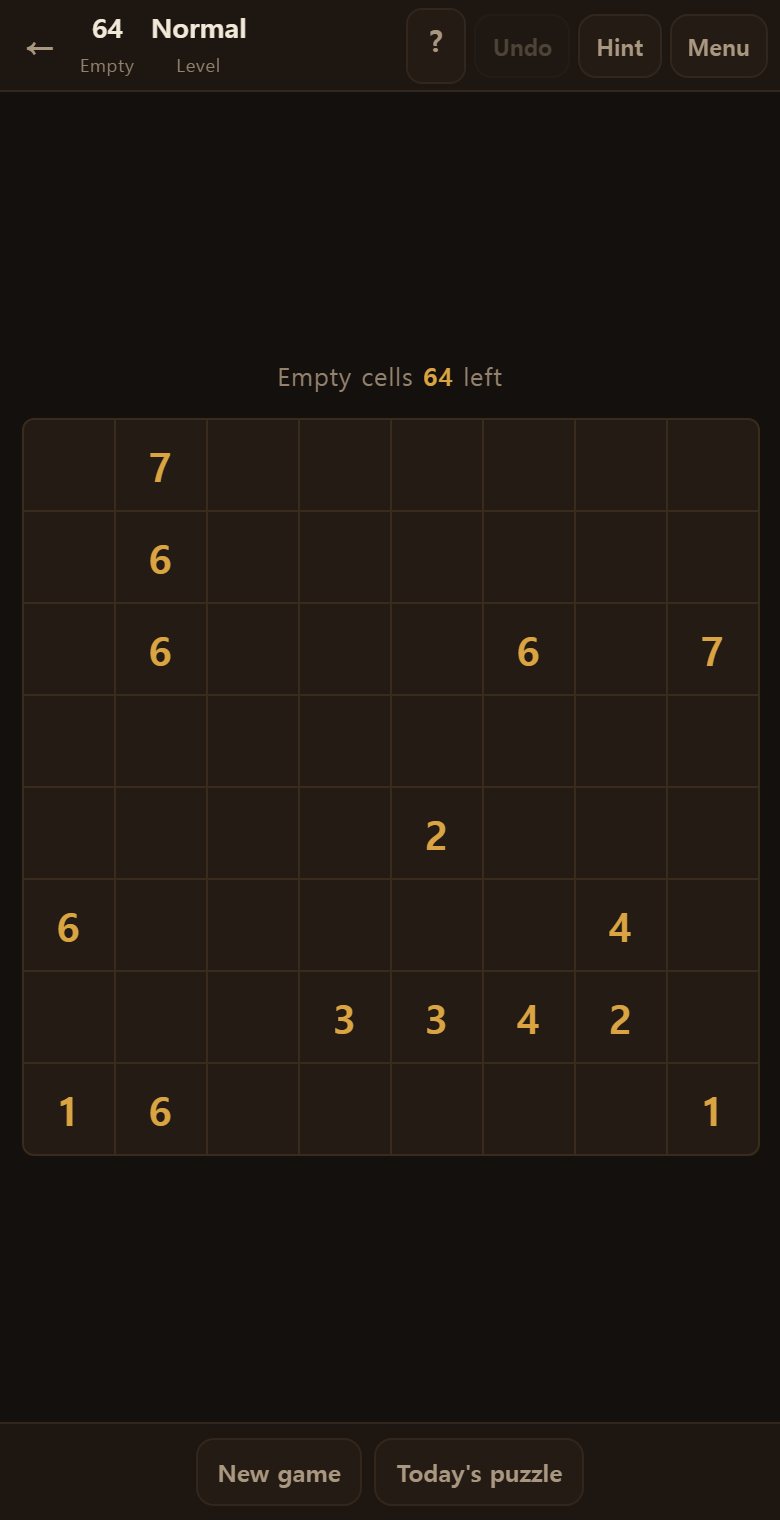
First, look at the screen
There is a square grid in the middle, with gold numbers scattered inside it.
- The grid — the squares. This is what you divide into rectangles.
- A gold number — how many squares the rectangle holding it must have.
- The line above the grid — how many squares still belong to no rectangle.
- The top bar — squares left, time, and difficulty.
When squares left reaches 0 it ends there. There is no Check button to press.
This is what a finished grid looks like
The grid is covered by rectangles with no gaps, and each rectangle holds one number.
Nothing overlaps and nothing is left over. That is the finish.
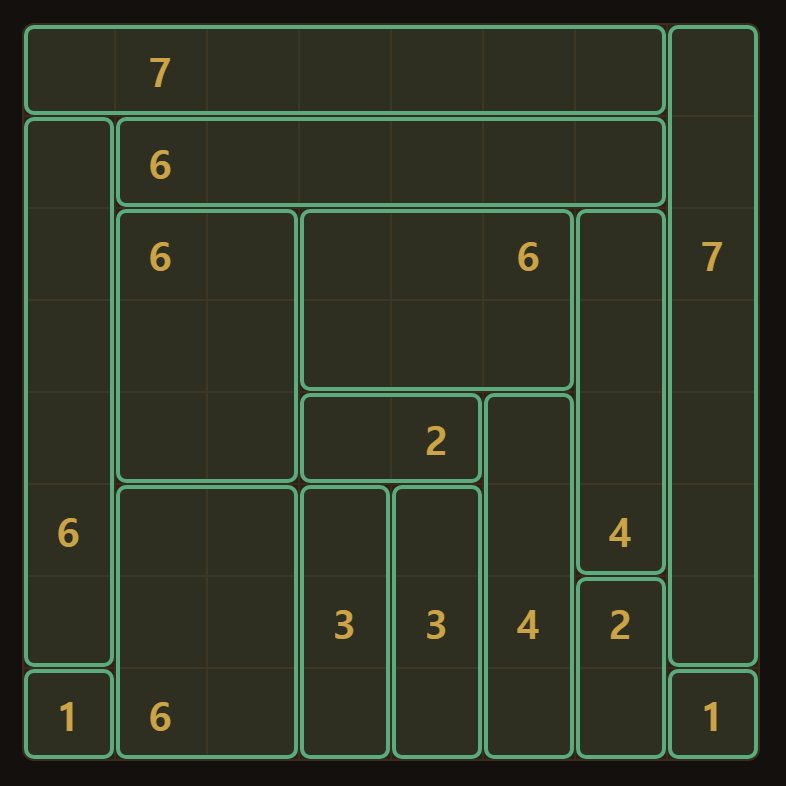
A rectangle may be long across or long down. It need not be square.
One number to a rectangle
Draw a rectangle and look inside it. There must be exactly one gold number.
Think of the number as the rectangle’s name tag. Two tags and there is no telling whose it is; none and it has no name at all.
- Two numbers inside is not allowed.
- Nor is a rectangle with no number at all.
- So there are always exactly as many rectangles as numbers.
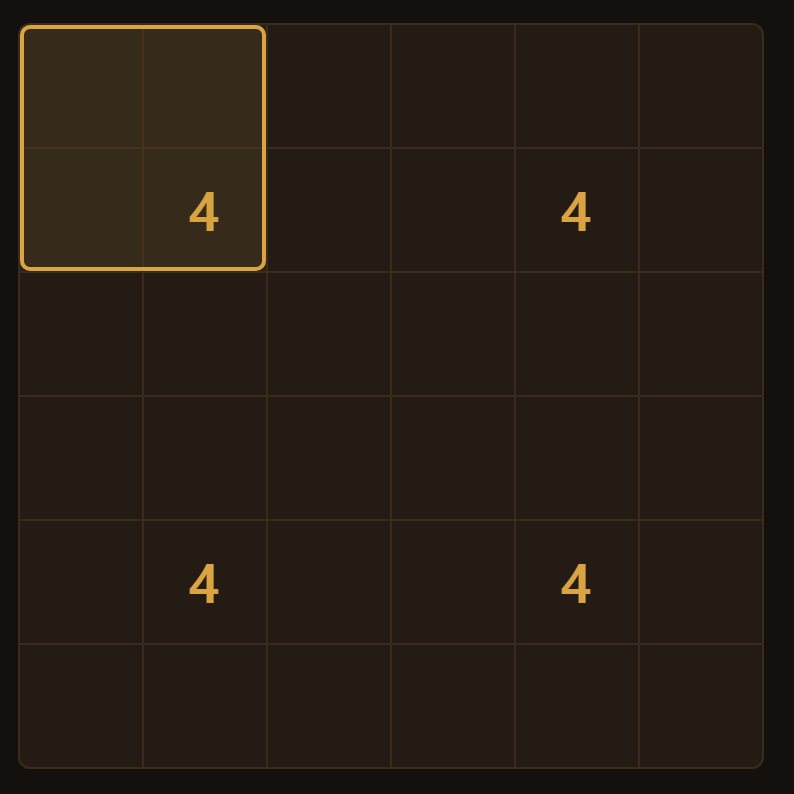
Draw one holding two numbers and the game tells you why it will not do. It does not simply refuse.
The square count must match the number
A 6 means a six-square rectangle. Several shapes will do.
- 1 × 6 — long across
- 2 × 3 — broad and low
- 3 × 2 — tall and narrow
- 6 × 1 — very long down
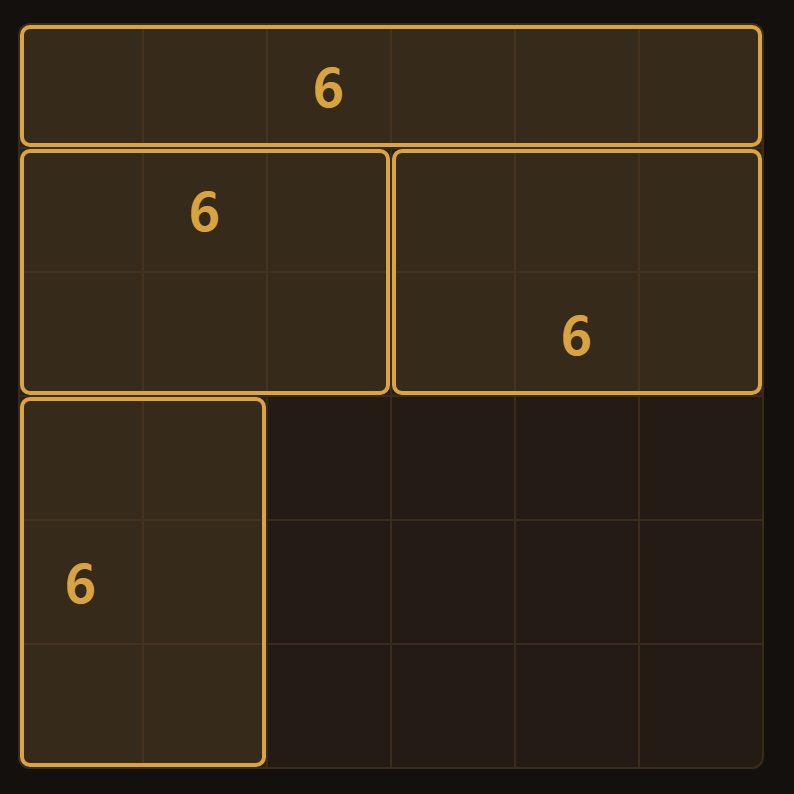
The numbered square may sit anywhere inside the rectangle — the middle or a corner, it makes no difference.
No overlaps and no gaps
No two rectangles may share even one square. And every square on the grid must belong to some rectangle.
So it helps to think of this as cutting the grid into pieces.
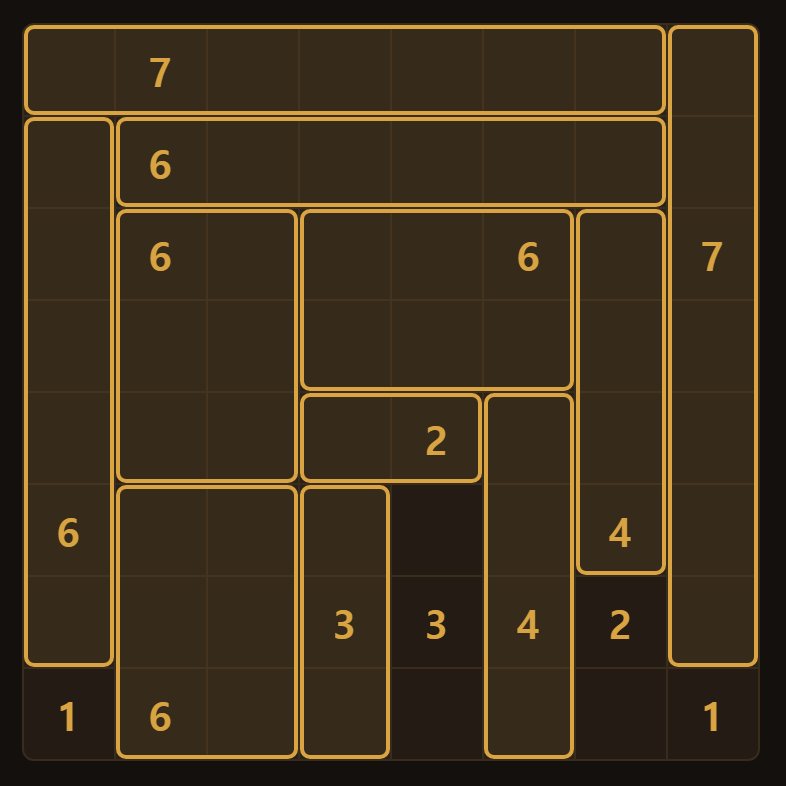
A rectangle that would overlap an existing one simply will not draw. Erase the first and draw again.
The numbers add up to the grid
Since the rectangles cover the grid entirely, adding up all the numbers gives you the grid’s square count.
On an 8 × 8 grid that is 64. On a 10 × 10, 100.
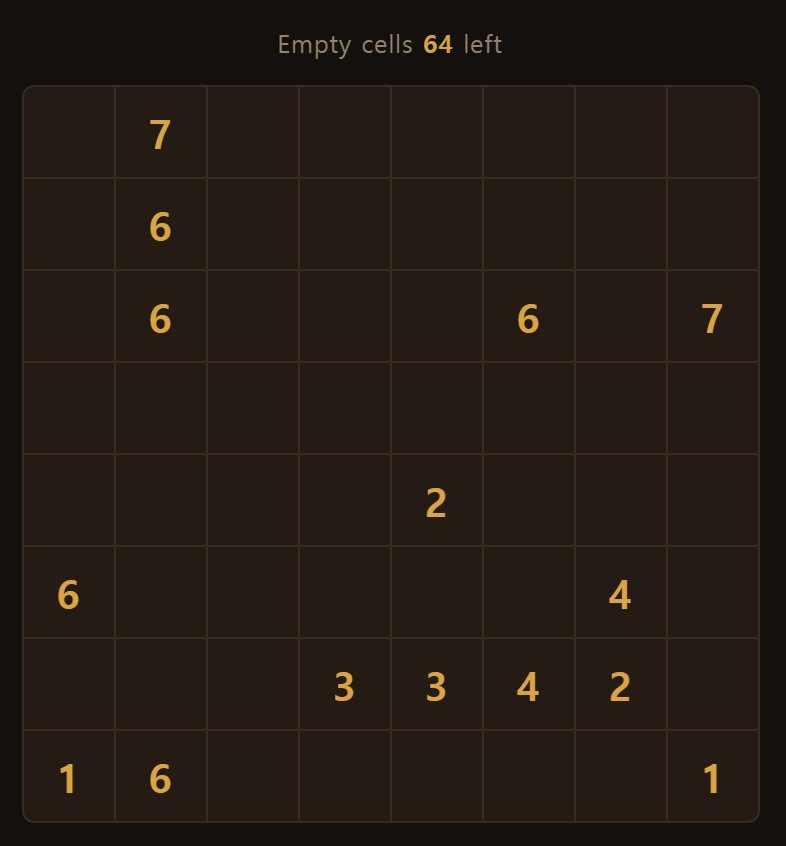
Knowing this helps a great deal. When you are unsure what to draw, you can work back from the squares left. If seven squares remain and the only number not yet drawn is a 7, those seven squares are that rectangle. There is no shape to work out.
Drag to draw a rectangle
Press and drag from a square to draw a rectangle. Let go and it is placed.
While you drag, its square count shows at the lower right. A shape that breaks a rule turns red.
- You may start from a numbered square or an empty one.
- Drag in any direction you like.
- Let go while it is red and nothing is drawn — instead you are told why not.
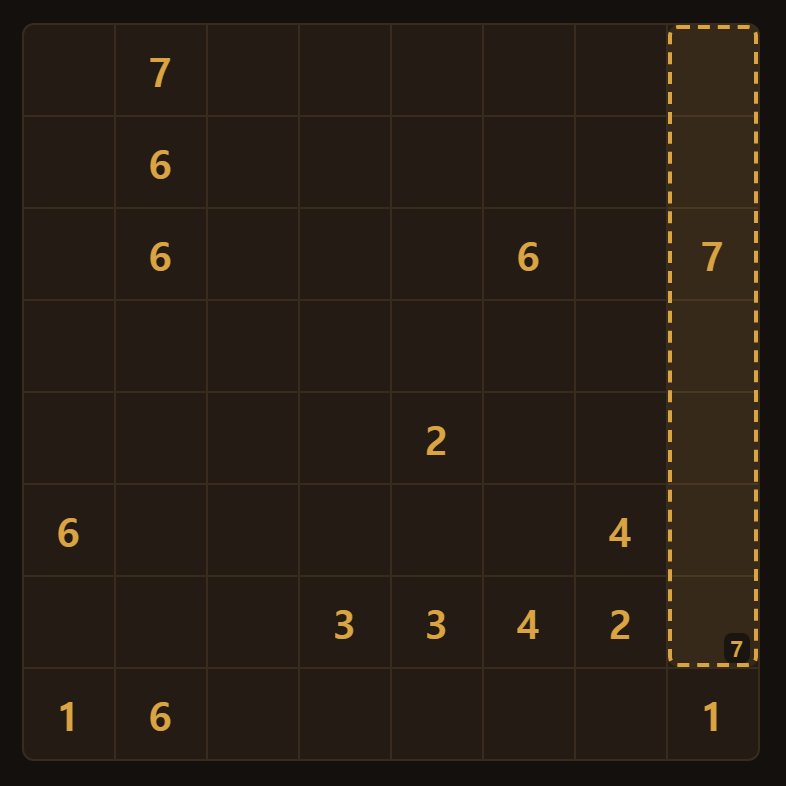
Watching the count as you drag is far easier — “stop the moment it reads 6.”
To erase a rectangle
Tap once inside a rectangle you have drawn and it is erased. No dragging needed.
If it looks wrong, tap it straight away. Undo at the top works too.
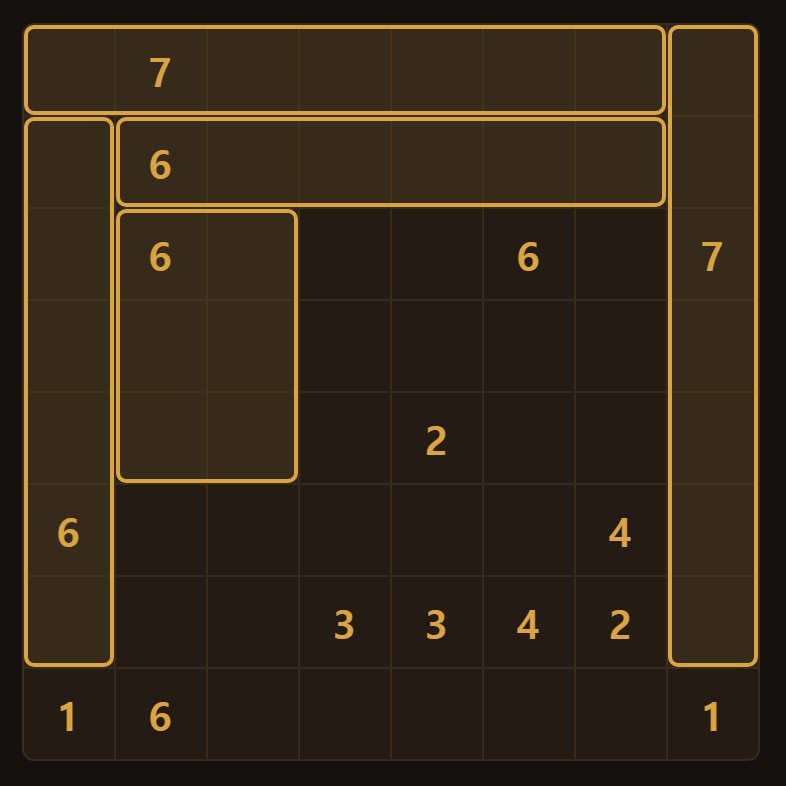
An erased rectangle comes back with Undo as well. You can step back as often as you like.
Draw the 1s first
The moment the grid opens, look for the 1s. A 1 is its own square and nothing else. There is nothing to weigh up.
Once the 1s are drawn, the numbers around them have slightly fewer places to go.
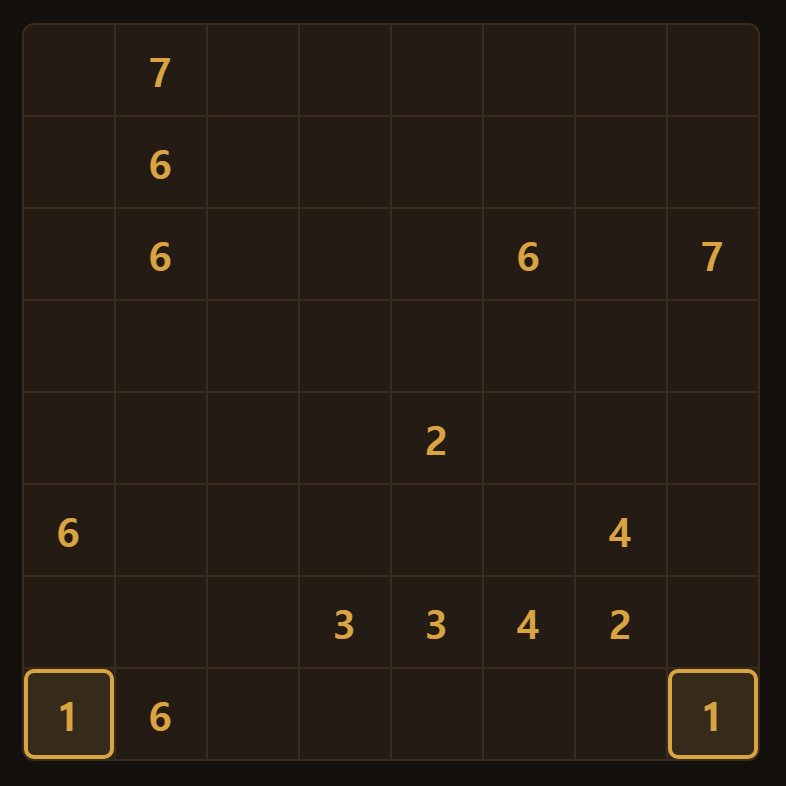
Doing the thoughtless work first is the knack in every puzzle.
A prime has only one shape
Numbers divisible only by 1 and themselves — 2, 3, 5, 7, 11 … — are primes. Their rectangles can only be a single line.
- A 7 is 1 × 7 or 7 × 1 — one row across or one column down, nothing else.
- A 5 is likewise only 1 × 5 or 5 × 1.
- A 6 is not prime, so it has four shapes: 1 × 6, 2 × 3, 3 × 2 and 6 × 1.
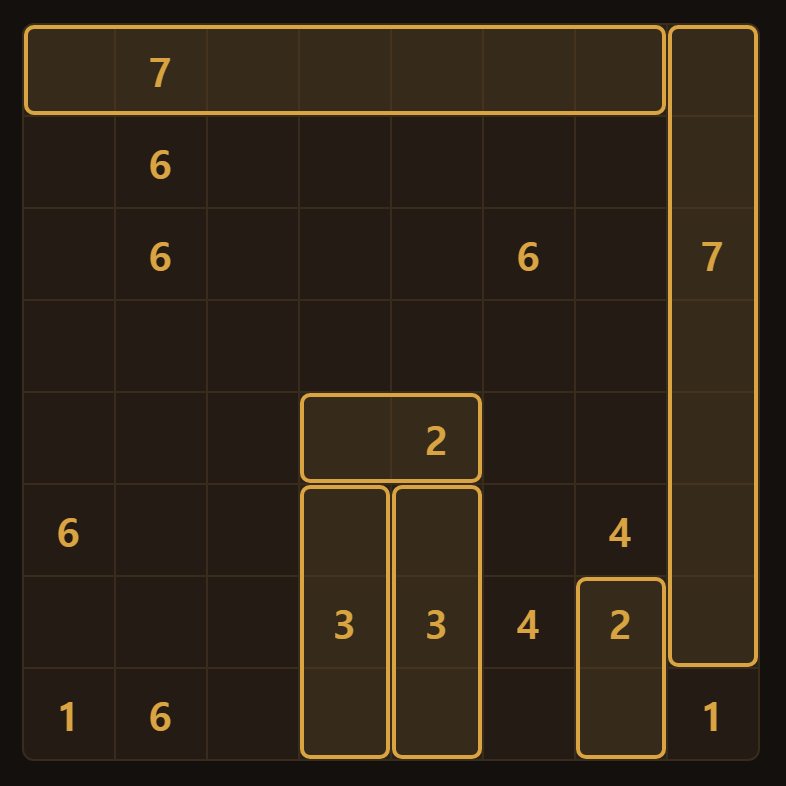
So it pays to take the primes first. With fewer places to go, they settle far sooner.
Look at the edges and corners
A number on the edge cannot reach outside the grid, so it has fewer places to go. A corner has fewer still.
A 6 in the top-left corner, for instance, can only extend right or down.
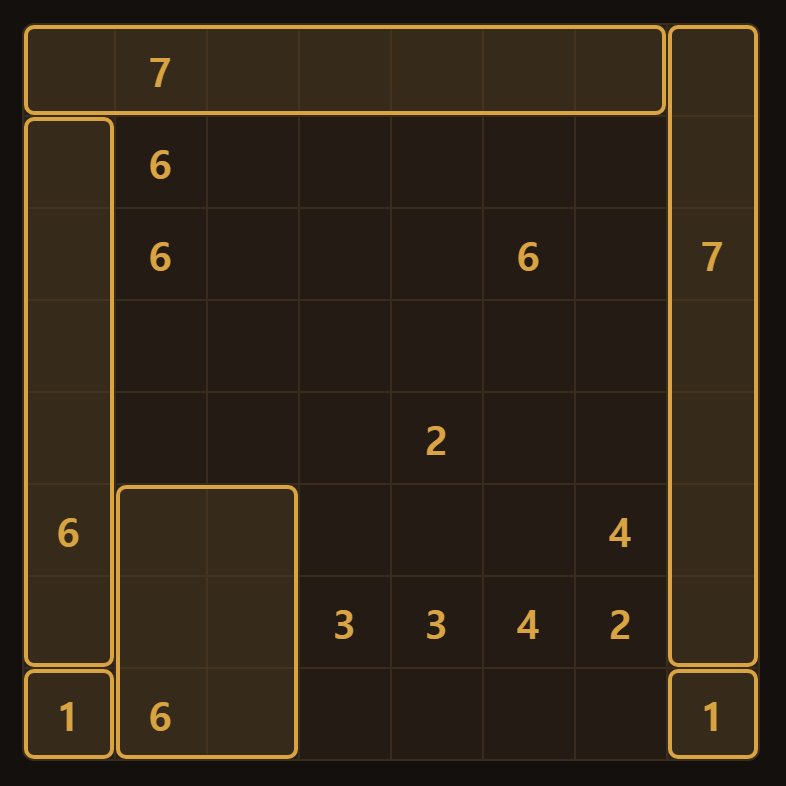
A number in the middle can extend in every direction and so has many options. Leave those for later.
A number with only one place to go
This is the reasoning you use most. When a number has only one possible rectangle, that is the answer.
What began with several options narrows to one as rectangles are drawn beside it.
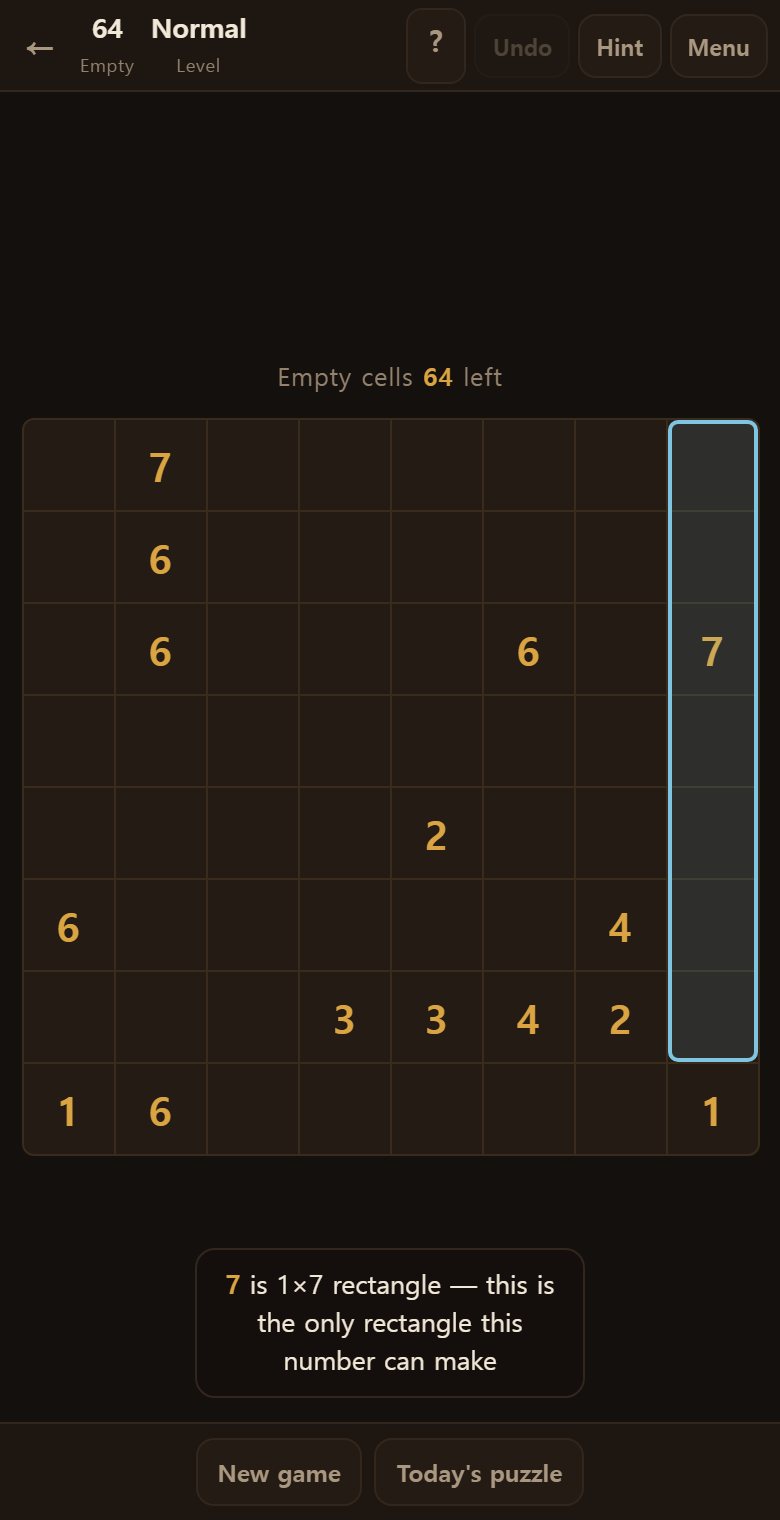
So every time you draw a rectangle, sweep around it again. The one you just drew may have settled a nearby number.
A square only one number can cover
You can reason from the squares too. If an empty square has only one number able to contain it, then that number’s rectangle must cover it.
That cuts down where the number can go sharply — often to one.
- It works especially well on squares left in corners.
- A number too far away cannot reach, so it drops out of the running.
- Alternate between reasoning from numbers and from squares.
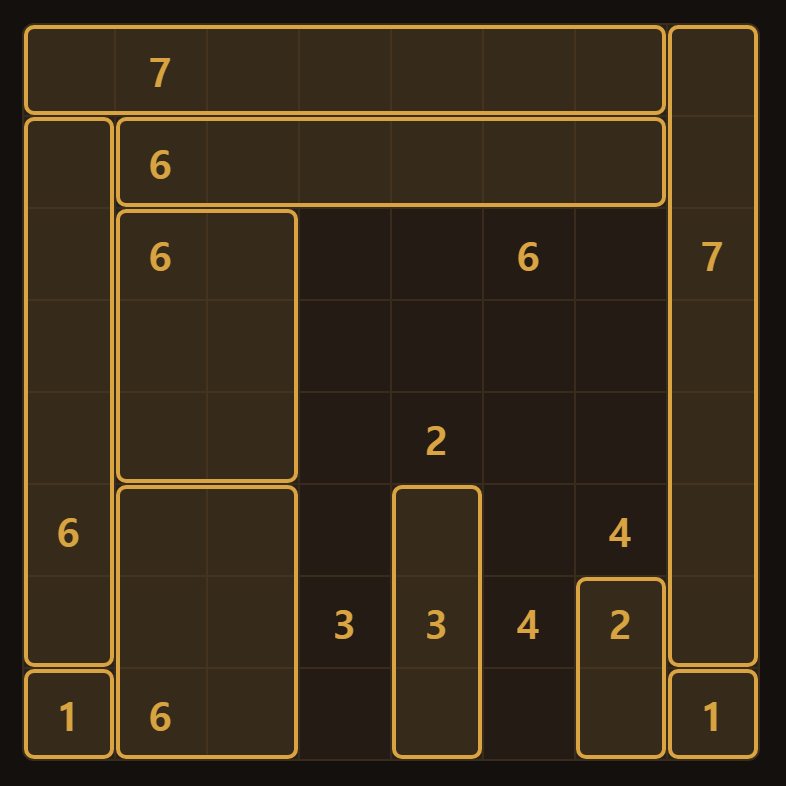
These two are exactly what the Hint uses.
Numbers push each other away
A slightly more advanced technique, using the fact that a rectangle cannot contain another number.
Extending out from a number, when you meet another number you must stop. You cannot go past it.
- Two numbers sitting side by side become walls for each other.
- With a 3 immediately beside an 8, the 8 cannot extend that way even one square.
- So where the numbers are crowded is actually where things settle most readily.
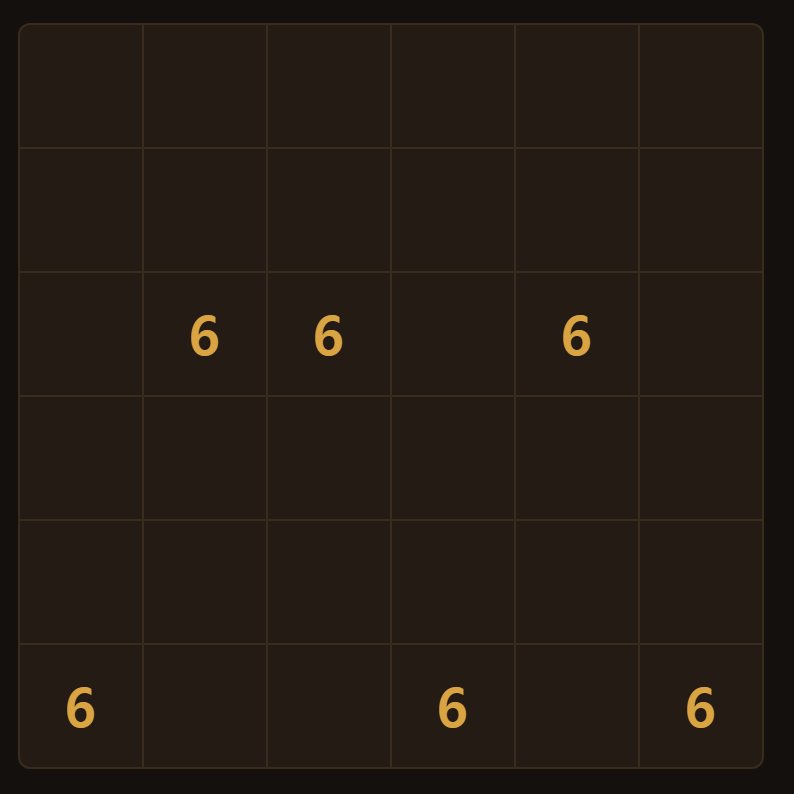
When a grid opens, look first where the numbers sit close together. Blocking each other, they leave only a few possible shapes.
The hint gives you its reason
Press Hint at the top and it marks one rectangle to draw next in blue, giving its size and why it goes there.
- This is the only rectangle this number can have
- Only one number can cover this square
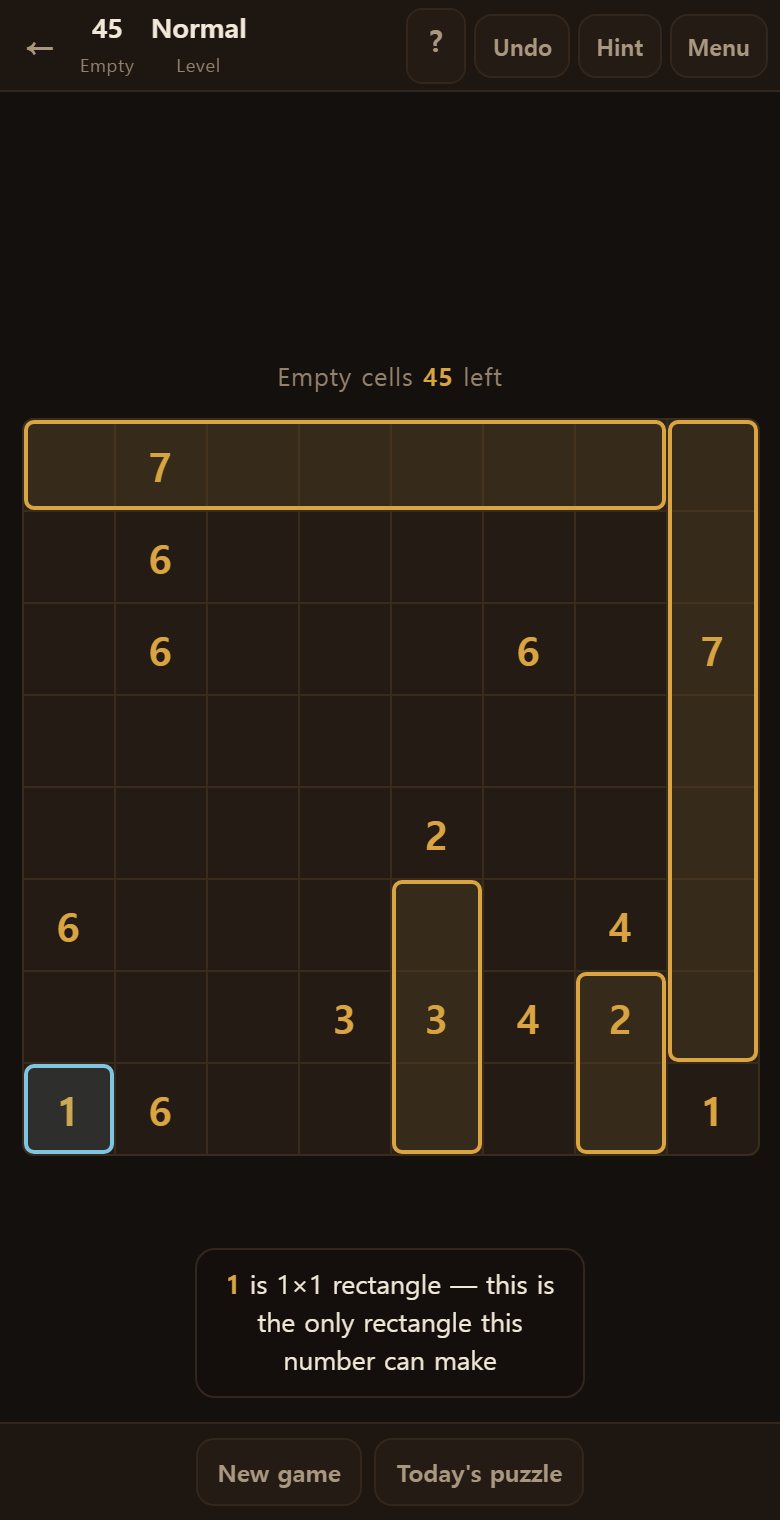
Draw what it marks and you always move closer to the answer. There is no penalty however often you press it.
It tells you why not
Try to draw an impossible rectangle and it does not merely refuse — it gives you the reason.
- It overlaps a rectangle already drawn
- It must contain one number — for a rectangle with none
- It contains two numbers — for a rectangle holding two
- N squares but the number is M — when the count does not match
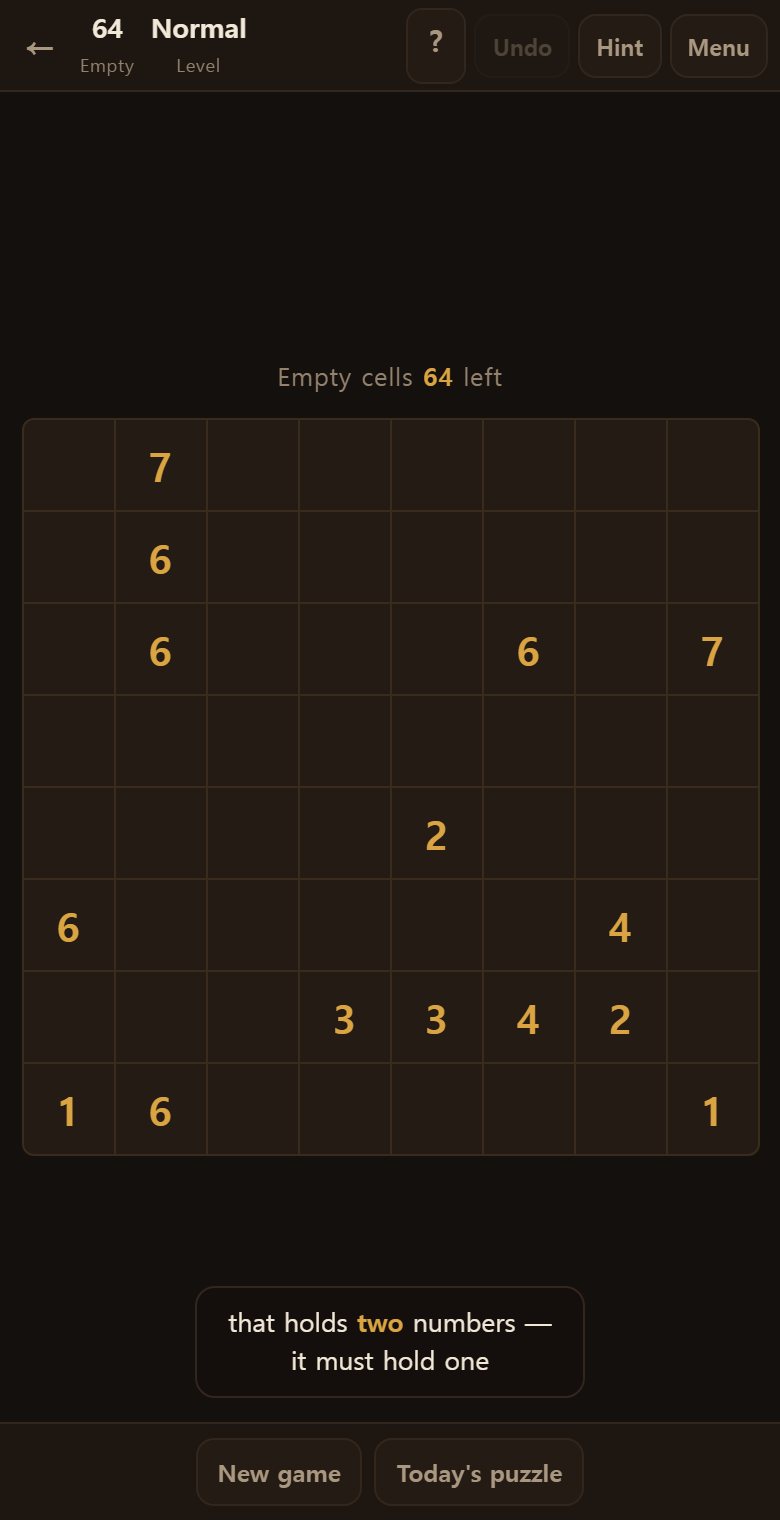
The preview turns red as you drag, so you know before you even let go.
Only grids with a single answer
Scatter numbers carelessly and you get a grid with several answers — where dividing it correctly still gets you told you are wrong.
Here every grid has its answers counted as it is built. More than one and it is thrown away and built again.
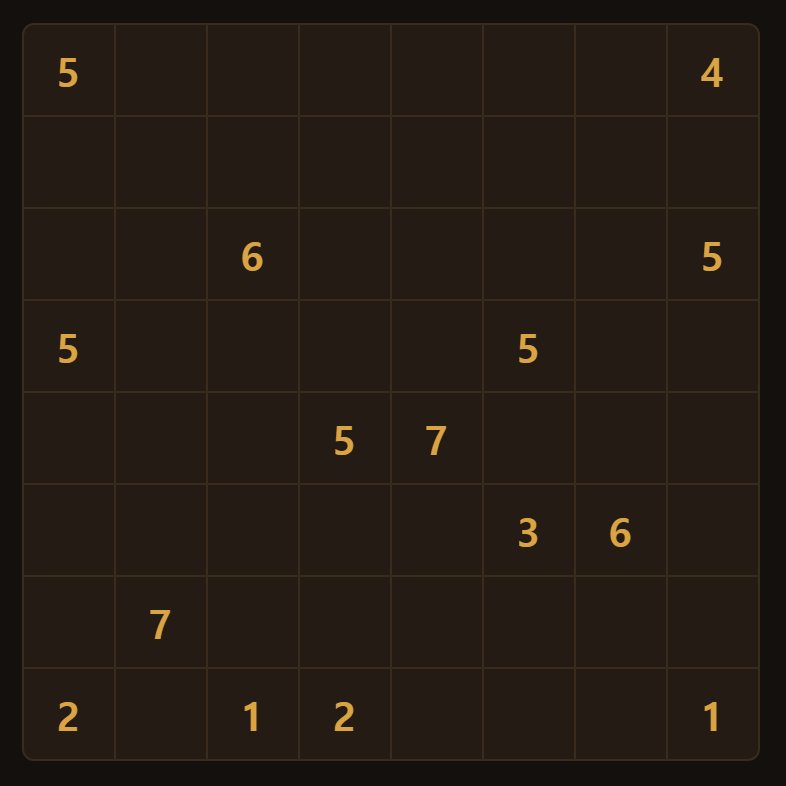
A grid someone sends you is counted again at your end. Hand-edit the link to send a broken grid and it will not open.
You never have to guess
There is no need to solve by “let me draw here and erase if it fails.”
Every grid dealt here can be carried to the end with the two kinds of reasoning above and nothing else. That is checked before it is dealt.
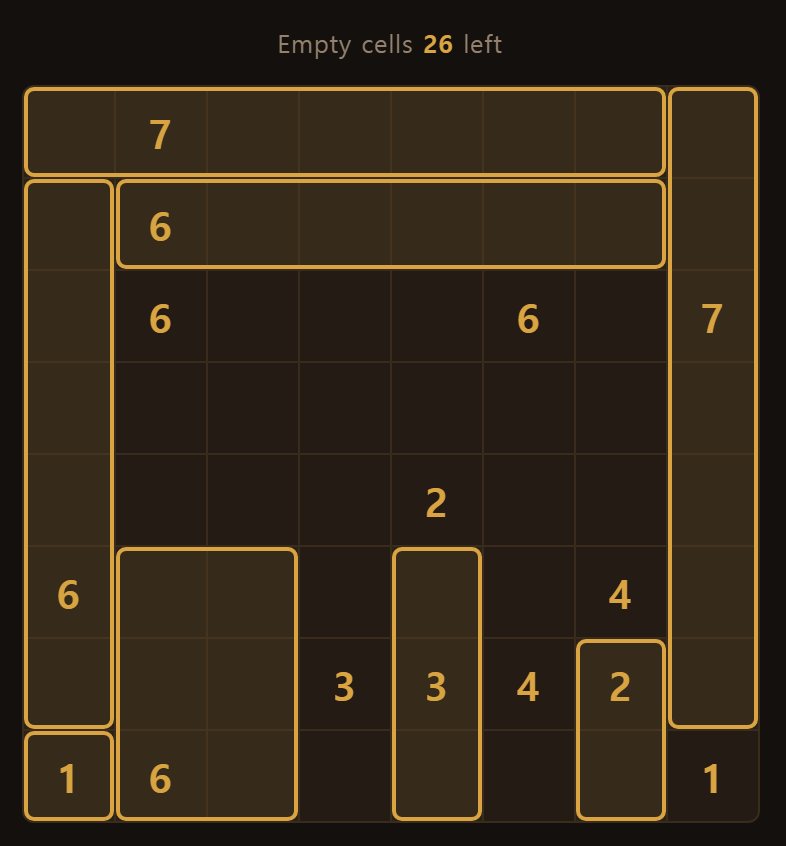
So being stuck means there is a clue you have not seen. Sweep again from the numbers and from the squares, alternately.
Grid size and difficulty
Choose the grid size and difficulty from the menu.
- 6 × 6 — around nine rectangles. Good for learning the rules.
- 8 × 8 — around fifteen rectangles. The size that suits it best.
- 10 × 10 — around twenty-two rectangles. A grid takes a good while.
- Easy — many small rectangles. Fewer places to go, so it is easier.
- Hard — fewer, larger rectangles. Each number has many more places to go.
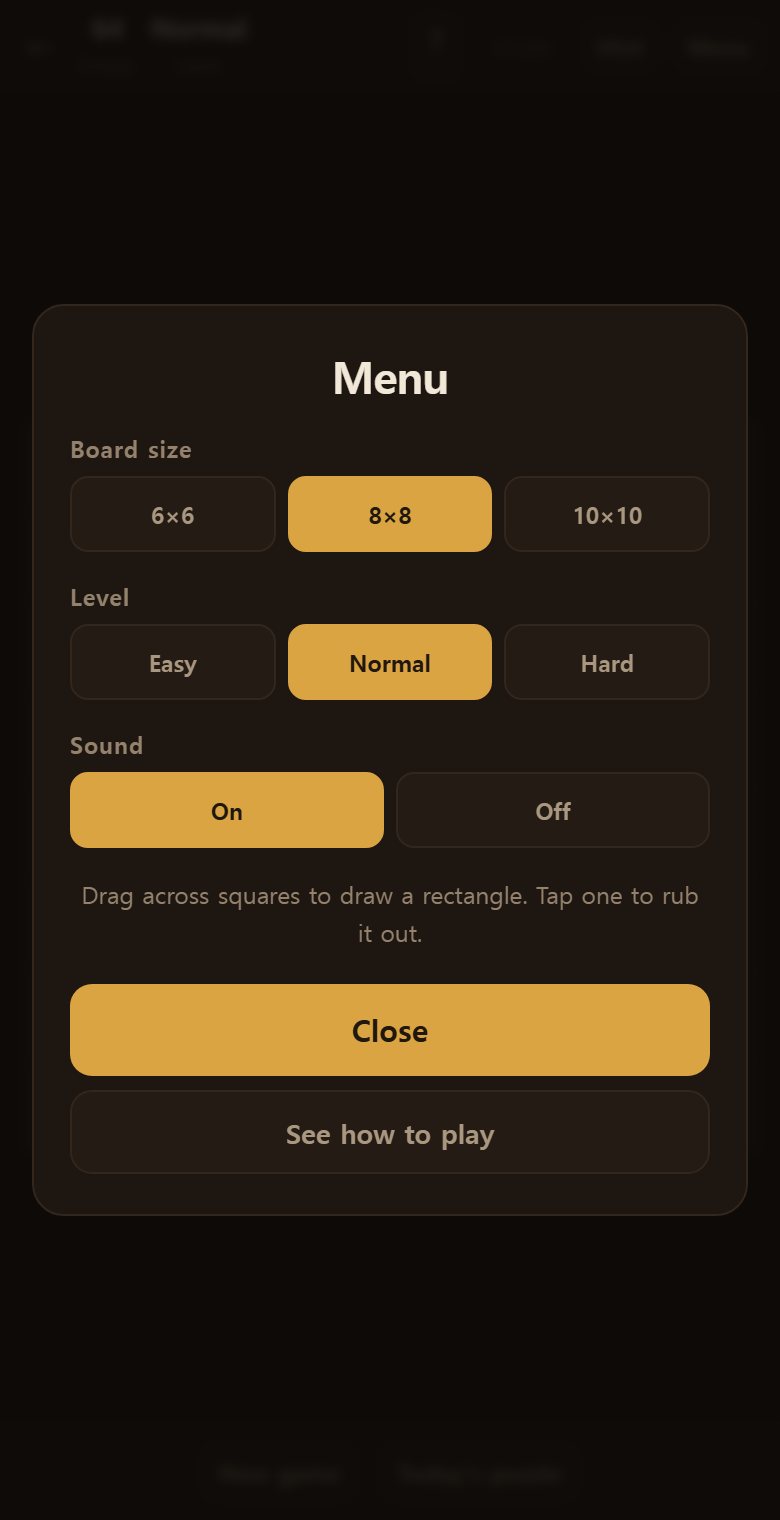
The more big numbers, the harder. A 9 can be 1 × 9, 3 × 3 or 9 × 1, which is a great many places to sit.
Sharing a grid, and today’s puzzle
When you finish, press Copy this grid’s link to send it to someone. Opening that link gives exactly the same grid.
Today’s puzzle, below, is one set grid per day. Everyone gets the same one, so you can compare times.
The receiving end counts the answers again too.
How to solve well
Work in this order and it usually falls.
- Draw the 1s first. There is nothing to weigh up.
- Then the primes (2, 3, 5, 7, 11). Only a single line is possible, so they have few places to go.
- Look at the edges and corners. They cannot reach outside, so they have few options.
- After every rectangle, sweep around it again. A number will have newly settled.
- Look at squares left in corners. Often only one number can cover them.
- Big numbers last. With many options they settle late.
- Stuck? Hint. It gives the reason too, so next time you see it yourself.
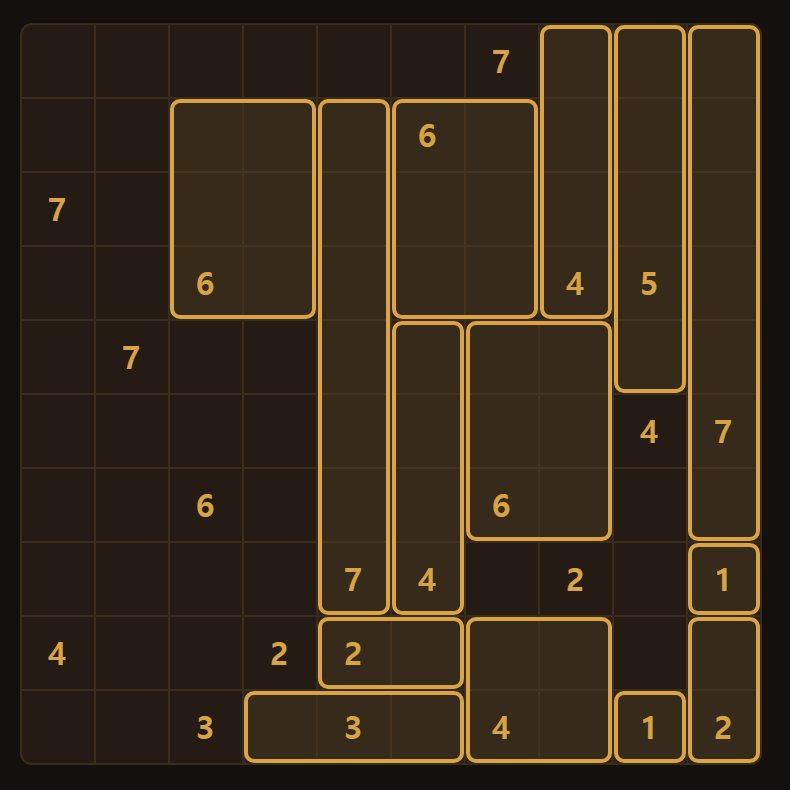
Common mistakes
Grids that stall here nearly always come down to one of these four.
- Starting with the big numbers — the most common. With so many options you redraw them again and again. Do the small ones and the primes first.
- Drawing a rectangle and not looking around it — you miss the number the new rectangle just settled.
- Trying to keep the number in the middle — it may sit anywhere inside the rectangle.
- Not counting the empty squares — the count left lets you work back to what size must fit.
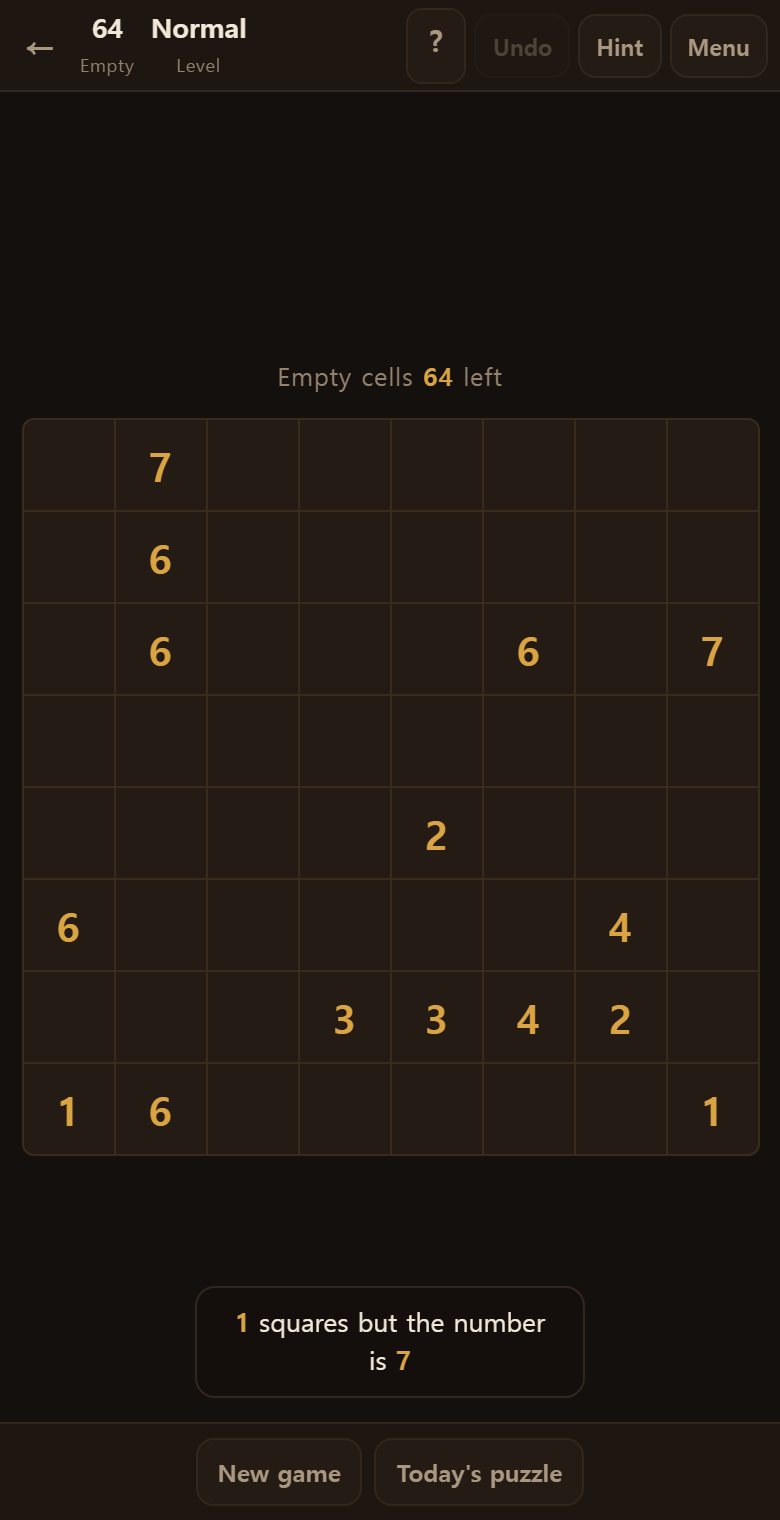
If the preview turns red as you drag, stop before letting go. Watching the square count as you drag cuts mistakes right down.
When you finish
When squares left reaches 0 it ends there. The rectangles turn green and your time appears.
A best time is kept separately for each grid size and difficulty.
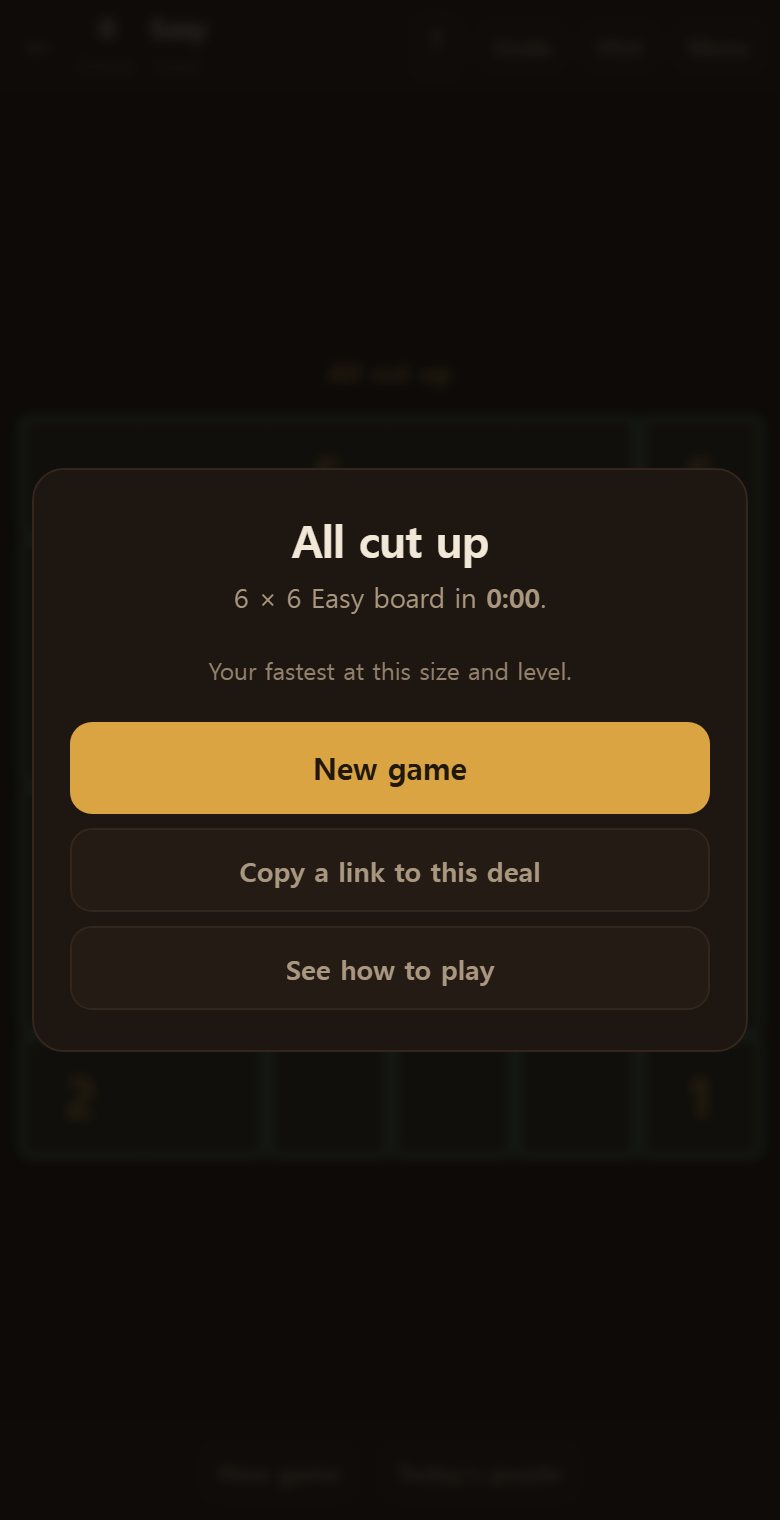
Press New grid for a different one. Every grid is checked, before it is dealt, for a single answer and for solving without guesswork.
Common questions
Press and drag from a square. The count shows as you drag, and an impossible shape turns red.
Tap once inside it and it is erased. Undo at the top works too.
No. It may sit anywhere inside — a corner is perfectly fine.
No. As long as the count matches it may be long across or long down. A 6 can be 1 × 6, 2 × 3, 3 × 2 or 6 × 1.
With the 1s. Then the primes (2, 3, 5, 7, 11) — only a single line is possible, so they have few places to go. Then the edges and corners.
The game tells you why not: no number inside, two numbers inside, the wrong square count, or an overlap with a rectangle already drawn.
No. Every grid has its answers counted before it is dealt, and any with more than one is discarded.
Never. Every grid is built so that the two kinds of reasoning the hint uses carry you to the end.
The grid’s square count. On an 8 × 8 that is 64 — because the rectangles cover it entirely.
- A 1 is a rectangle all by itself. Draw those first.
- A prime (2, 3, 5, 7, 11 …) can only be a single strip. With so few options they settle quickly.
- Start with numbers on the edges and in the corners. They cannot run off the board, so they have fewer options.
- Every rectangle you draw cuts down the options for the numbers around it. Look again each time.
- Press Hint when you are stuck. It points at one rectangle to draw next.