 MindHub
How to play Reversi
Place a stone to flip your opponent’s stones to your colour. When the board is full, whoever has more stones wins.
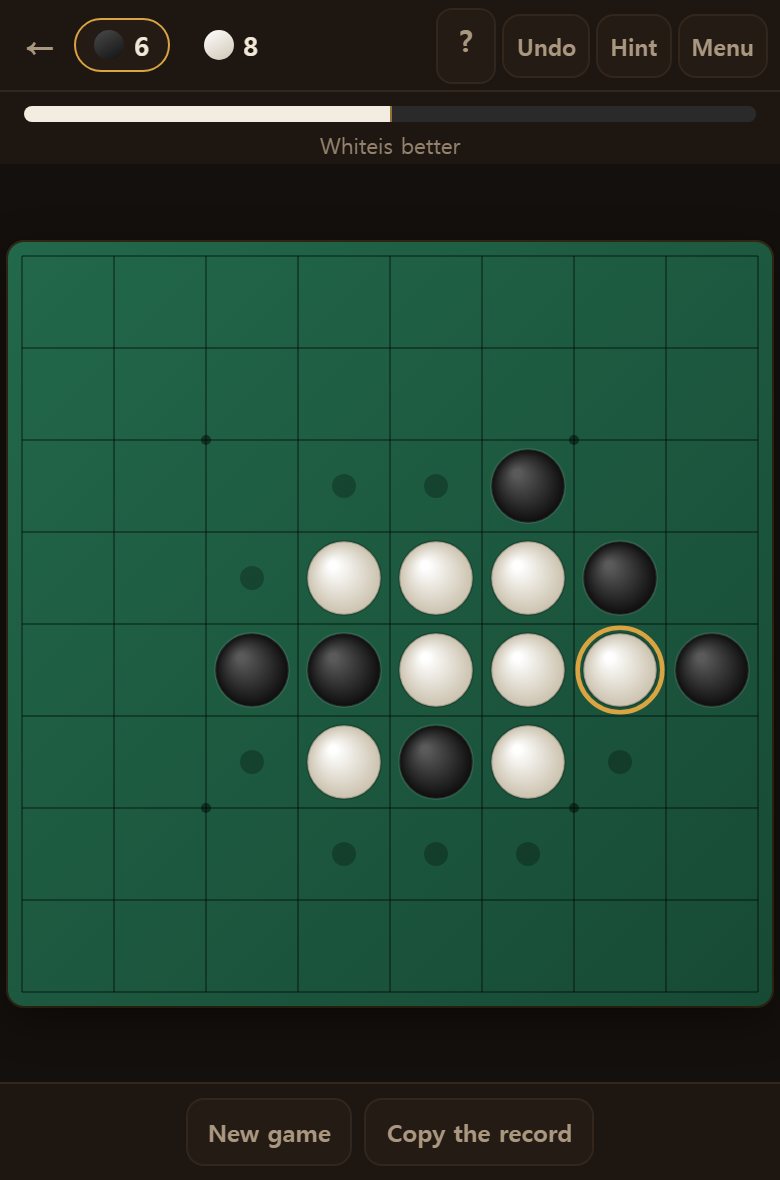
First, look at the screen
Eight squares across, eight down. Stones go inside the squares (unlike go or five-in-a-row).
- Squares with a small dot — where you may play right now.
- The bar at the top — who stands better right now. It is not the stone count.
- The numbers at the top — how many black stones and how many white.
- The gold ring — the stone just played.
Having more stones does not mean you are winning. Why, comes later.
The opening shape is fixed
Open a new board and the four centre squares hold two black stones and two white, set crosswise. This is always the same.
Black plays first. There are only four squares to choose from at the start.
- The four centre squares are set so that each diagonal is one colour.
- Black playing first is the rule. It never changes.
- There are only four legal squares for the first move.
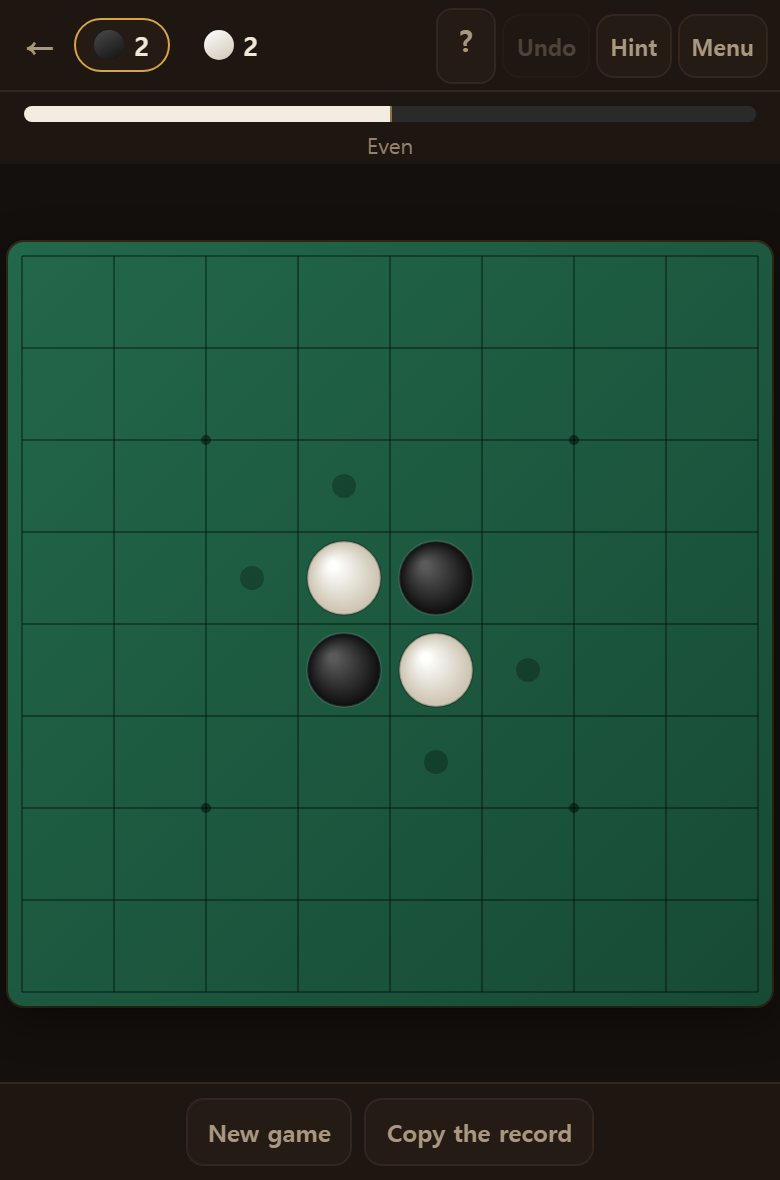
Whichever of the four you pick, the shape is effectively the same — turn the board and they match. So reversi really begins on the second move. There is no point agonising over the first.
Flipping is the whole game
When you place a stone, every enemy stone trapped between two of yours turns your colour.
Say the board reads like this:
● ○ ○ ○ _
Play black on the empty square at the right and all three trapped white stones become black.
- All eight directions count — across, down, and both diagonals. One move can flip in several directions at once.
- A single empty square in between and nothing flips.
- If one of your own stones sits in between, the flipping stops there.
- A stone once placed never moves. Only its colour changes.
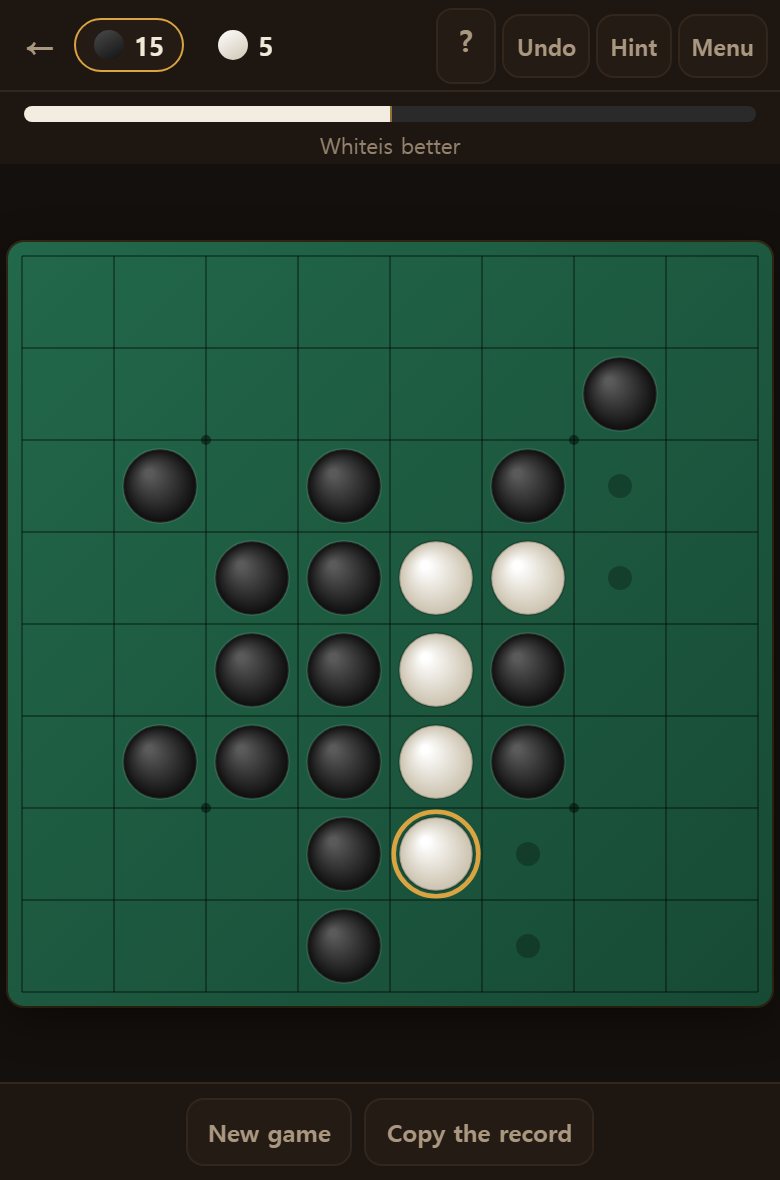
So on this board only the positions are settled; the colours keep changing. The only stones that never change are the ones running out from a corner. That is why this game is a fight over corners.
You cannot play just anywhere
You may only play where at least one stone flips. An empty square alone is not enough.
Legal squares are marked with a dot. Nothing to memorise.
- An empty square with nothing to flip is not playable.
- Flipping a single stone is enough. The count does not matter.
- Sometimes there is only one legal square. Then there is nothing to choose.
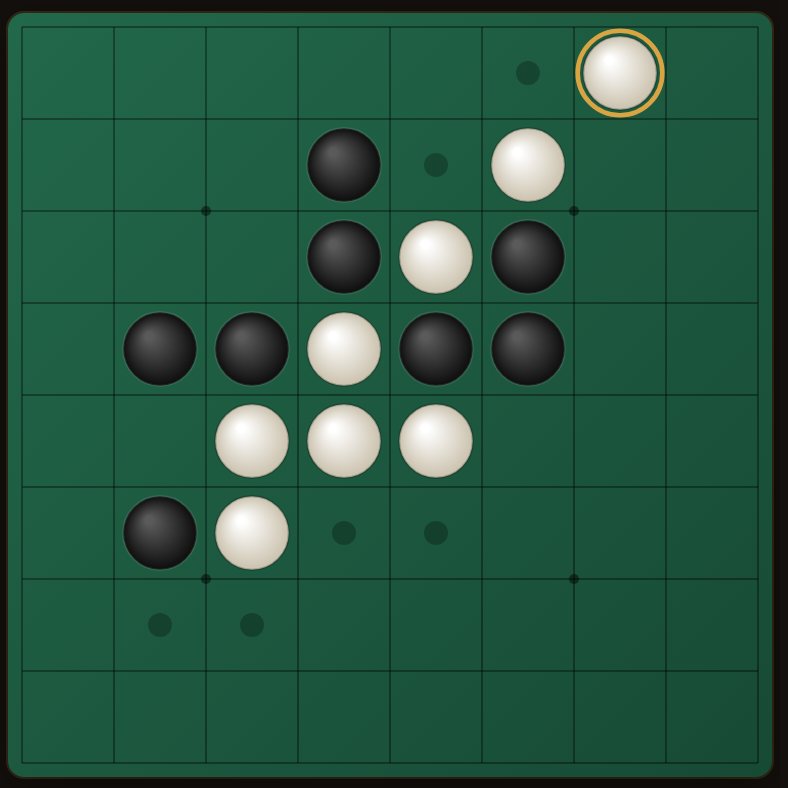
With no legal square at all, your turn passes by itself. When neither side can play, the board ends. Passing is not a fault, it is the rule. Making your opponent pass means you play twice in a row, which is a large gain.
Flipping a lot is not good
Beginners pick the square that flips the most at once. In reversi that is usually a bad move.
Flipping a lot hurts twice over. First, your stones spread towards the edges, which gives your opponent more places to play. Second, the stones you just flipped flip straight back on the next move.
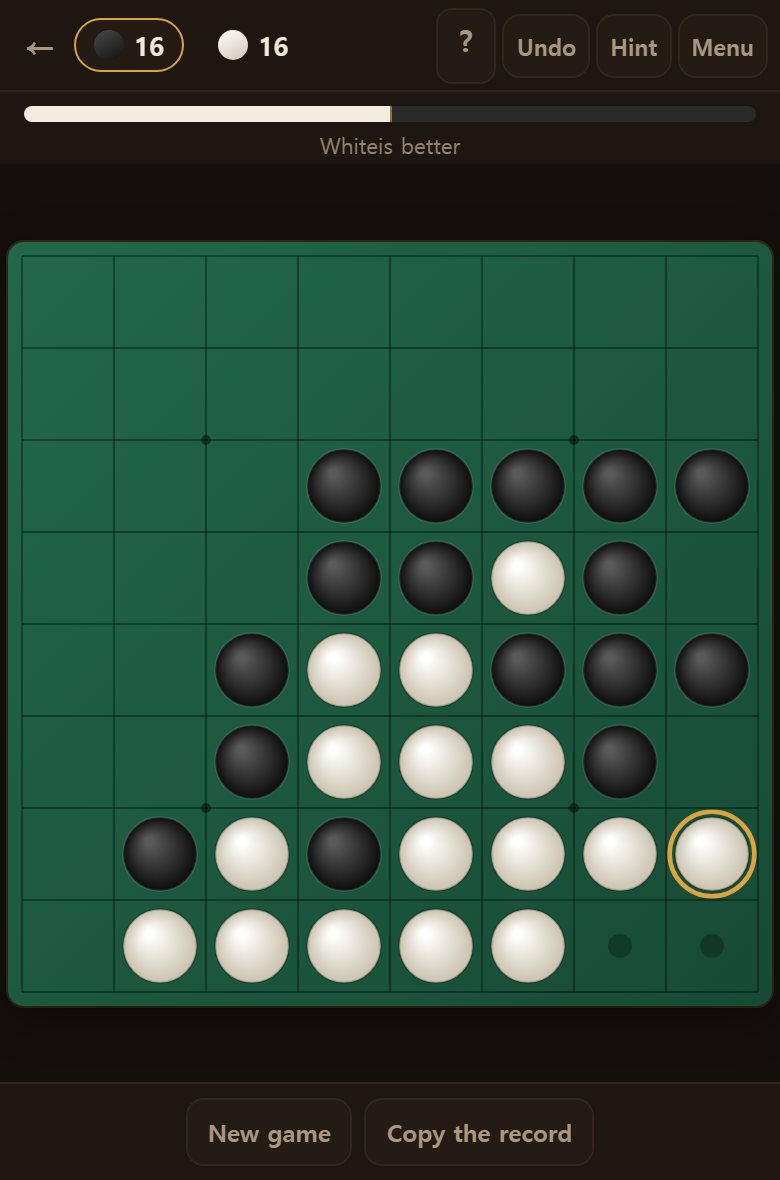
Early on, the move that flips least is the better one. The fewer stones you have, the fewer places your opponent can play, until they are forced onto a bad square.
Corners matter most
A stone on one of the four corners can never be flipped, because it cannot be trapped from both sides.
Take a corner and the lines running from it grow solid. Reversi is, in practice, a fight over the corners.
- Avoid the squares right beside a corner where you can. Your opponent uses them to walk into the corner.
- The square diagonally next to a corner is worse still. It hands the corner straight over.
- The edge lines are the next most solid thing after corners.
- When a chance at a corner comes, take it nearly every time.
- Take a corner and the two lines running from it firm up with it.
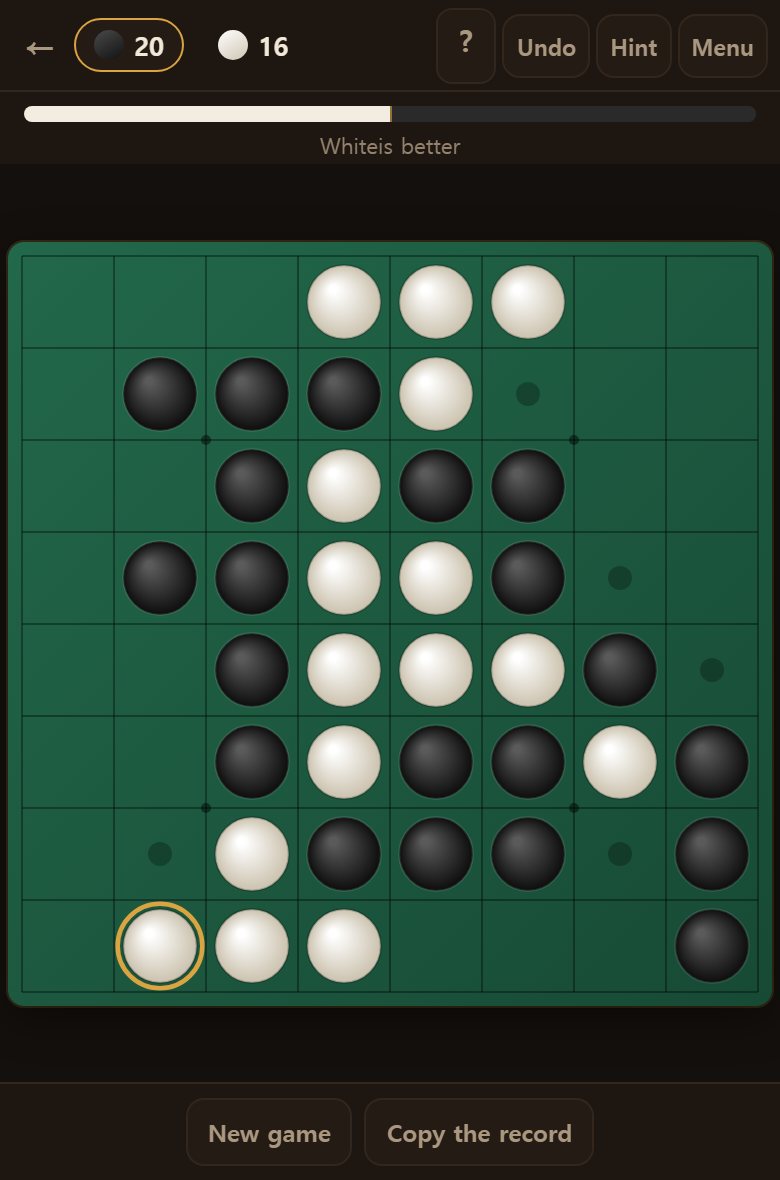
Even with fewer stones, holding all four corners usually wins. Do not be fooled by the count. The reason is simple. To flip, a stone must be trapped from both sides — and at a corner, two sides are off the board. There is no trapping it.
The computer reads the endgame out in full
Once few squares remain, the computer calculates all the way to the end. From there it is not an estimate but the exact answer.
So the game has to be decided before that. Get ahead in the middlegame, on corners and on space.
- With ten or fewer squares left the branches shrink so far that everything can be counted out.
- So at the end there are no mistakes. Only best play.
- Put the other way round: do not count on a turnaround in the endgame.
- Whatever edge you built in the middlegame becomes the result.
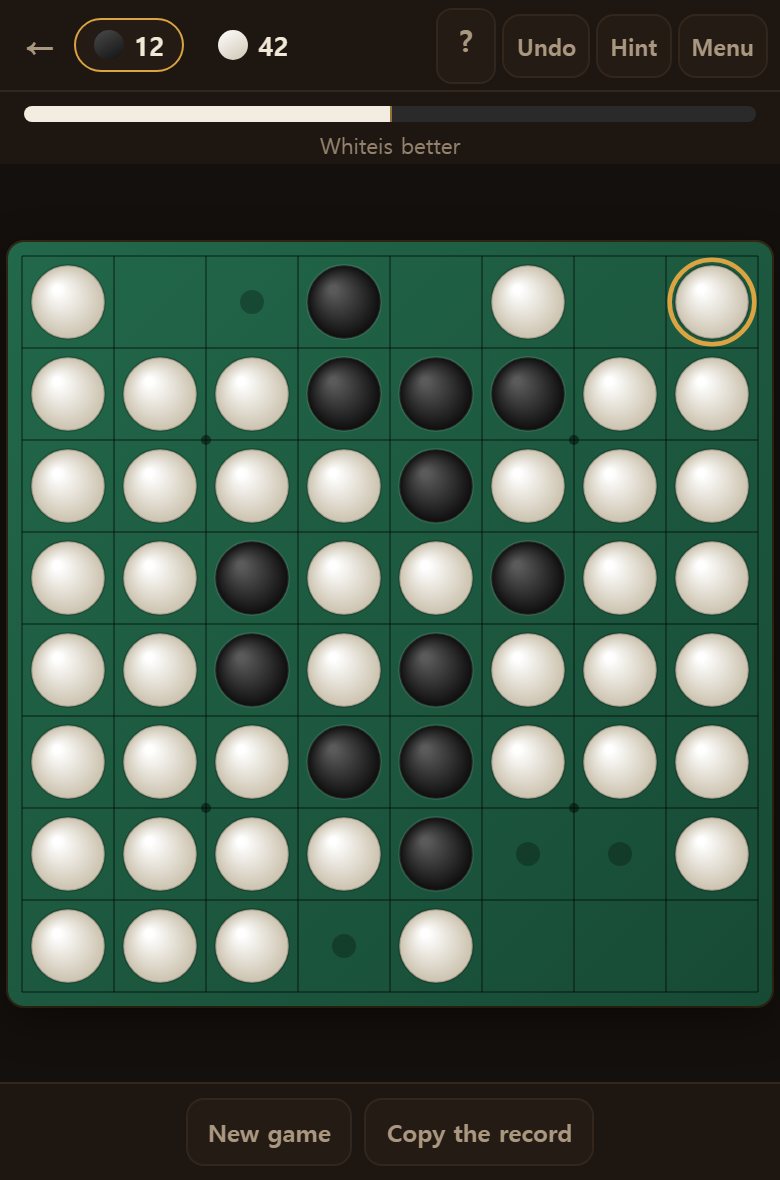
A person can count the last ten squares too. Build the habit of counting once when few squares remain and you will gain a lot at the finish.
When the board ends
It ends when the board fills, or when neither side can play. Whoever has more stones then wins.
The last few moves can flip a great many stones. Even if you look behind partway through, play it out.
- Even with empty squares left, if neither side can play it ends there.
- The squares still empty count for neither side.
- Equal stone counts are a draw. Rare, but it happens.
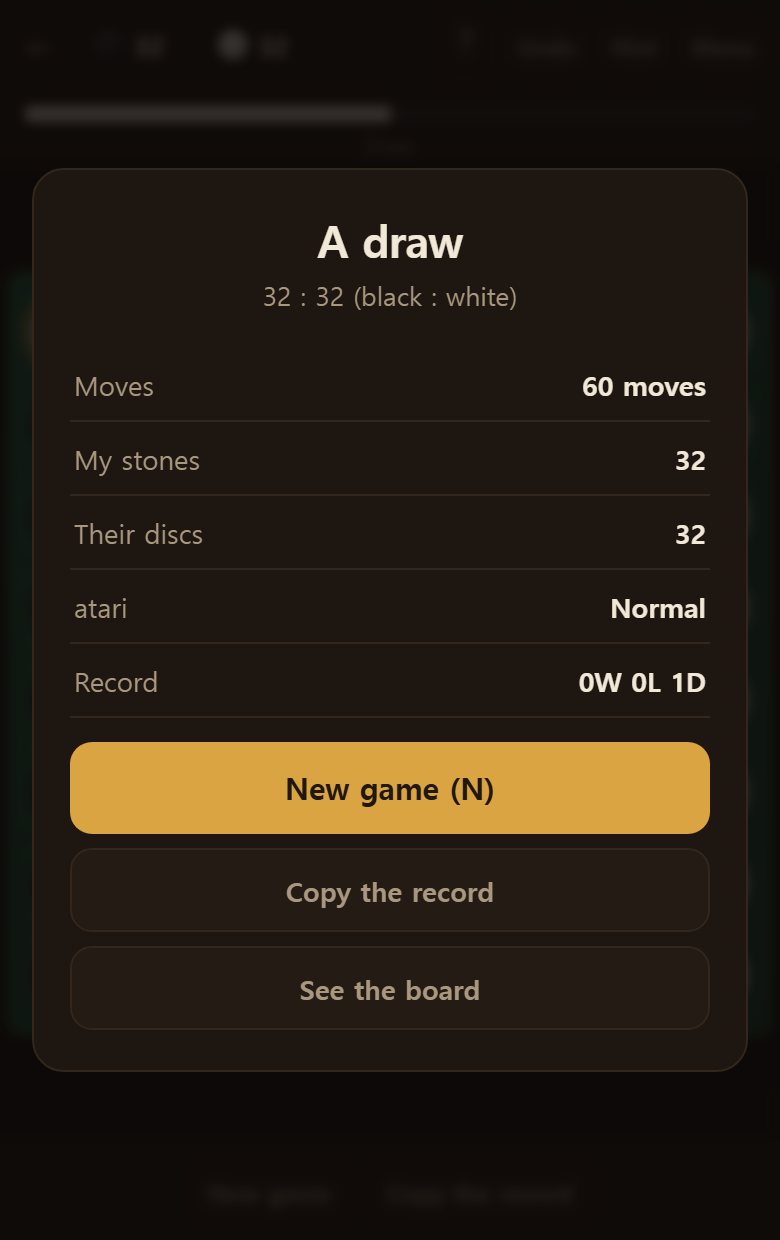
Beware the squares beside a corner
The square diagonally beside a corner is the most dangerous place in this game. Play there and your opponent plays next to it and walks into the corner.
- Diagonally beside a corner — the most dangerous. Avoid it if you possibly can.
- Right beside a corner (along a row or column) — the next most dangerous.
- Once the corner is already filled, the squares beside it are safe. Then you may play there.
- Often it is the only legal square and you have no choice — which is exactly why the fight over space matters.
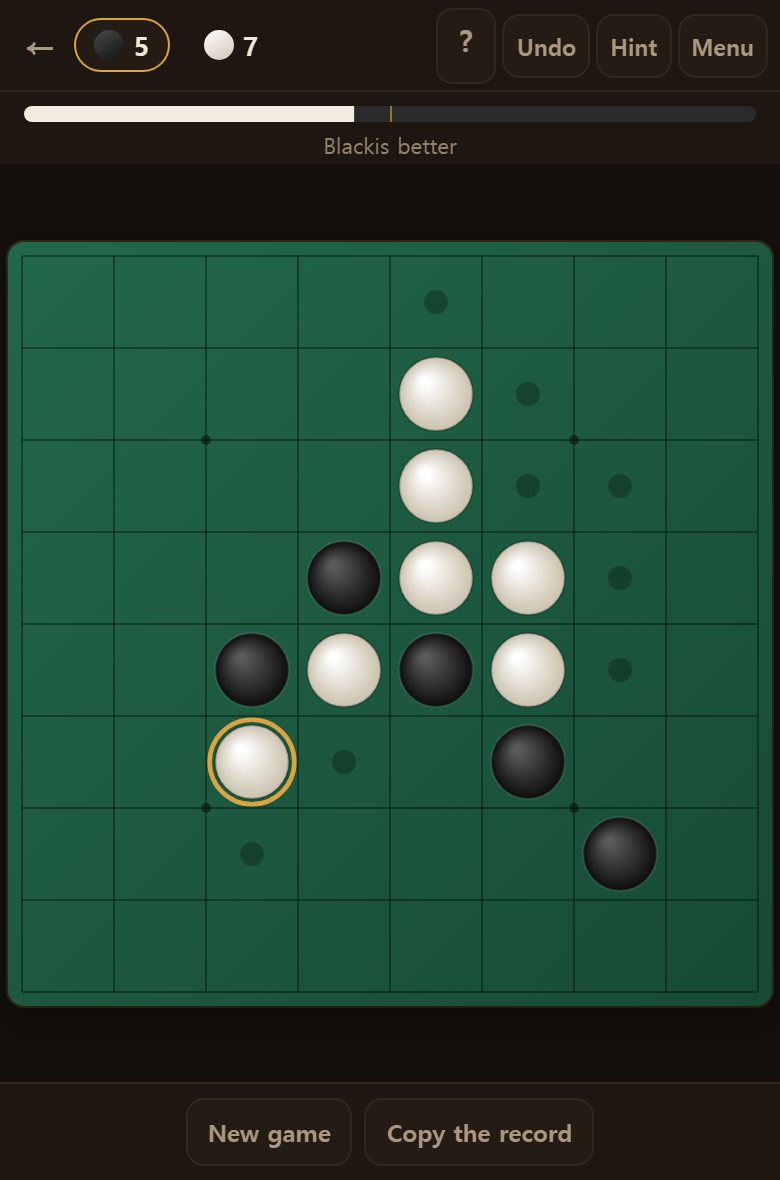
This is where beginner and expert differ most. Knowing when it is safe to play beside a corner is the skill itself.
The edge lines
The border lines are the next most solid thing after corners, because one side is off the board and only half the directions can trap them.
- Edge stones flip far less often than centre stones.
- Fill an entire border line and it never flips again.
- But leave one gap in a border and your opponent digs in through it.
- When filling a border, running out from the corner is the safe way.
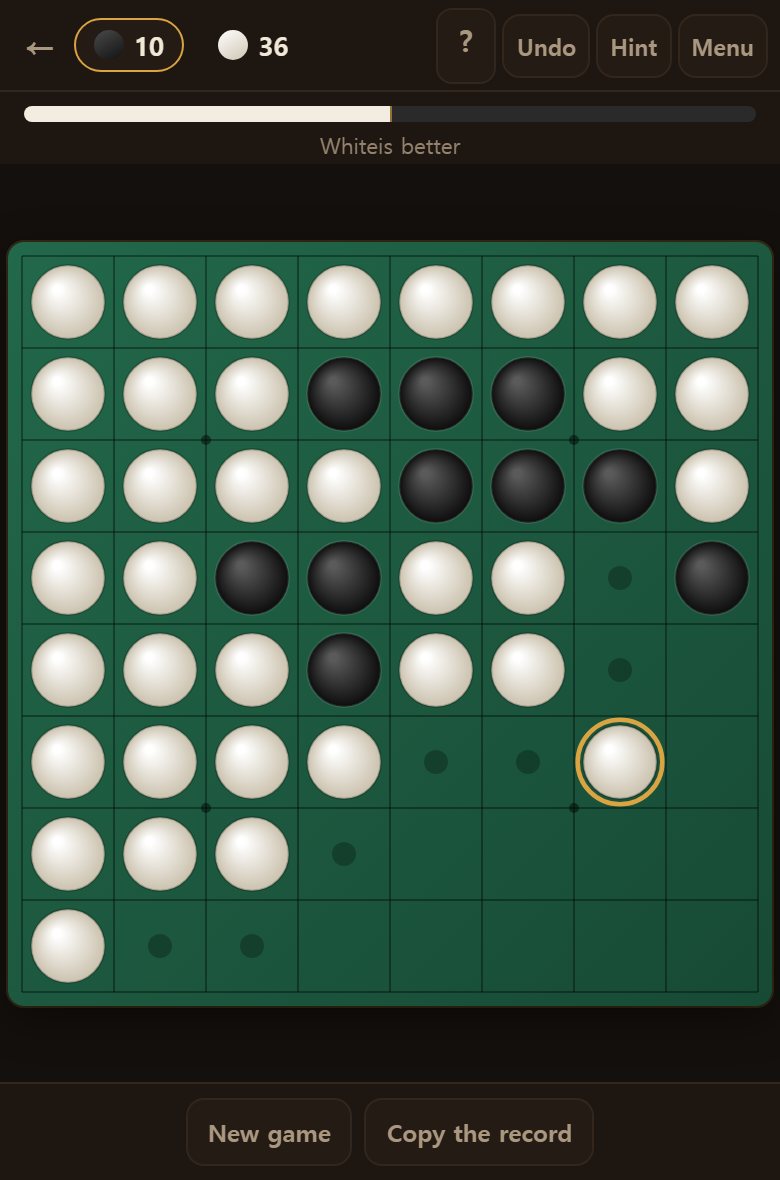
If you cannot get a corner, take the border. Piling stones in the centre only means they all flip next move. Border stones running unbroken from a corner are as unflippable as the corner itself. Adding to that chain, one stone at a time, is the road to winning.
Winning means cutting down their moves
The heart of reversi is not the stone count but the number of places to play.
As your opponent’s options shrink, they are forced onto bad squares like the ones beside a corner. Then the corner rolls in by itself.
- The fewer stones you have, the fewer places your opponent has to play.
- That is why flipping little is good early on.
- Keeping your stones bunched in the centre reduces where your opponent can go.
- When your opponent has only one square, you can read the following moves in advance.
With no square at all, their turn passes to you and you play twice in a row. That is the biggest gain in reversi. Two moves in a row is usually enough to simply take a corner. Which is why strong players squeeze their opponent’s breathing room instead of flipping stones.
Reading the bar at the top
The bar at the top is not the stone count. It shows who stands better right now.
It is a figure built from how many corners you hold, how many places you have to play, and how many of your stones can no longer be flipped.
- The bar leaning your way means the position is good.
- Being behind on stones while the bar looks good is common. That is normal.
- Leading on stones while the bar looks bad is a warning — a big flip is coming.

Trust the bar over the number. In the opening and middlegame the stone count means almost nothing.
Hint
Press Hint at the top and it points out a square worth playing. On a keyboard it is H.
- It points not at the square that flips most, but at the one that improves your position.
- If you wonder why that square, count the corners and the number of moves available.
- You can simply follow the hints, but after a few you start seeing it yourself.
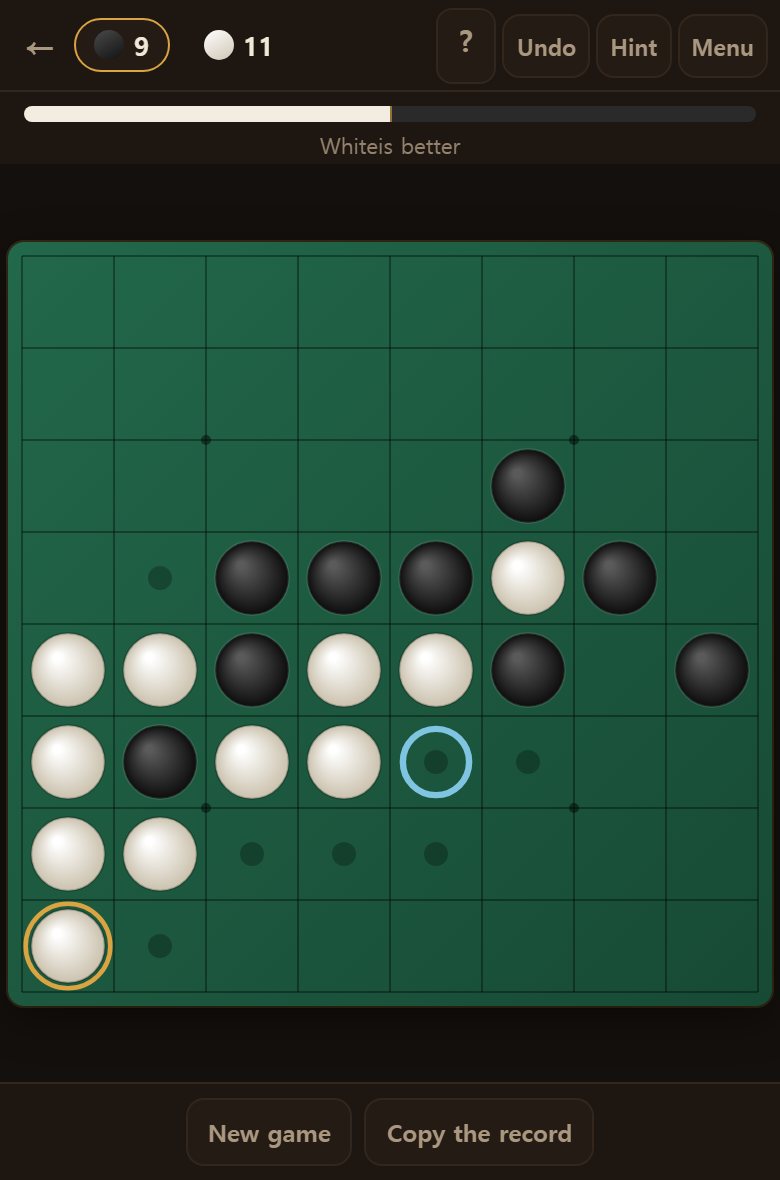
At first the hint’s choice looks odd, because it picks a square that flips only one or two stones. But a few moves later you see that square is what opened the corner. That is the knack of this game.
Undo and sharing the record
Press Undo and your move and the computer’s step back together. On a keyboard it is Ctrl+Z.
Press Copy record below and you get a link holding the whole sequence of moves. Open that link and the same game unfolds again.
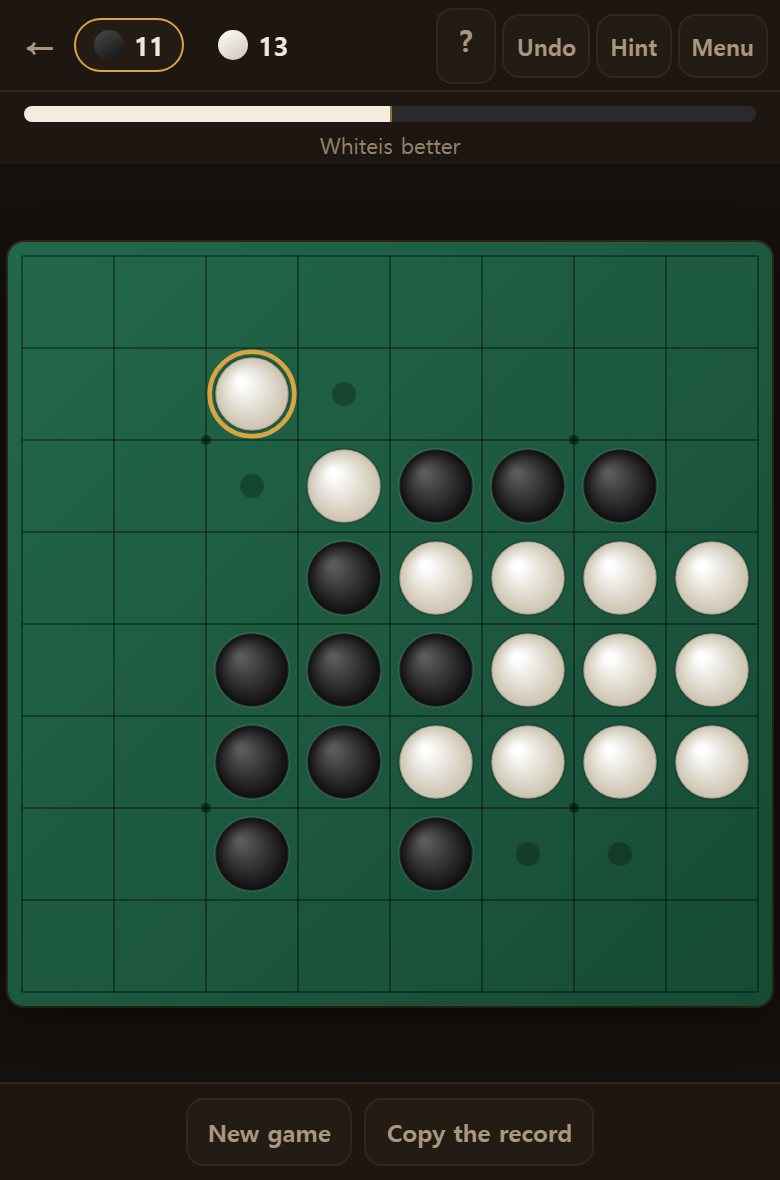
Keep a game you played well, or one that swung hugely, then open it again and find where it turned. You improve fast that way. It is usually the single move that gave up a corner.
How to win
Just five habits change your play completely.
- Do not flip a lot. Early on, the move that flips least is the good one.
- Always take a corner. Stones that cannot flip are the stones that win.
- Avoid the square diagonally beside a corner. That is the door that gives a corner away.
- Cut down where your opponent can play. With nowhere good left, they play somewhere bad.
- Do not be fooled by the stone count. In the middlegame the side with fewer stones is usually better off.

All five are really one — grow the stones that will never flip again, not the ones you flipped just now.
Common mistakes
Lost games nearly always come down to one of these four.
- Picking the square that flips most — the most common. Those stones flip straight back next move.
- Playing beside a corner first — it opens the corner door for your opponent.
- Taking comfort in the stone count — in the middlegame it means almost nothing. Watch the bar instead.
- Giving up when behind — the last few moves can flip twenty at a time. Play it out.
All four come from counting the stones in front of you. In reversi what you count is not stones but space.
Common questions
You may only play where at least one stone flips. Look for the squares with a dot.
With no legal square, the rules pass your turn. Nothing has gone wrong.
Yes. Reversi swings hugely in the last few moves. Do not worry about having fewer stones — in the middlegame the smaller side is often the better one.
Correct. The bar reads the position, not the stones. It counts corners, available moves and the like together. So the bar can look good while your stones are few.
It is the same game. We play by the Othello rules exactly.
Lower the difficulty in settings. It reads the endgame out in full anyway, so what matters is getting ahead in the middlegame.
Flipped stones flip straight back next move. And the more your stones spread, the more places your opponent can play. Stones flipped early are worth almost nothing; the extra choices you handed over are what remain.
When neither side can play, it ends there even with squares empty. Those squares count for neither side.
Press Copy record below to copy a link holding the sequence of moves. Open that link and the same game unfolds again.
- Flipping a lot is often the wrong move. Early on, flip as few as you can.
- The four corners can never be flipped. Do not give away the squares beside them.