 MindHub
How to play One Card
Whoever plays out their hand first wins. A card can go down if it matches the suit or the rank of the one on the table. This is the game you played with friends at break time — Crazy Eights.
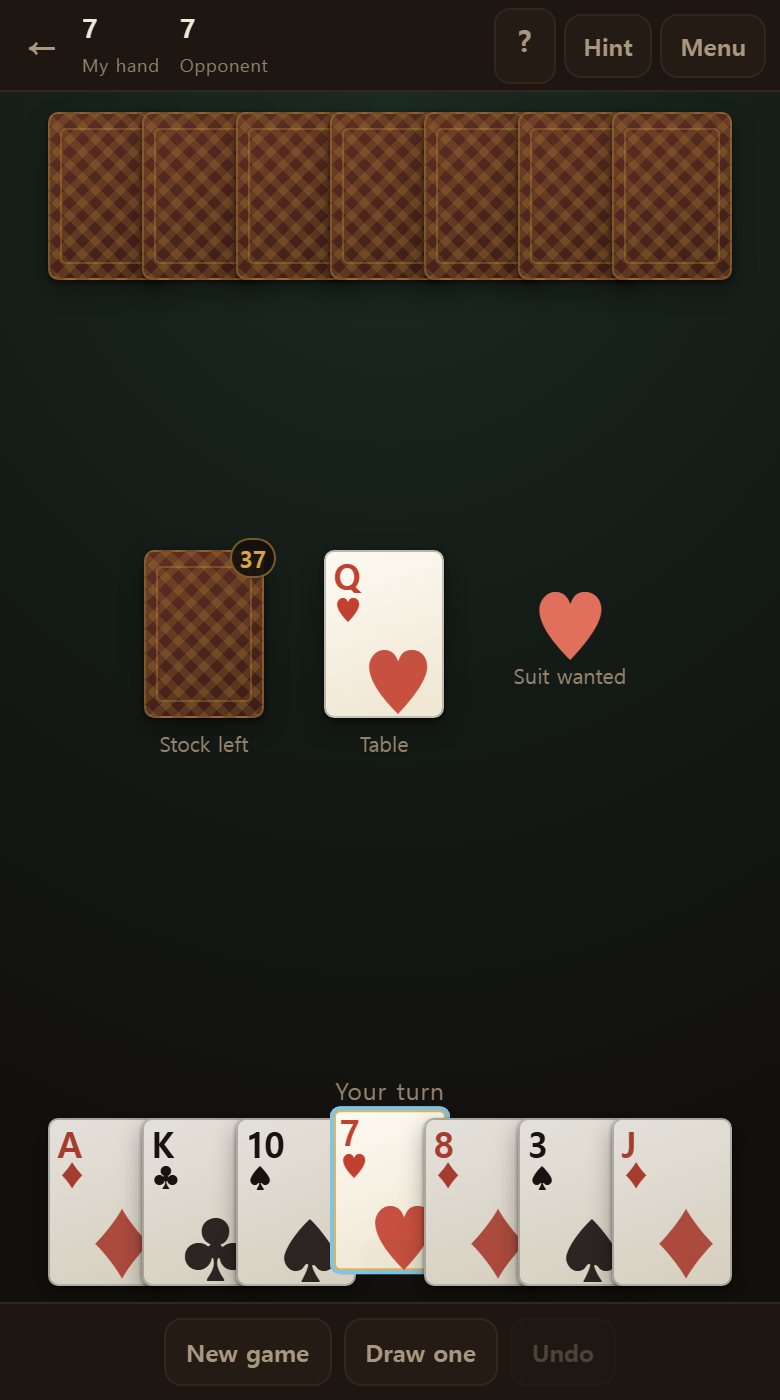
First, a look at the screen
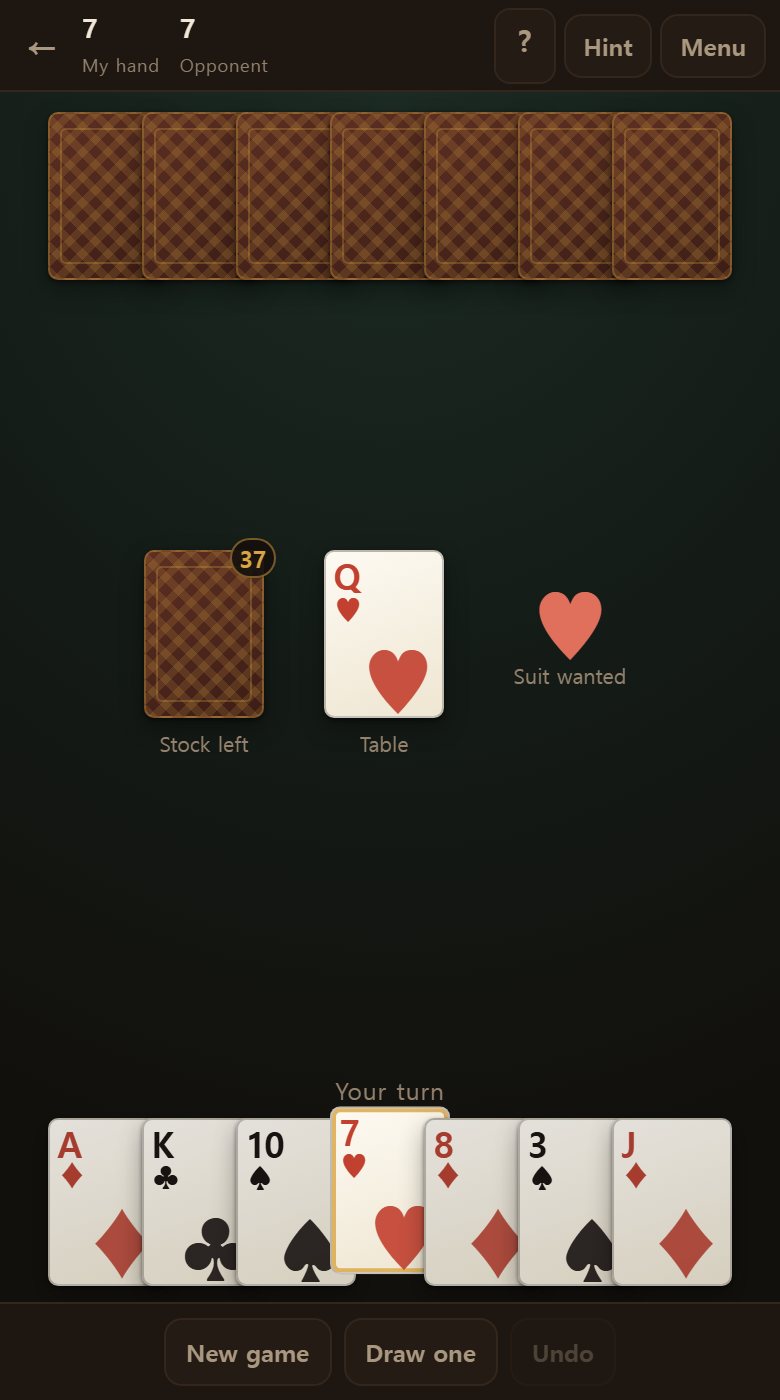
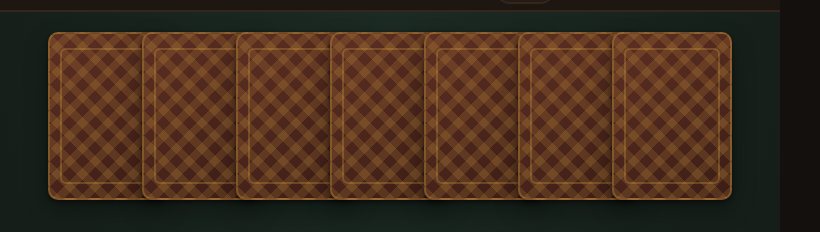
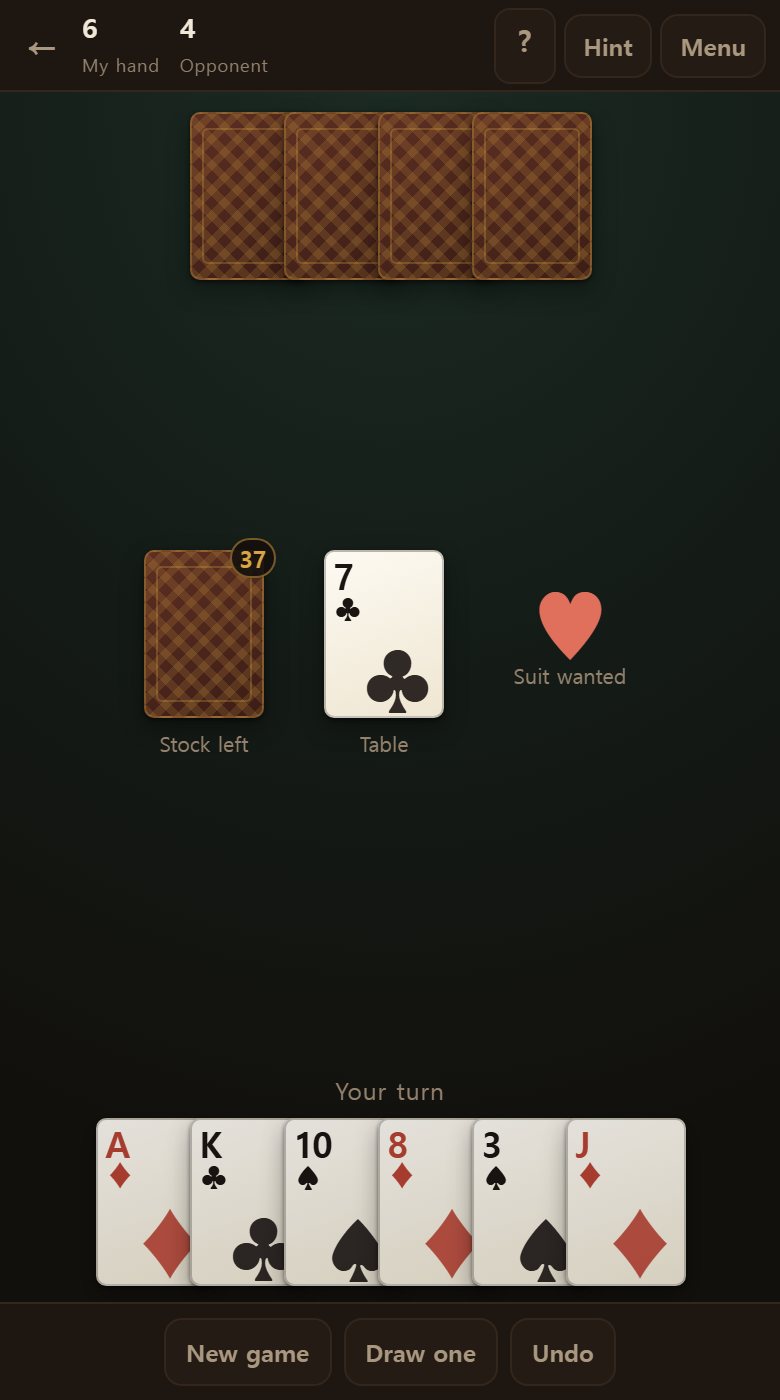
Their cards lie face down above, two piles sit in the middle, and your hand is below.
- The face-down cards at the top — their hand. You see how many, never what.
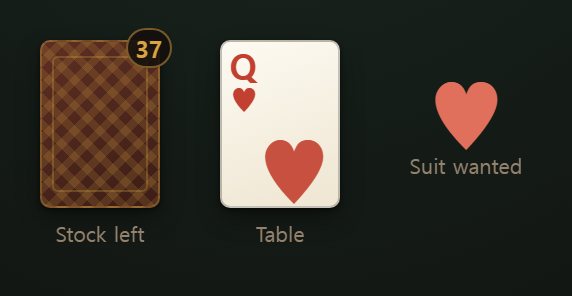
- Middle left — the stock. With nothing to play, you draw from here.
- Middle centre — the table. You play against this card.
- Middle right — the suit wanted. Playing a 7 changes it.
- The bottom — your hand. Cards with a gold ring are the ones you can play.
A playable card lifts slightly, so you can see it without knowing the rule.
Seven cards each to start
You and the computer take seven cards each, and one card is turned face up on the table to begin.
The remaining thirty-seven make the stock.
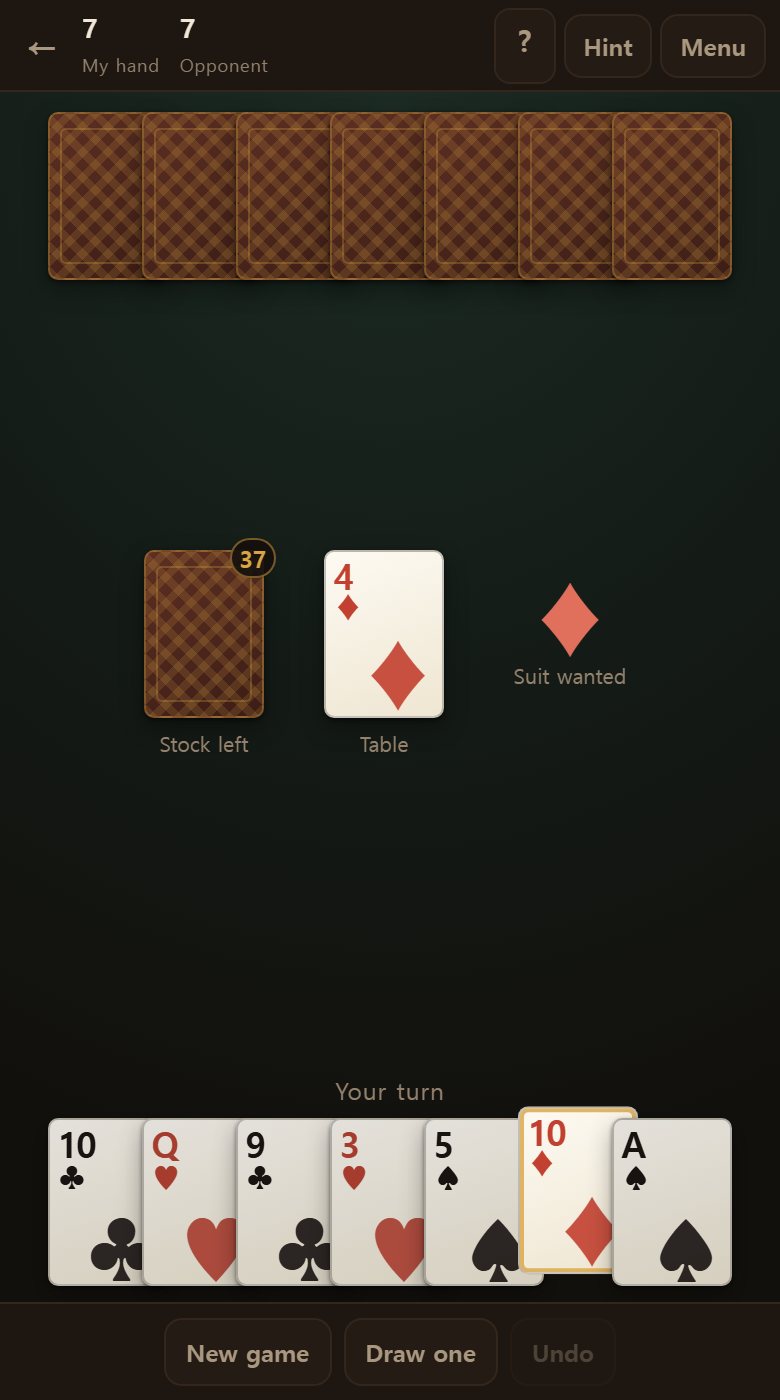
The opening card is chosen to be a plain one. A 7 or a 2 turning up first would leave it unclear who chooses the suit or who draws.
Match the suit or the rank
This is the base rule. With 6♠ on the table, you may play:
- any ♠ — 2♠, 9♠, K♠ …
- any 6 — 6♥, 6♦, 6♣
- and a 7, which is always playable (explained below).
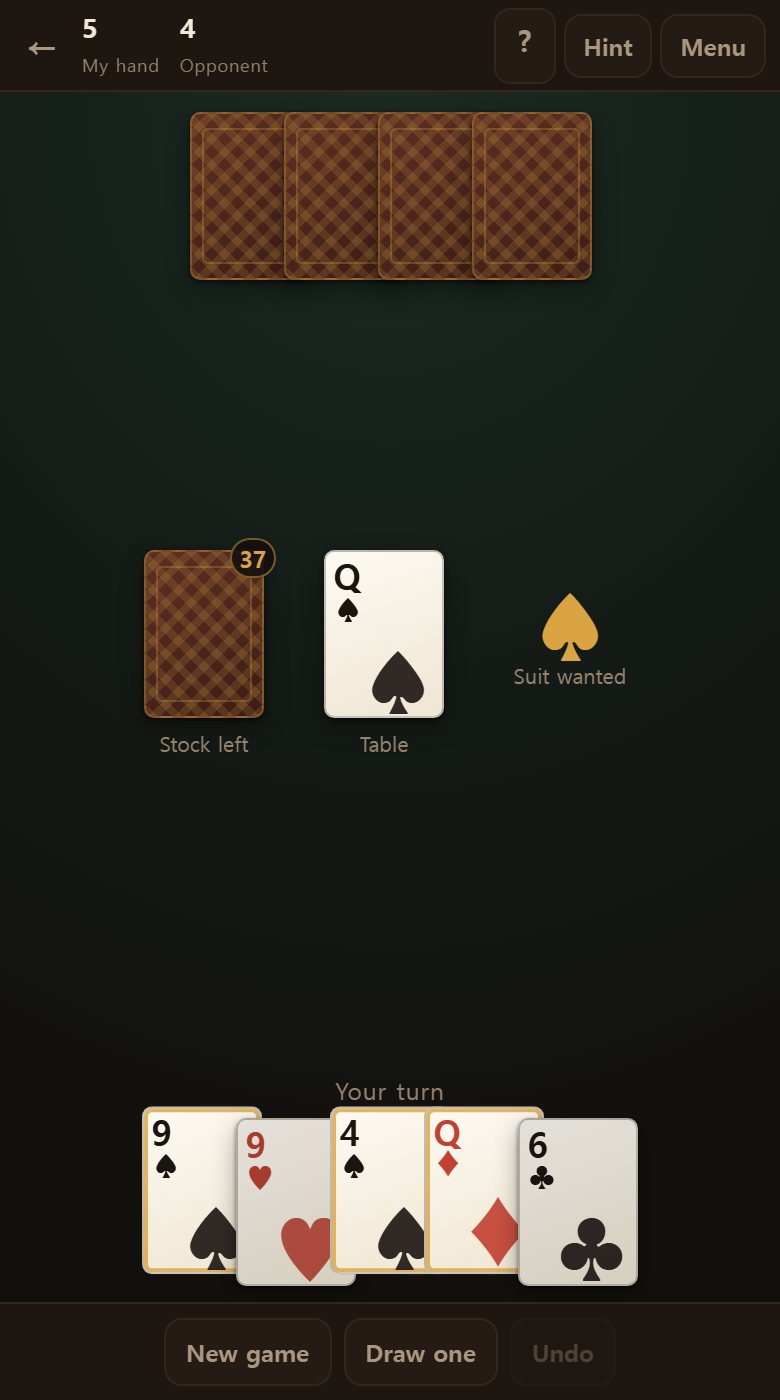
With nothing playable, you draw one from the stock. Even if it would have been playable, it cannot go down that turn — it waits for the next. Which is why several cards of one suit is a good hand. If the table comes round to that suit they go out in a stream, and if not, at least one of them tends to match by rank.
2 and A make them draw
This is where it gets interesting.
Play a 2 and they draw two. Play an A and they draw three.
- Unless they hold a 2 or an A of their own, in which case they can answer.
- An answer makes the penalty stack. A 2 followed by an A is 2 + 3 = five cards.
- Whoever cannot answer draws the whole stack.
- The stacked total shows in red in the middle of the screen.
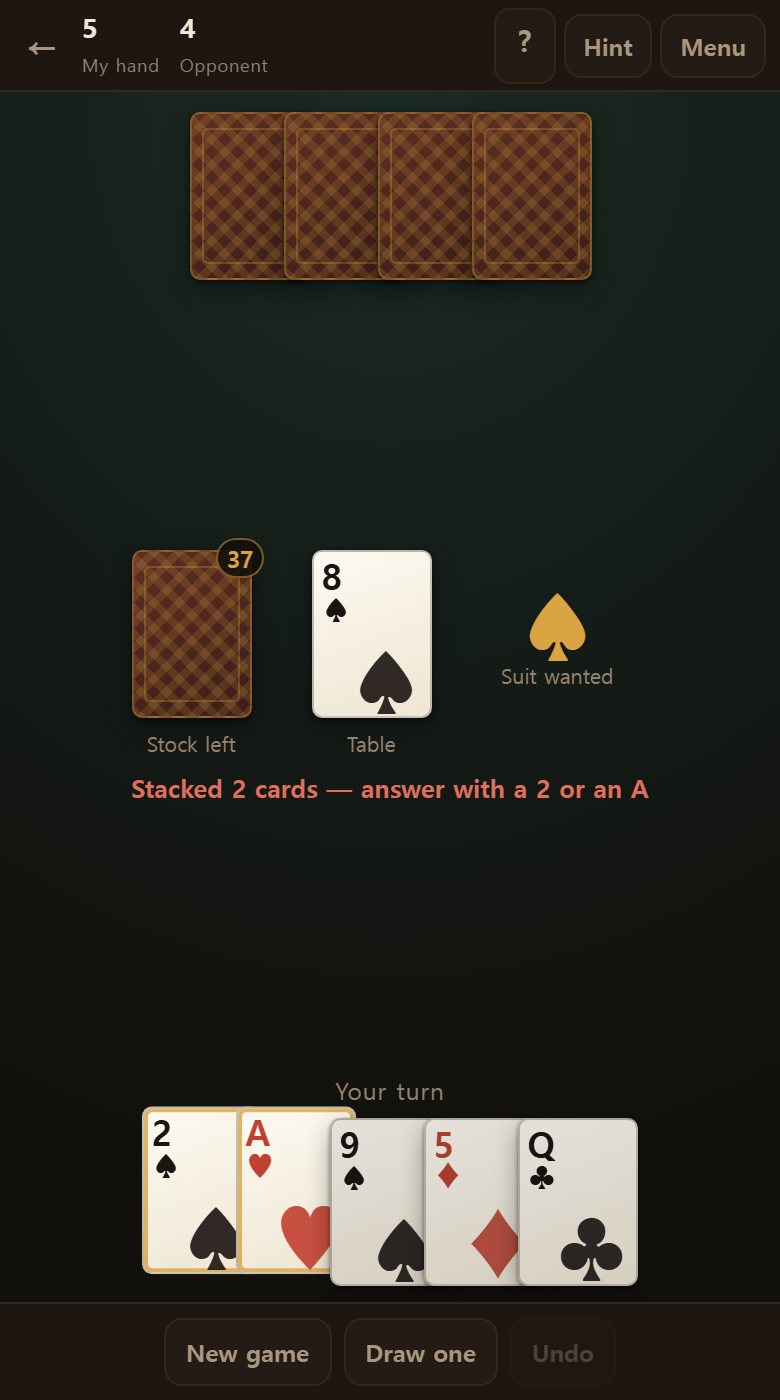
While an attack is stacked, nothing but a 2 or an A can be played — matching suits included.
When to play a 2 or an A
These are the strongest cards in the game, and spending them at random is a waste.
Making someone with a full hand draw two or three barely registers. Played when they are down to one or two, the same card turns the game.
- Keep watching their card count at the top of the screen.
- When they are down to one card, hit them without hesitation. That card cannot go down.
- Conversely, if you are down to one and they play a 2, you are back to three. Be careful.
- An A makes them draw three, which makes it worth more than a 2. Save it for last.

7 changes the suit
The 7 is special: it can be played at any time, whatever is on the table.
After playing it, a panel asks you to choose the suit that comes next. Your choice is shown in the middle of the screen.
- As a rule, choose the suit you hold most of.
- If they have just drawn rather than play a particular suit, choosing it blocks them again.
- The 7 is the key you keep for when you are stuck. Save it.
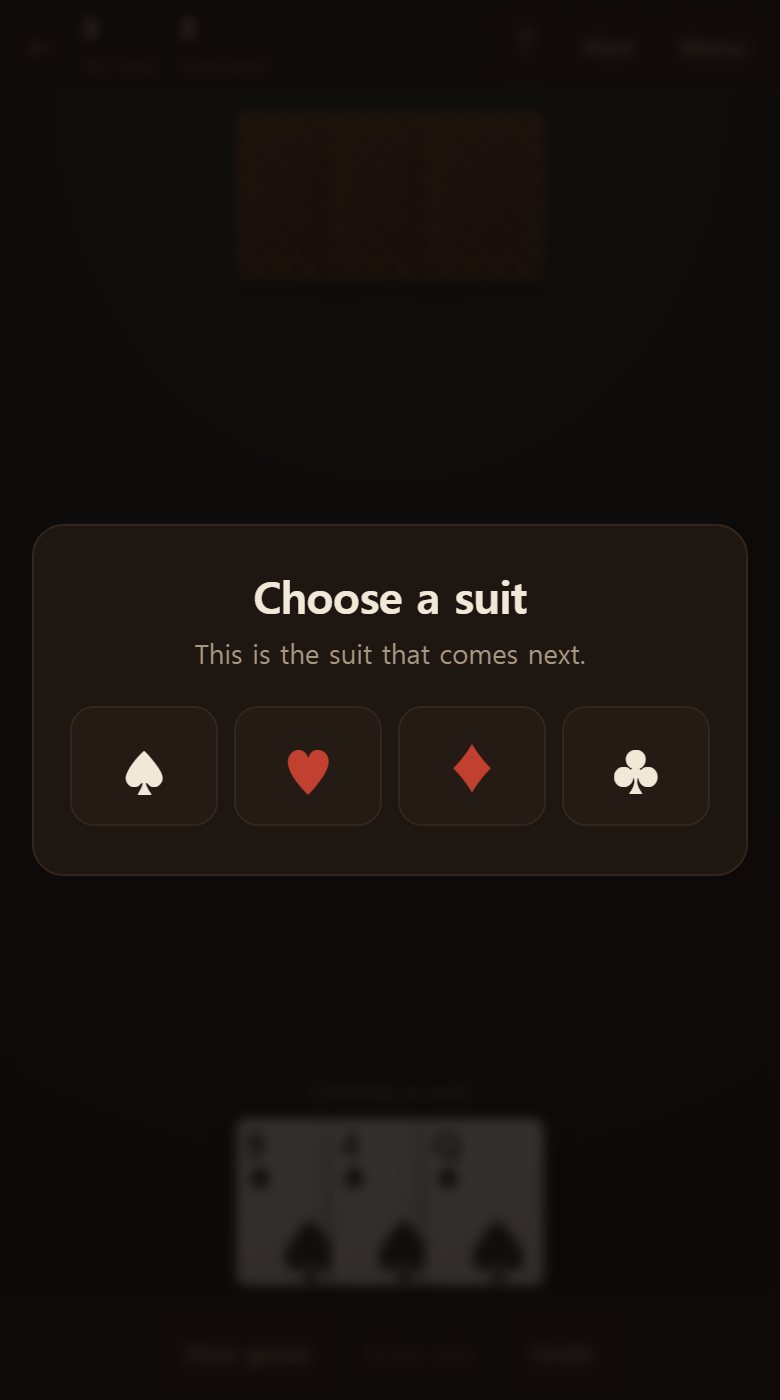
Playing a 7 and choosing a suit ends your turn. You do not play again.
J skips, K goes again
Two more cards matter.
A J skips their turn. They sit one out and you play again.
A K lets you play again — excellent if you have something to follow it with.
- J and K both amount to the same thing: you play again.
- Follow a K with another K and you keep going.
- With two or three cards left, finishing on a J or a K leaves them no chance to act.
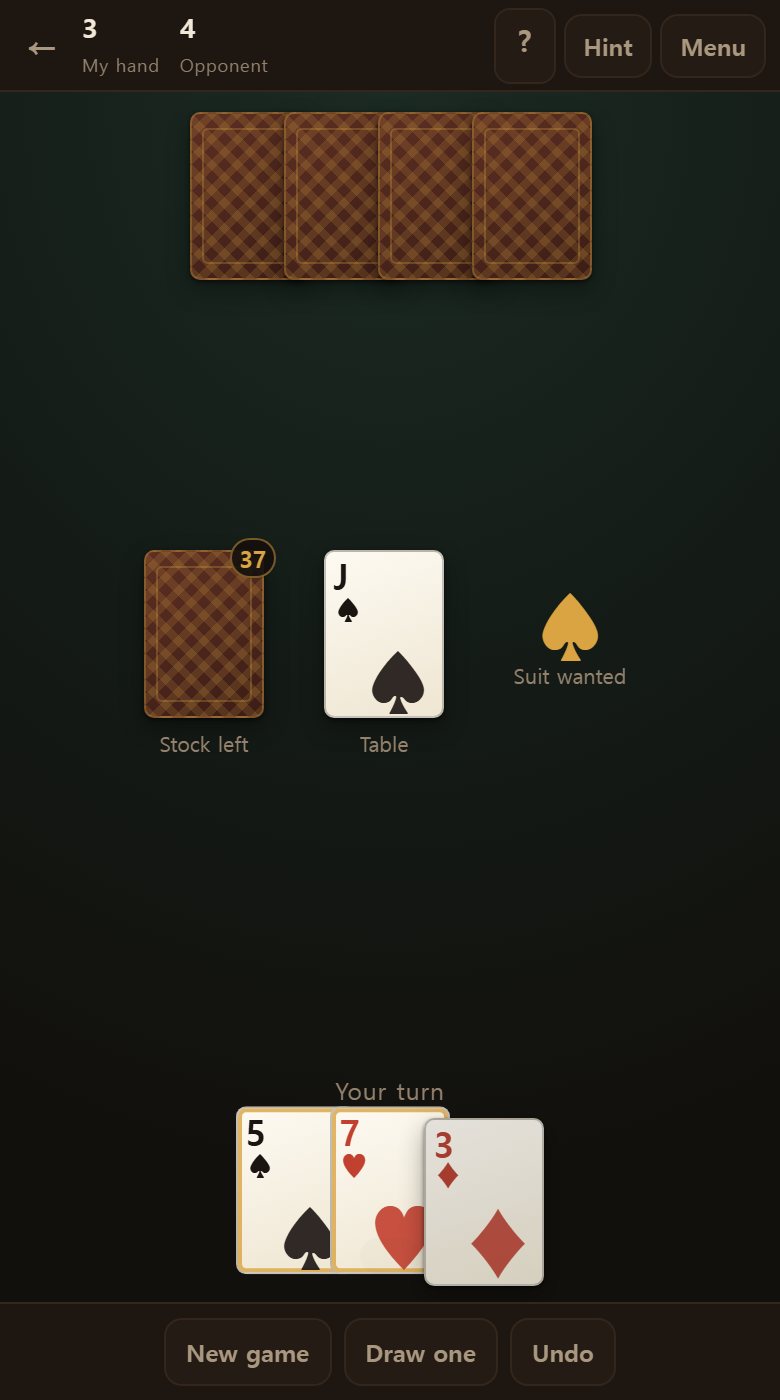
So a J or a K is the card to keep for last. Ending on plain numbers hands them a turn.
How to play well
There is luck in this game, but the skill is in what you play and when.
- Shed a suit you hold only once first. If it comes up you will be drawing instead of playing.
- Holding several of one rank is solid. Whatever the suit becomes, the rank still plays.
- Remember which suit made them draw. You can block them with it.
- From about three cards left, plan the order you will play them in.
- Keep the attacks (2, A) and the key (7) for the end.
- Do not play everything you can. The game is about choosing what to keep.
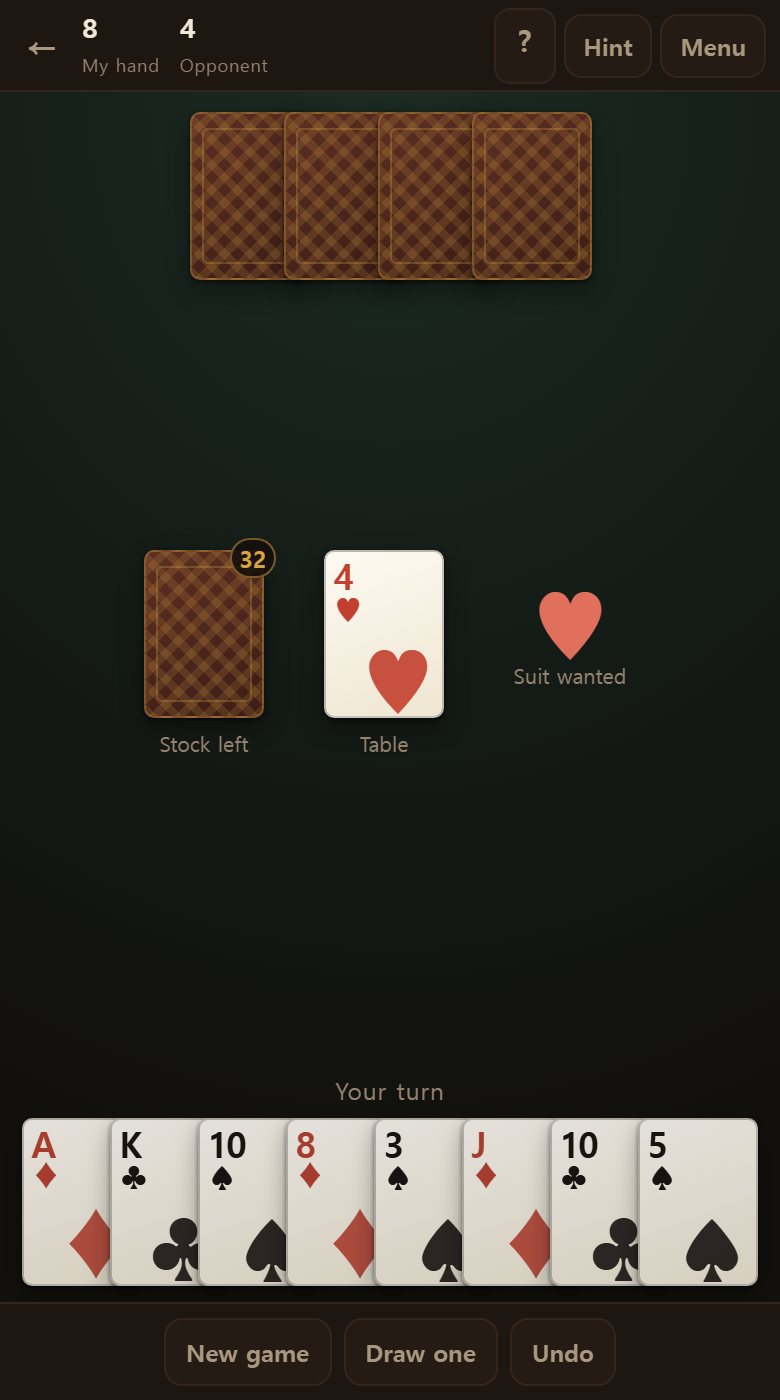
The order to shed in, in one line: lone suits → common ranks → J and K → 7 → 2 and A. The front of that list is dead weight if you keep it; the back is where your late-game strength lives. Keeping to it alone will jam your hand far less often.
When the stock runs dry
The stock does run out sometimes. When it does, the discards on the table are turned back over — all but the top card — and become the stock again.
So a game never stops for want of cards.
- The stock figure at the top tells you how many are left.
- A shallow stock makes an attack worth more — what they draw will be cards straight off the table.
- A stock rebuilt from the table is made of cards you played earlier. You can guess what is in it.
This is why the game always ends. With nothing to play you draw, and with nothing to draw the stock is rebuilt.
The computer cannot see your hand
The computer plays from its own hand and what is showing on the table. It does not know what you hold.
All it knows is how many cards you have — exactly as a person would.
- The only thing you can see about them is the count.
- The same is true in reverse — they see only your count.
- Which makes counting cards the whole of reading this game.
- If a particular suit keeps making them draw, they do not hold it. Dig there.
So the computer never blocks a card it could not have known about. A loss is bad luck, or a badly planned order.
Undo and hint
Played the wrong card? Press Undo below. Their reply comes back too, returning it to your turn.
If you cannot decide, press Hint. It picks a card using the same reasoning the computer uses.
- The card it picks gets a blue ring.
- “Nothing to play” means you have to draw.
- Space draws a card; H asks for a hint.
- Undo is Ctrl+Z on a keyboard.
The hint does not read ahead. In a game where the other hand is hidden, it cannot. It simply picks what looks good from here, so take it as a suggestion.
To win
Play out your hand first and you win.
The menu can set the opponent to Easy, where it plays whatever comes to hand. On Normal it saves its attacks and strikes when you are down to one card.
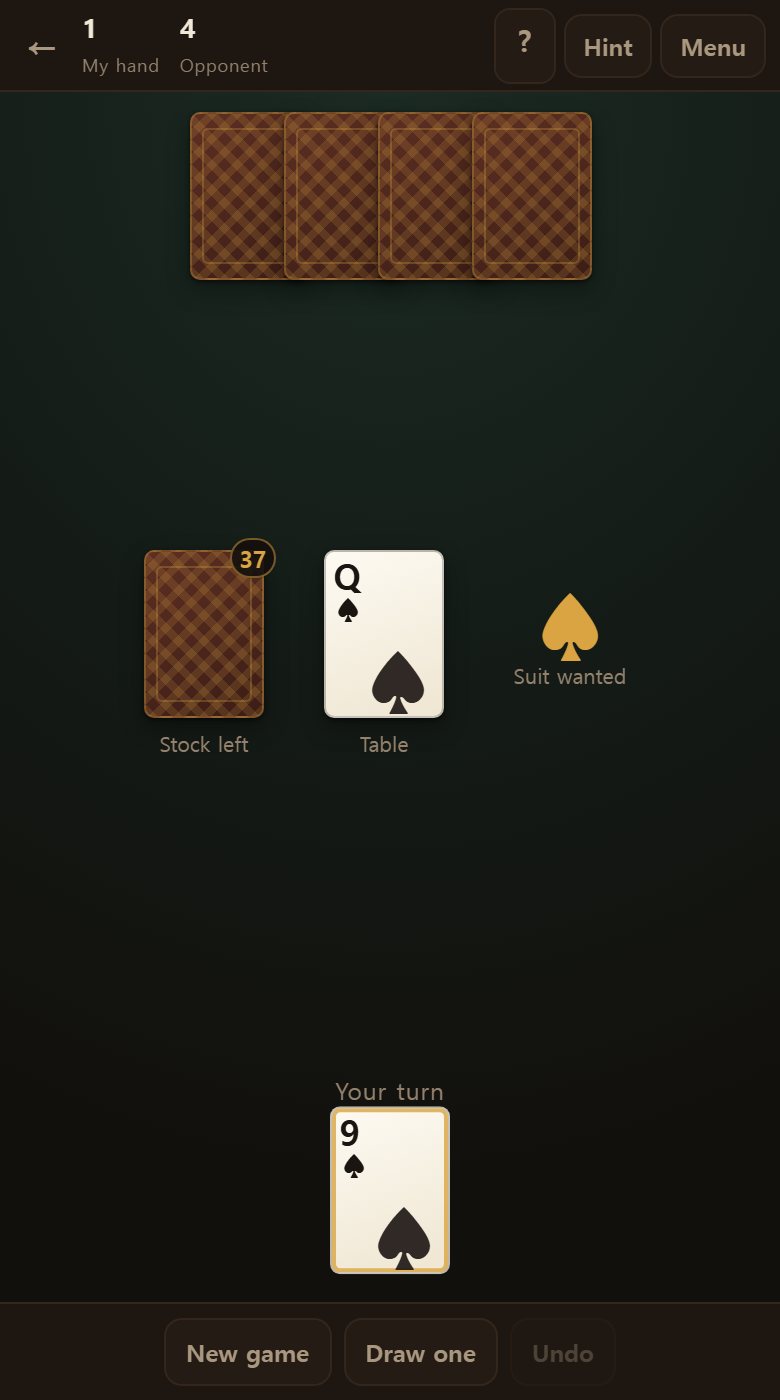
- There is nothing to declare on your last card. They can see the count anyway.
- Even if your last card is an attack, simply playing it wins.
- But if that last card is unplayable you draw, and you are back to two.
When a game ends
Whoever empties their hand first wins. The game ends there and your tally of wins is shown.
- On a loss it tells you how many cards you had left, so you know how close it was.
- New game deals the cards afresh.
- Your wins stay on this device. Nothing is sent anywhere.
- They are counted as one tally regardless of opponent strength.
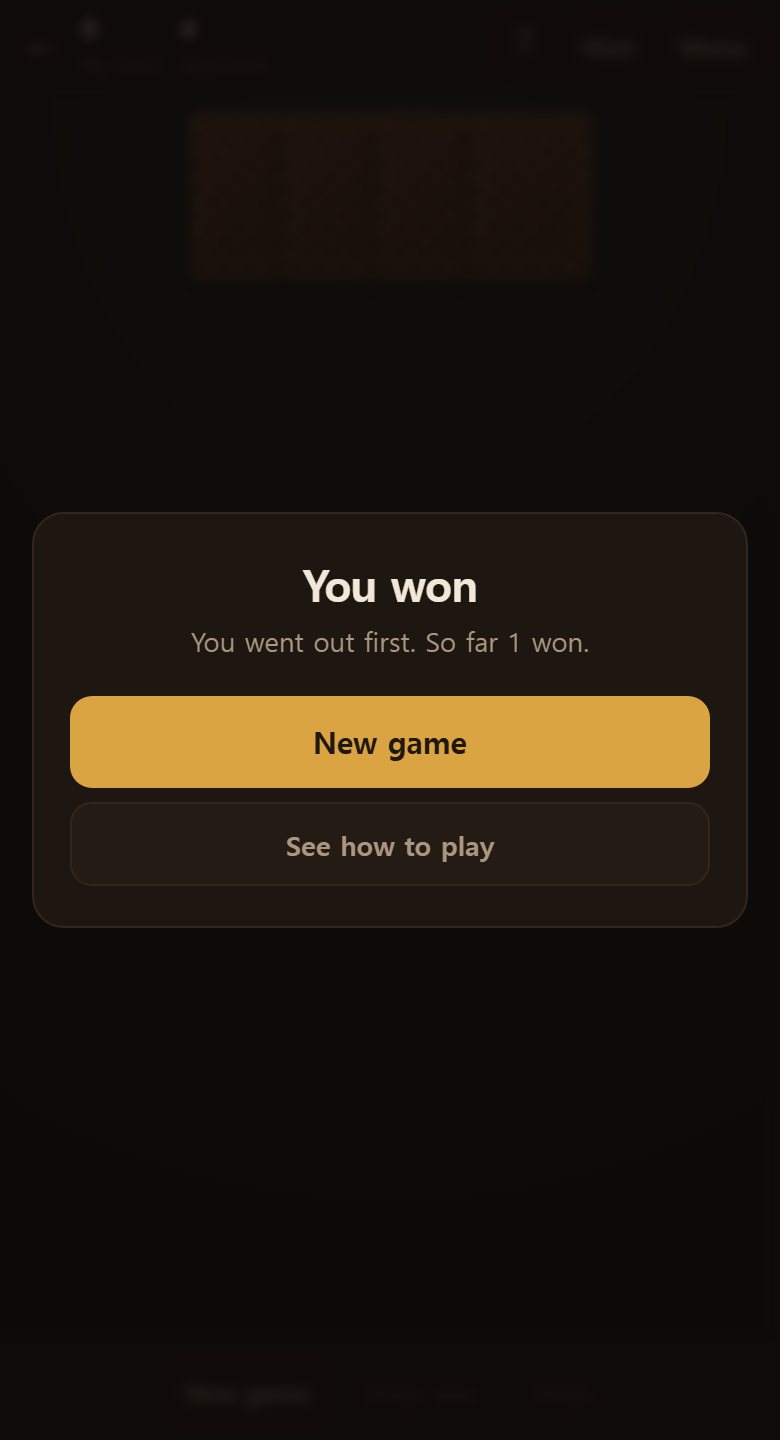
Look back at a lost game and it usually turns on when the attacks were spent. Too early and you have nothing for the finish; too late and you lose holding them.
Undo
Press Undo at the top and your last play never happened. Your card and their reply come back together. On a keyboard it is Ctrl+Z.
- A card you drew goes back to the stock too.
- A suit called with a 7 reverts as well.
- You can undo as far back as the start.
- The computer answers the same position the same way, so undoing and playing differently shows you what changed.
Since the other hand is hidden, undoing cannot show you the future. But it does show you why the order you played in was poor.
The last two or three plays decide it
This is not a game won early. Both hands start at seven and come down together; it turns on the last two or three plays.
- So early on all that matters is the order you shed in — lone suits first.
- The reckoning begins the moment they reach two cards. From there you spend what you saved.
- At two cards yourself, settle your last two plays in advance. Improvising jams you.
- A J or a K as your last card ends it before they can act.
- When they are on one card, you must either finish within your turn or block them with an attack.
Spend the attacks early and you have nothing at the very point the game turns. Saving them is winning.
Common mistakes
Games are lost, more often than not, in one of these four ways.
- Spending the attacks early — the commonest of all. A 2 or an A against a full hand makes them draw a few cards and tilts nothing. All it does is leave you empty at the finish.
- Spending the 7 early — a 7 is playable at any time. Throw that away early and later you will be drawing for want of anything to play.
- Keeping suits scattered — a little of this and a little of that means jamming every time the table changes.
- Not watching their count — play something else while holding an attack against their last card and you simply lose.
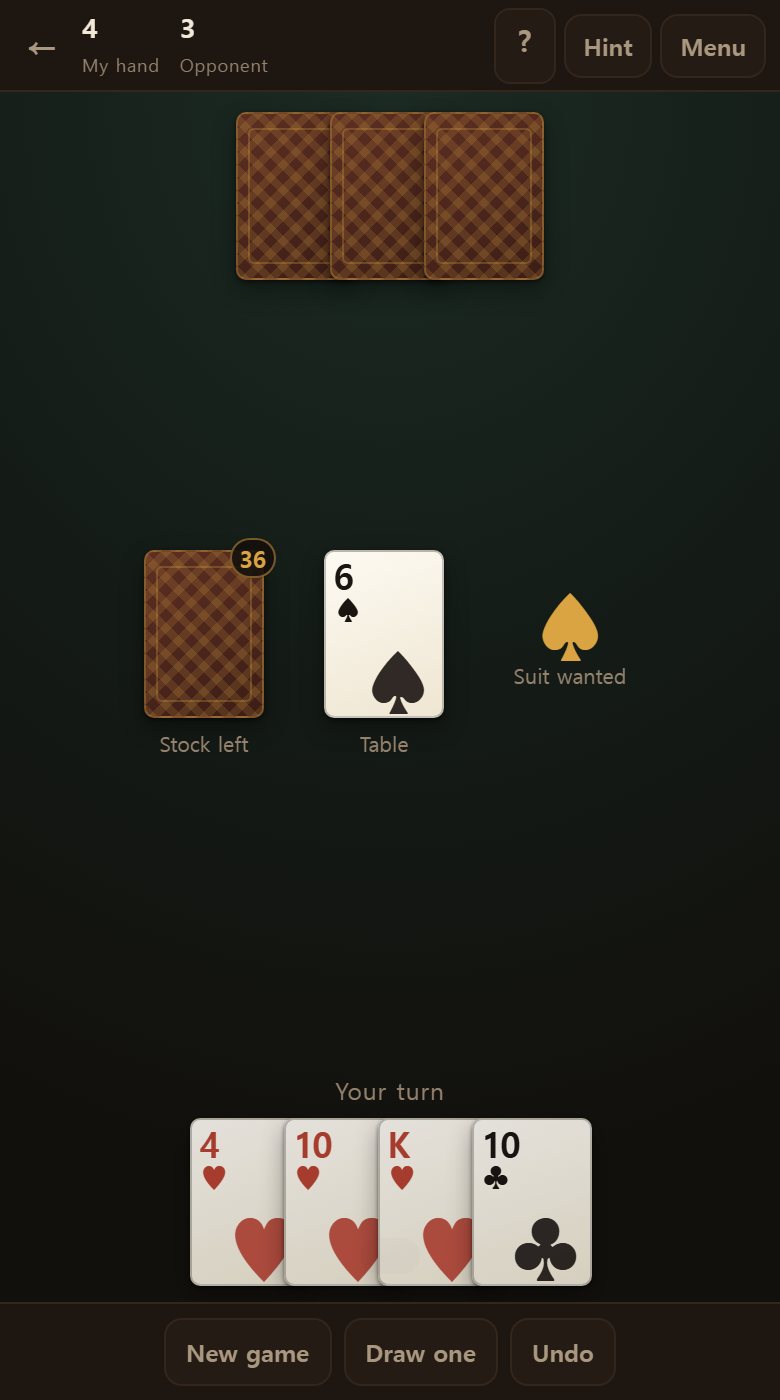
All four come from playing a card because it happens to be playable. This is not a game of playing everything you can, but of choosing what to keep.
Common questions
It has to match the table by suit or rank. Only cards with a gold ring can be played.
While an attack is stacked, only a 2 or an A can be played. The stacked total shows in the middle of the screen.
No. Drawing ends your turn. It waits for the next one.
Yes. Nothing else can happen until you do. Choose the suit you hold most of.
As many as you can make. Follow a K with another and it keeps going.
The discards are turned back over into a new stock. The game does not stop.
None. Short rules are what let a newcomer sit straight down, so they were left out.
- Save your 2s and As. They are worth most when the other side is down to one card.
- Get rid of a suit you hold only once. If it comes up you will be drawing instead of playing.