 MindHub
How to play Janggi
Janggi is traditional Korean chess. Capture your opponent’s general and you win. Each piece travels its own way, and knowing those ways is all you need to start playing. Here, tapping a piece marks every square it can reach with a dot. So there is no need to memorise the rules before you begin — tap around and learn as you go. Every picture below was taken from a real board, with one piece tapped. Read it, then do the same and you will see exactly the same thing.
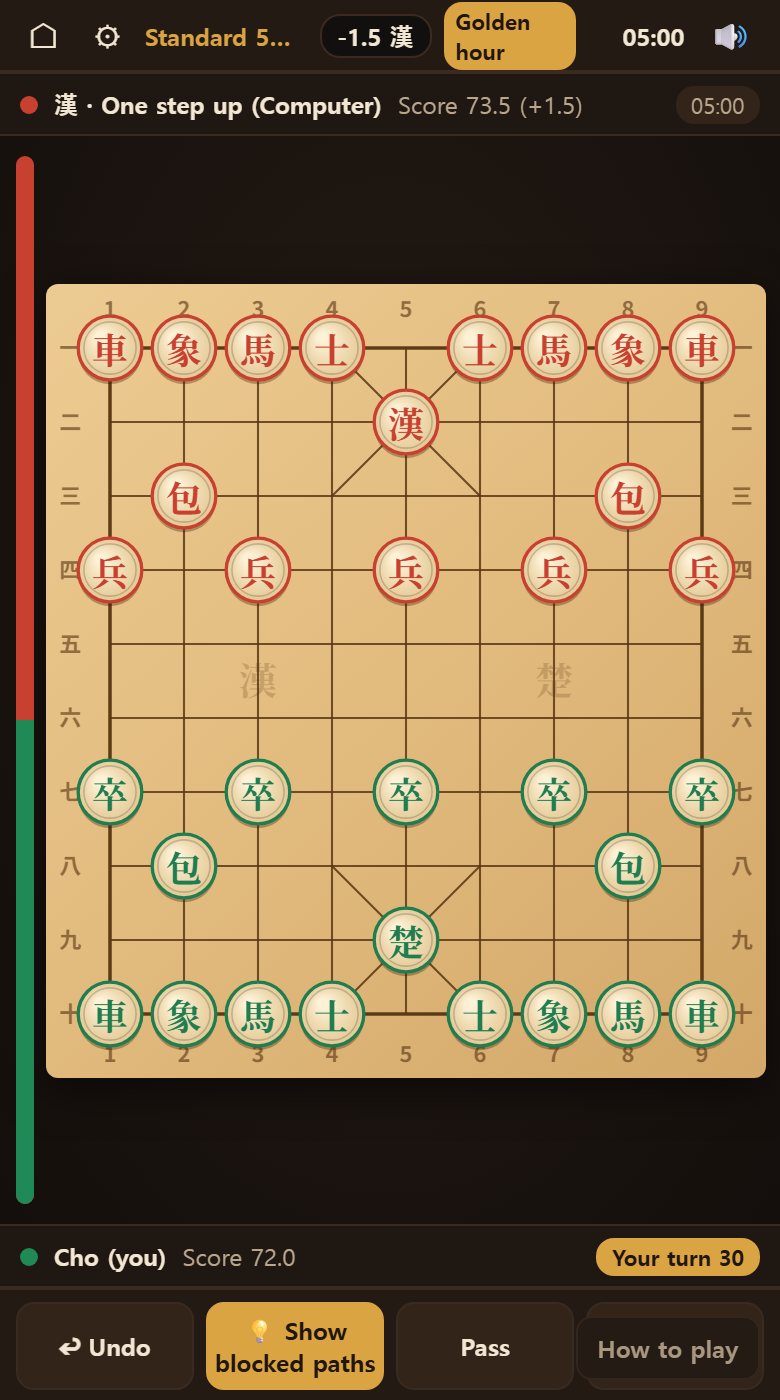
First, look at the board
Nine lines across, ten down. Pieces sit not inside the squares but on the points where lines cross.
- The 3 × 3 squares at each end — the palaces, with diagonals drawn across them.
- Cho (楚) is at the bottom, Han (漢) at the top. Cho moves first.
- The name bars top and bottom — whose turn it is, how much time is left, and the score.
- The coloured bar on the left — shows your time running down.
- There is a line across the middle that looks like a river, but unlike Chinese chess, janggi has no restriction on crossing it.
- Numbers along the edge — 1 to 9 across, 一 to 十 down. They are how moves are written down.
- The score on the name row — the value of everything you still have on the board. It changes the moment a piece is taken.
Setting up before you start
Press Change beside Play the computer now and you can set three things before the game.
- Game mode — Classic (5 minutes, 30 seconds a move) or Blitz (3 minutes, 10 seconds a move).
- Computer strength — Beginner, Intermediate, Expert.
- Setup — how the horses and elephants are arranged.
- Horse-Elephant-Horse-Elephant / Elephant-Horse-Elephant-Horse — putting the horses on the outside gets them into play sooner.
- Horse-Elephant-Elephant-Horse — both elephants sit in the middle, so the centre is thick. Good for defending.
- Elephant-Horse-Horse-Elephant — both horses in the middle, so you attack faster. The flanks are thinner for it.
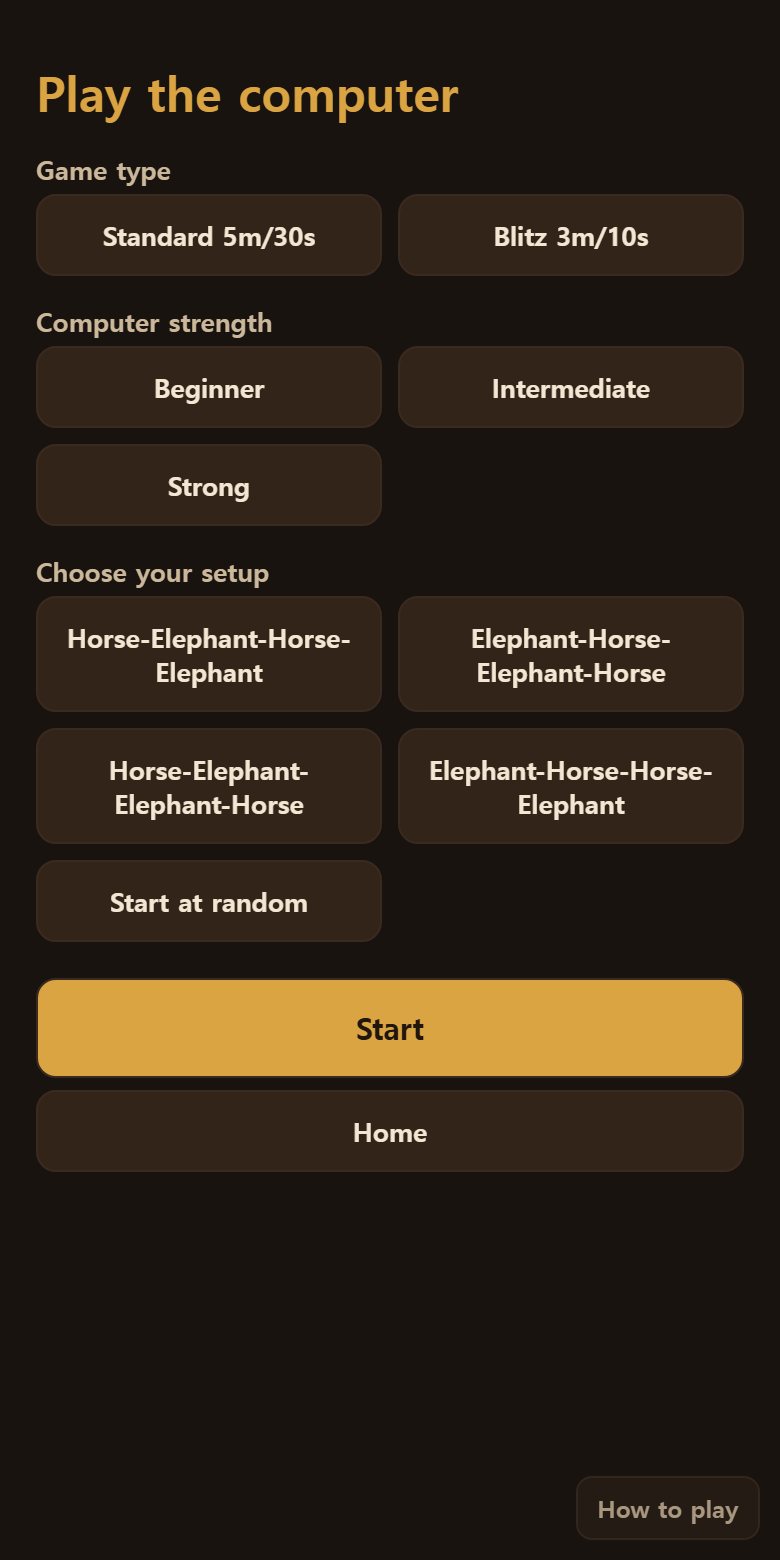
Setup is a delightful rule found only in janggi. Before play begins you may swap the positions of your horses (馬) and elephants (象). There are four arrangements — horse-elephant-horse-elephant, elephant-horse-elephant-horse, horse-elephant-elephant-horse, elephant-horse-horse-elephant — or you can start at random. Which you choose changes the game enormously.
Tap a piece and see where it can go
You do not need the rules memorised before you begin. Tap a piece once and everywhere it can go is marked with dots on the board.
In the picture the chariot (車) at the bottom left has been tapped. Two points above it carry dots. Beyond that its own soldier is in the way, so it can go no further.
- Tap the dot you want and the piece moves there.
- Tap a different piece and the selection moves to it.
- Tap somewhere it cannot go and you are told, in words, why not.
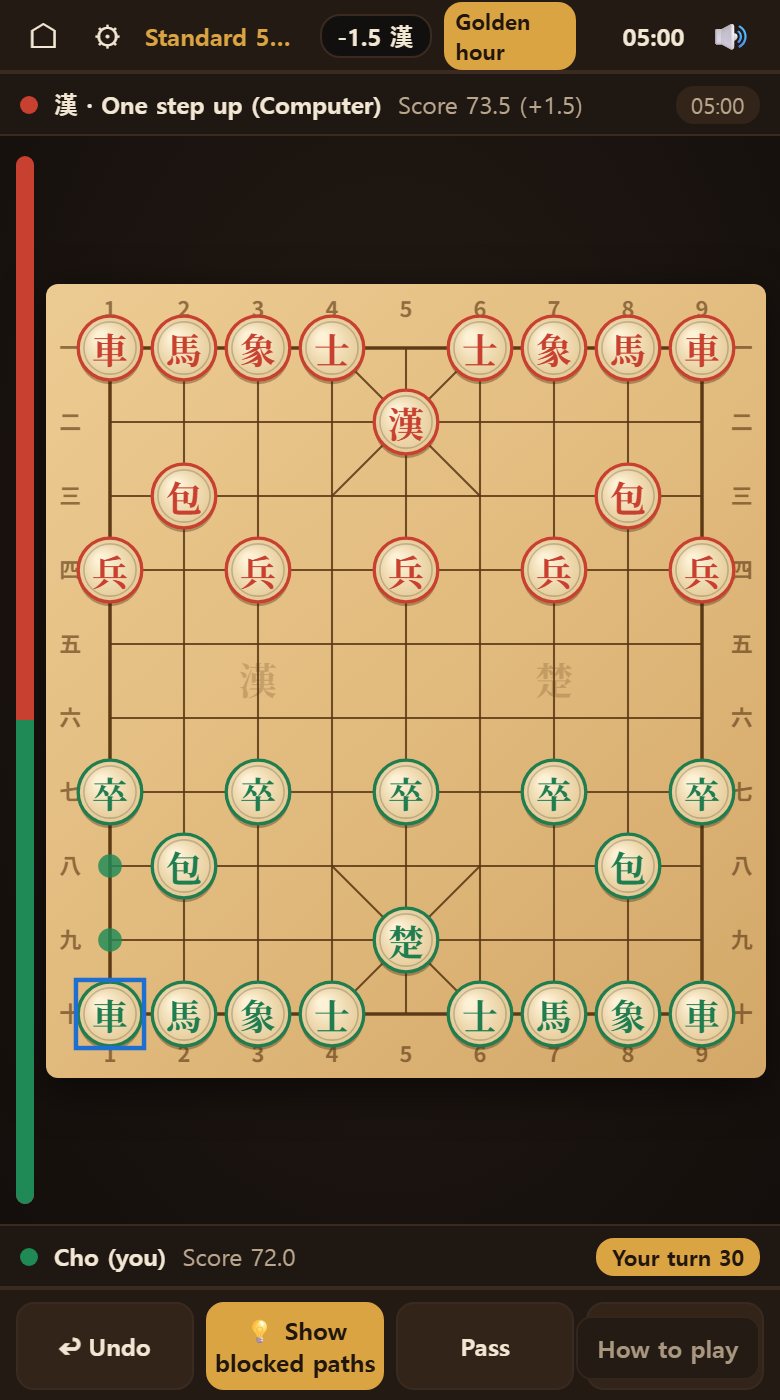
So at the start, tap the pieces one by one and watch where they go. That alone teaches you half the rules.
The palace — where the general and guards live
At each end of the board is a 3 × 3 square with diagonals drawn across it. This is the palace.
The general (王) and the guards (士) may never leave those nine points. In exchange, inside the palace they may also move along the drawn diagonals.
- The chariot travels the palace diagonals too.
- The cannon can leap along the palace diagonals as well.
- Soldiers too may move one point diagonally inside the palace.
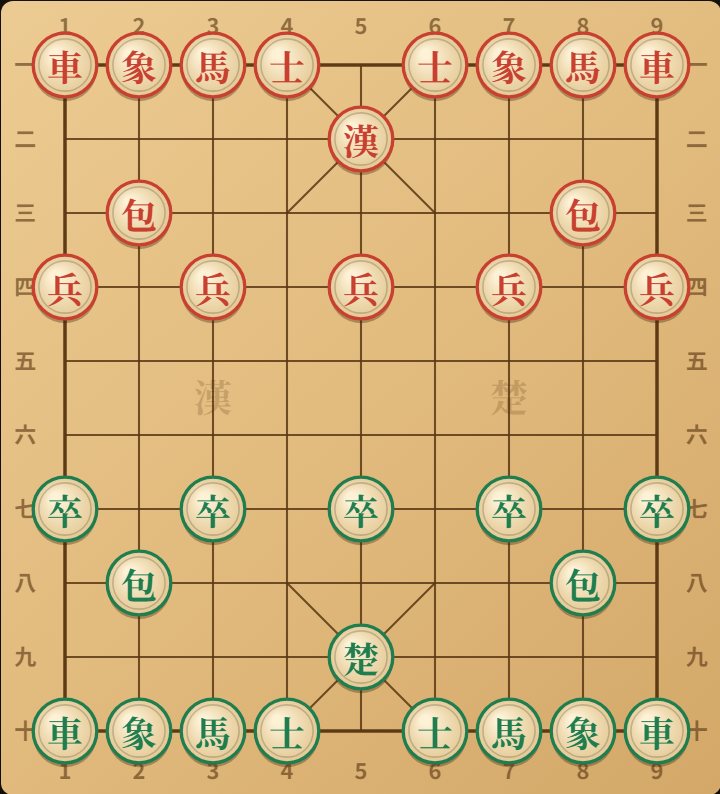
The centre point of the palace, where all four diagonals meet, matters most. An enemy chariot arriving there is very dangerous.
How many pieces are there?
Sixteen a side. There are seven kinds, but by how they travel there are only five.
The picture lays out one of each. Learn these and you have learned janggi.
- One general (王) — lose it and you lose
- Two guards (士) — they protect the general
- Two chariots (車) — the strongest pieces
- Two cannons (包) — they travel by leaping
- Two horses (馬) — they travel by turning
- Two elephants (象) — they turn and travel further
- Five soldiers (卒 / 兵) — they only go forward
- Every piece has a value — chariot 13, cannon 7, horse 5, elephant 3, guard 3, soldier 2.
- Add them up and you get 72. That is exactly the number shown above and below the board.
The characters look daunting, but there are only five kinds. Cho’s soldiers are written 卒 and Han’s 兵 — only the name differs; they move identically.
The chariot (車) — straight, as far as it likes
It runs across or down until something blocks it, however many points that is.
A piece in its path stops it. If that piece is an enemy, it captures and takes the point.
Inside the palace it runs along the diagonals as well.
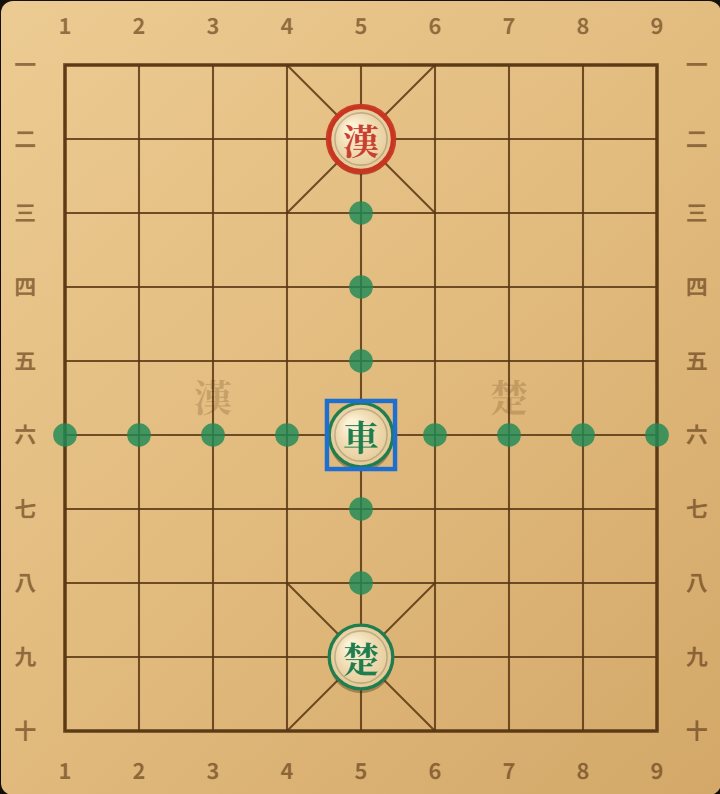
This is the strongest piece in janggi. Always watch what the enemy chariots are looking at. Give one away for nothing and the game is very nearly gone. Standing in the middle of the board as in the picture, it reaches over ten points in a single move. So a chariot earns its keep just by having its lines kept open. Crowd your own pieces in front of it and the strongest piece on the board becomes nothing at all.
The cannon (包) — it must leap exactly one
A cannon travels across and down, with a condition: there must be exactly one piece in its path, and it leaps over that piece.
Look at the picture. The cannon (包) on the left has been tapped and dots appear to its right — it is leaping the horse (馬) beside it. Earlier it could not move at all, having nothing to leap; sending the horse to that point opened its road.
- Nothing to leap, no move. Two or more in the path and it cannot leap either.
- The piece it leaps must not be a cannon. A cannon cannot leap a cannon.
- A cannon cannot capture a cannon either.
- The piece it leaps may be yours or your opponent’s; it makes no difference.
- Inside the palace it may leap along the diagonals too.
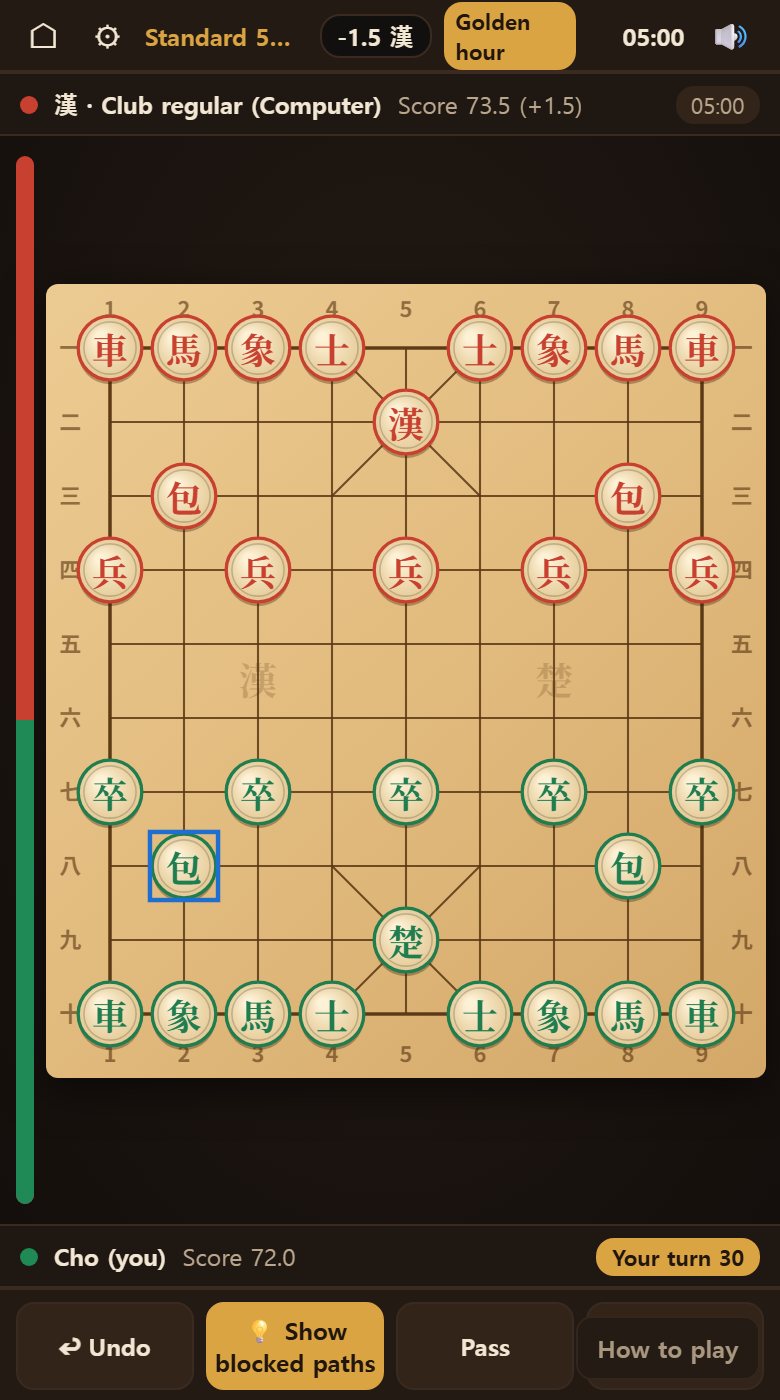
Remove the piece in front of an enemy cannon and it suddenly loses all its power — an excellent move. Conversely, putting a piece in front of your own cannon brings it to life.
Horse (馬) and elephant (象) — their road gets blocked
Both go one point straight first, then turn diagonally.
- Horse — one straight plus one diagonal (two points in all)
- Elephant — one straight plus two diagonals (three points in all)
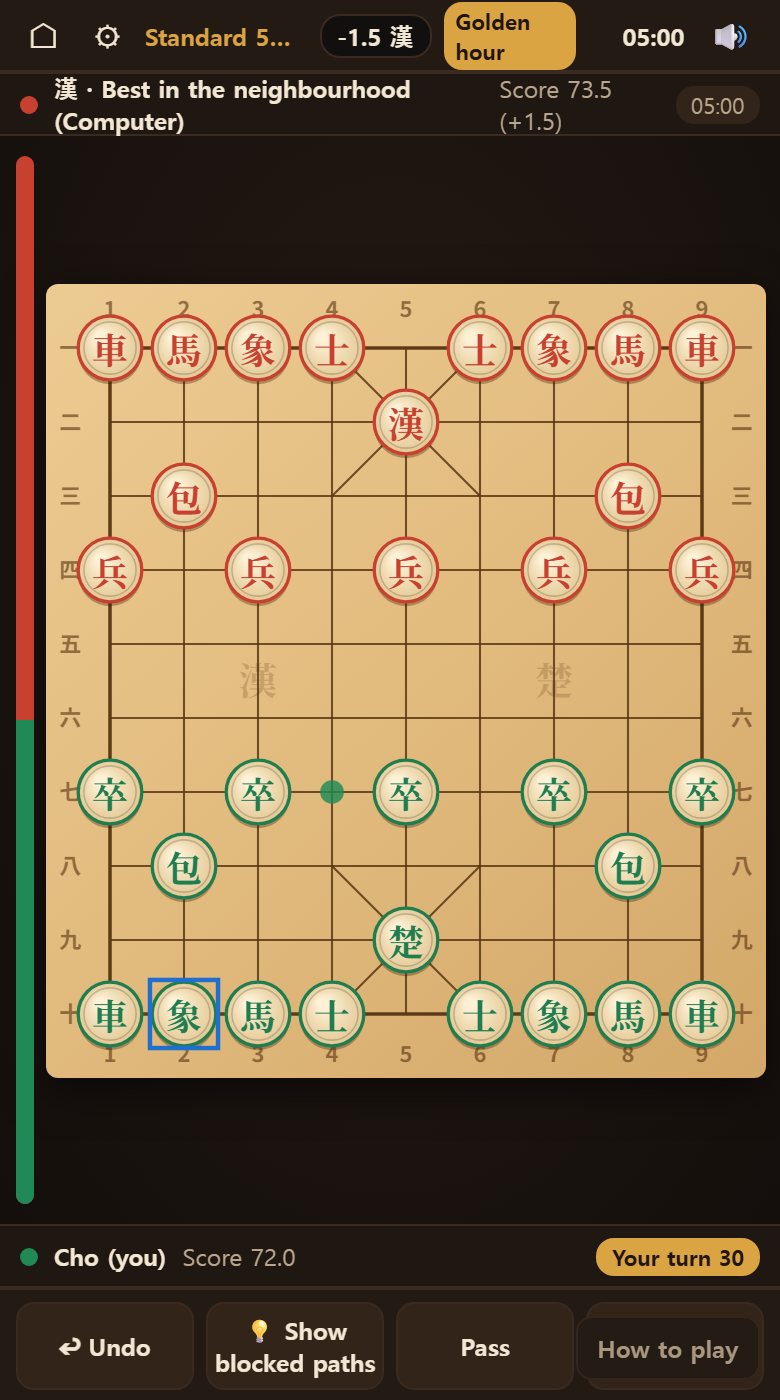
The important part: a piece anywhere along the path stops the move. Janggi pieces do not jump (the cannon alone excepted). This is called having the road blocked. In the picture the elephant (象) has been tapped and has exactly one square to go to. Every other way is blocked by its own pieces along the path. Turn on Blocked-road guide below and it points this out for you.
Soldiers (卒 / 兵) — one point forward or sideways
Soldiers move one point forward or sideways. They never move backwards.
Inside the palace they may also move one point diagonally.
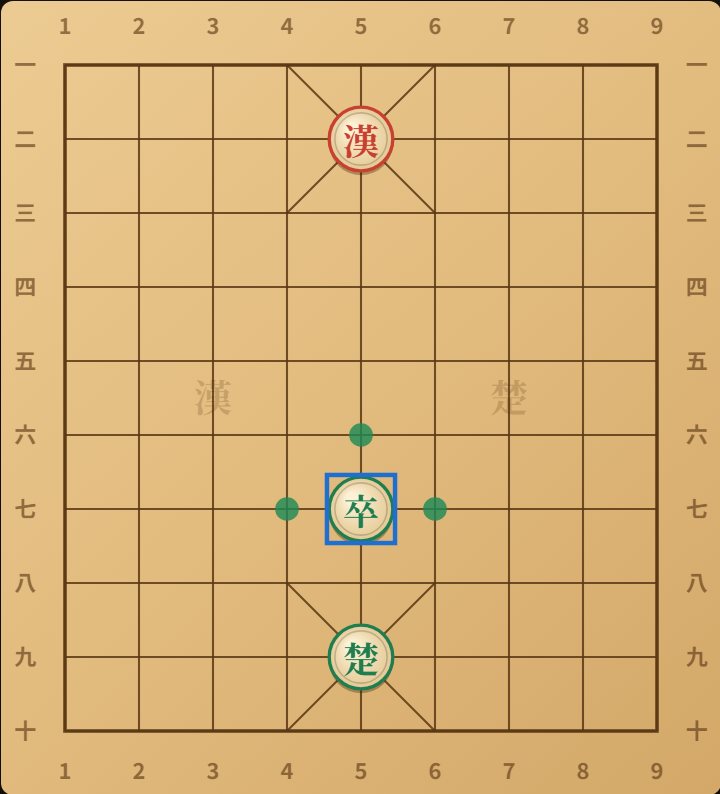
Since they cannot go back, do not push them out carelessly. Once forward, they never return. Five of them abreast, though, are as solid as a wall. What sets them apart from a western pawn is that they can move sideways. So a line of soldiers can be shuffled across to plug a gap — and that same sideways step is how you take away the piece an enemy cannon was leaping.
General (王) and guards (士) — inside the palace only
General and guards move one point at a time within the 3 × 3 palace, and along the drawn diagonals where those run.
Guards exist to protect the general, and are usually kept right beside it.
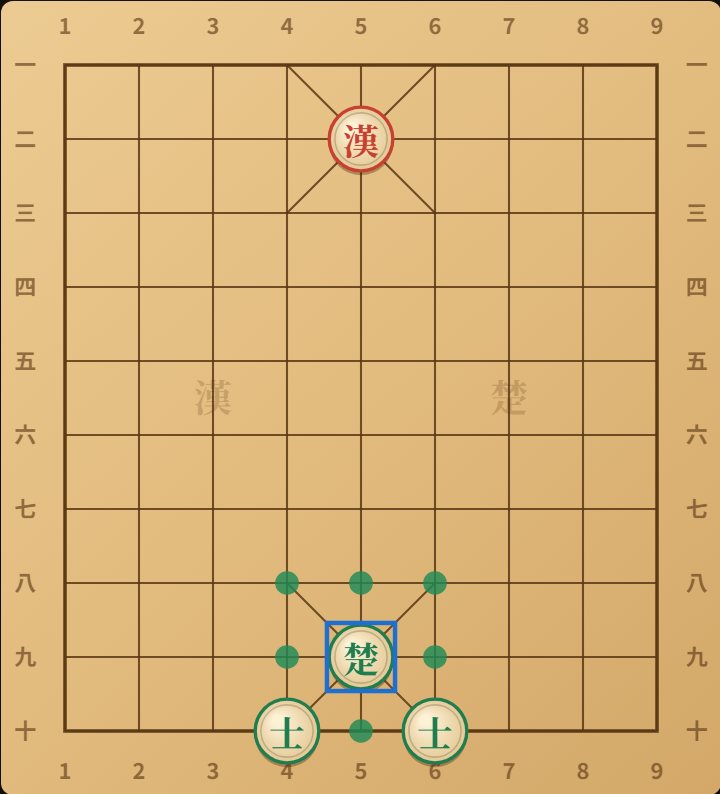
Of the palace’s nine points, the centre matters most, since all four diagonals meet there. An enemy chariot arriving there is very dangerous. With the general in the centre it can step away diagonally in any direction. Cornered, it has only two places to go and is easily mated. Keeping both guards right beside the general is the basic setup.
Check and checkmate
When the enemy general stands where it could be captured next move, that is check. The side in check must answer it.
There are three ways.
- Move the general to safety
- Capture the checking piece
- Block the line with another piece (possible only against a chariot or cannon)
- You cannot simply ignore a check and play elsewhere. Tap such a move and nothing happens.
- If answering one check leaves another check standing, that move is not allowed either.
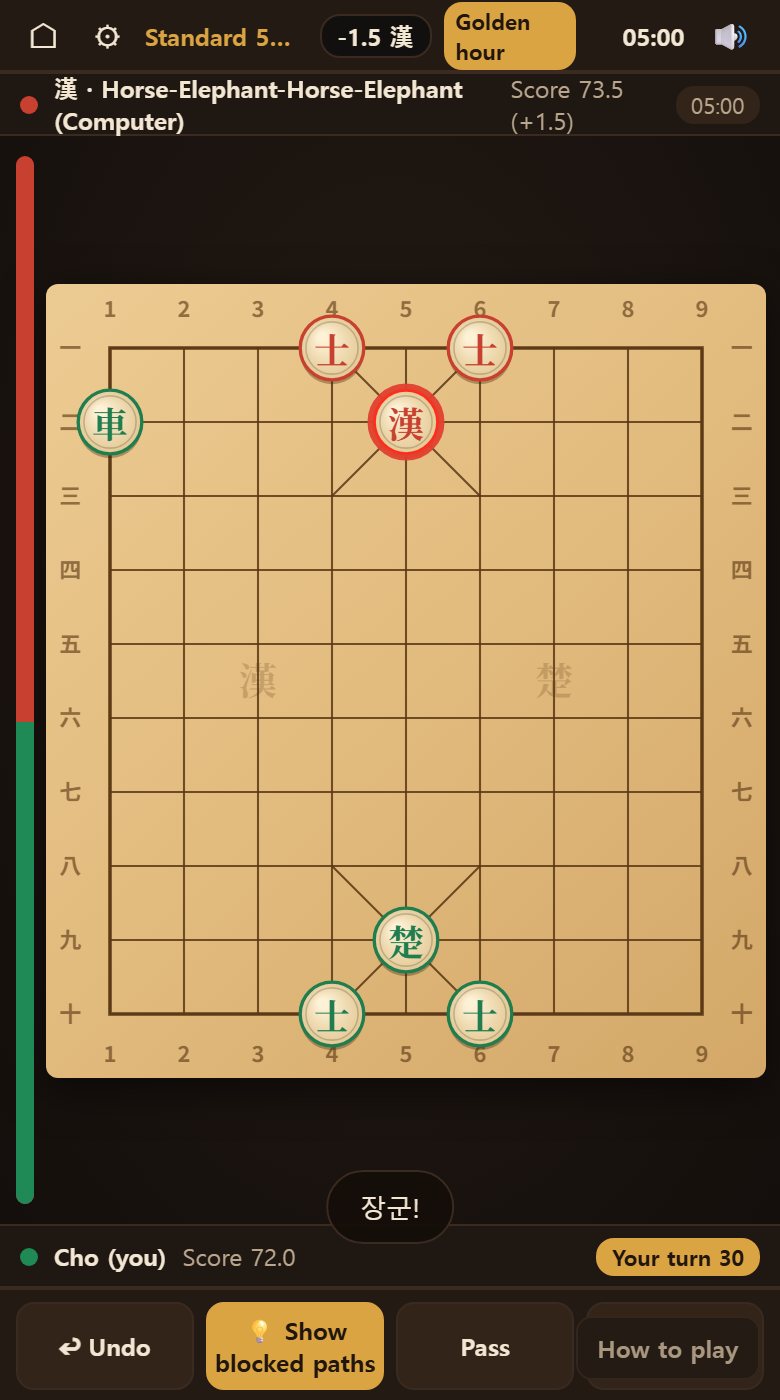
If nothing works it is checkmate and the game ends there. The screen announces every check, so you will not miss one. Checking over and over is not automatically good. Very often the general simply steps to a better square than it was on. Give check only when you get something out of it — you win a piece next move, or you force the general somewhere worse. If you are the one getting checked constantly, your general is too exposed. Keep both guards beside it and the general in the middle of the palace, and it will be bothered far less.
Bikjang — the generals may not face each other
You may not make a move that leaves the two generals facing each other along a line with nothing in between. This is called bikjang.
The picture shows exactly that shape, with the space between the generals empty. Try to move into such a position and the game stops you.
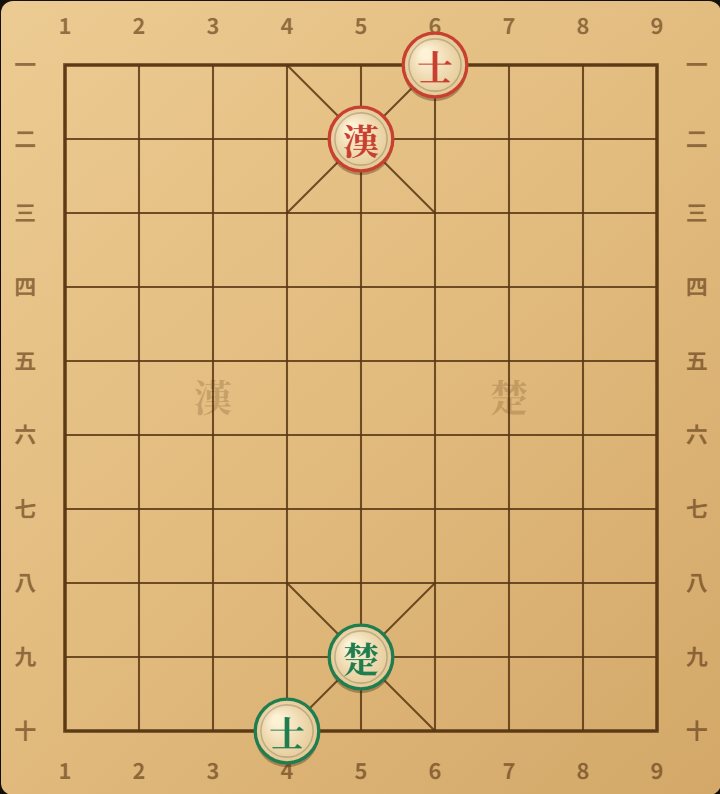
The reason is that such a move simply loses your own general next turn. It is suicide, so it is disallowed outright. If a square will not accept your piece, this rule may be why.
Time and score
Janggi is played on a clock. Classic gives you 5 minutes in all with 30 seconds a move; Blitz gives 3 minutes with 10 seconds a move. Run out and you lose.
Each piece has a set value, so the score rises and falls with captures. The current score shows at the top and bottom of the screen.
- Chariot (車) 13 — the dearest piece on the board. One chariot is worth about two horses.
- Cannon (包) 7 — but only while it has something to jump. A blocked cannon earns nothing.
- Horse (馬) 5 · Elephant (象) 3 — the elephant travels further yet costs less, because its path is blocked so easily.
- Guard (士) 3 — it never leaves the palace, but what it is worth is the general it keeps alive.
- Soldier 2 — five of them come to 10. That is not nothing.
- Altogether 72 points a side. Every capture comes straight off that.

Han (漢) moves second, so it gets 1.5 points as compensation. It balances the advantage of moving first — the same idea as komi in Go. So a tie on points is a win for Han. Playing Cho (楚) you cannot just trade evenly; you have to come out at least two points ahead somewhere. Running out of time loses on the spot. When the clock is short, a safe move beats a long think.
How to win
Tapping a piece marks everywhere it can go, so you need not memorise the rules first. Just follow the order below and you will get past Beginner.
- Start with the strength set to Beginner.
- First open lines for your chariots. They are the strongest pieces.
- A cannon lives only if it has something to leap. Give it one.
- With horses and elephants, always check the path is clear before you move.
- An enemy chariot on your palace diagonals is very dangerous. Block it before it gets there.
- Do not push soldiers out carelessly. They cannot come back.
- Turn on the blocked-road guide and it shows you when a horse or elephant is blocked.
Common mistakes
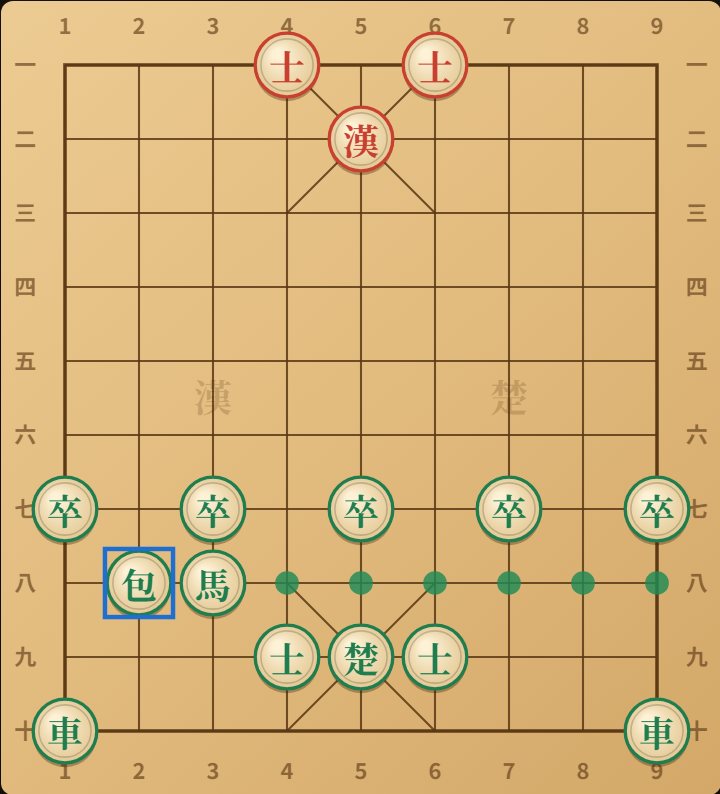
Lost games nearly always come down to one of these four.
- Giving away a chariot — the strongest piece there is. Before you move, sweep once over what the enemy chariots and cannons are looking at.
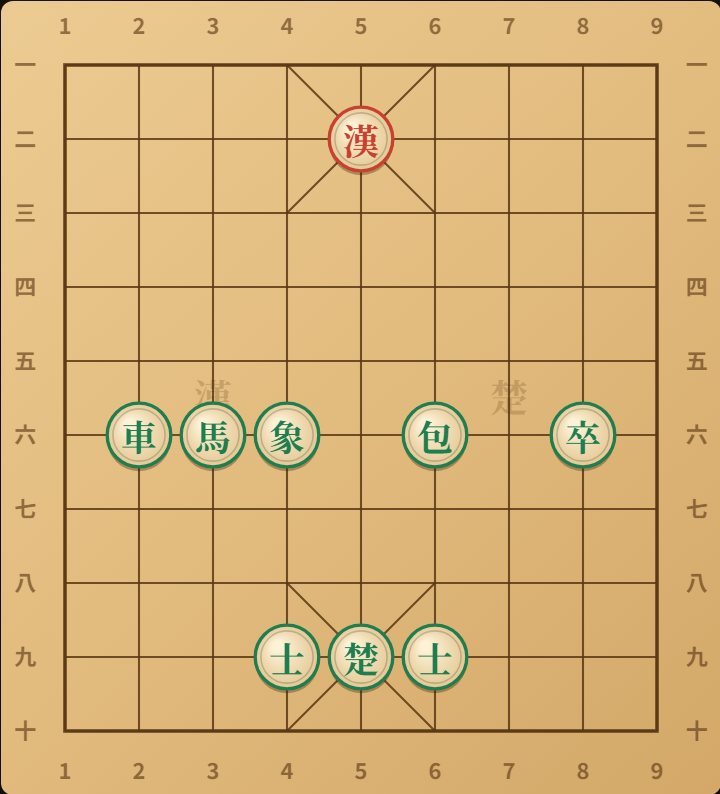
- Separating the guards from the general — as in the picture. An empty palace collapses to a single enemy chariot.
- Pushing soldiers out carelessly — they cannot go back. Once forward, they never return.
- Removing the piece in front of your own cannon — with nothing to leap, your cannon becomes a dead piece on the spot.
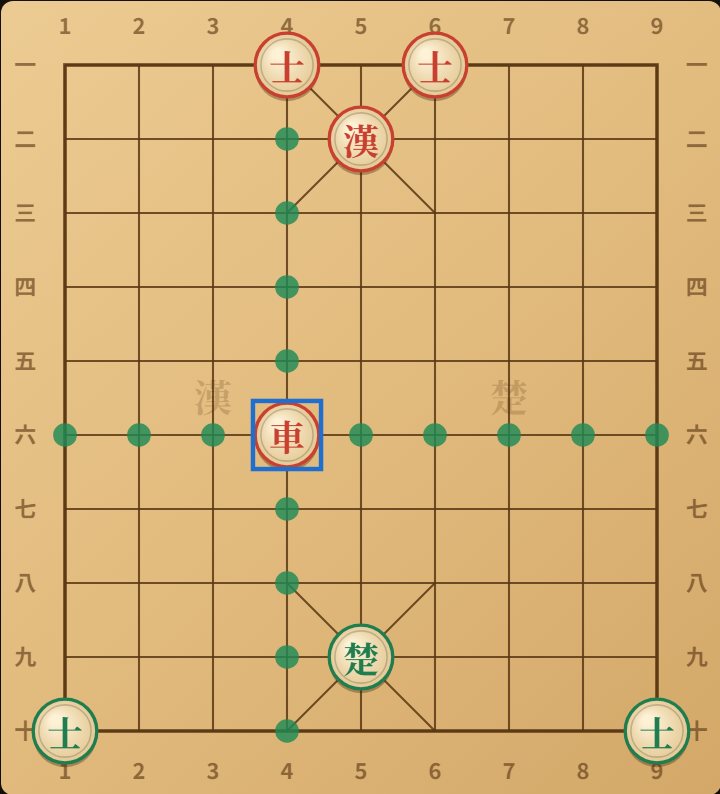
Above all, before you move, look once at what your opponent could do next. At Beginner level that single habit decides nearly every game.
You can play a friend
Press Play a friend and you can create a five-character room code.
Give those five characters to your friend, they enter the code on the same screen, and you are playing together at once.
- No sign-up, no installation. A browser is all you need.
- Quick match pairs you with someone without a code.
- If it will not connect, try Connection check.
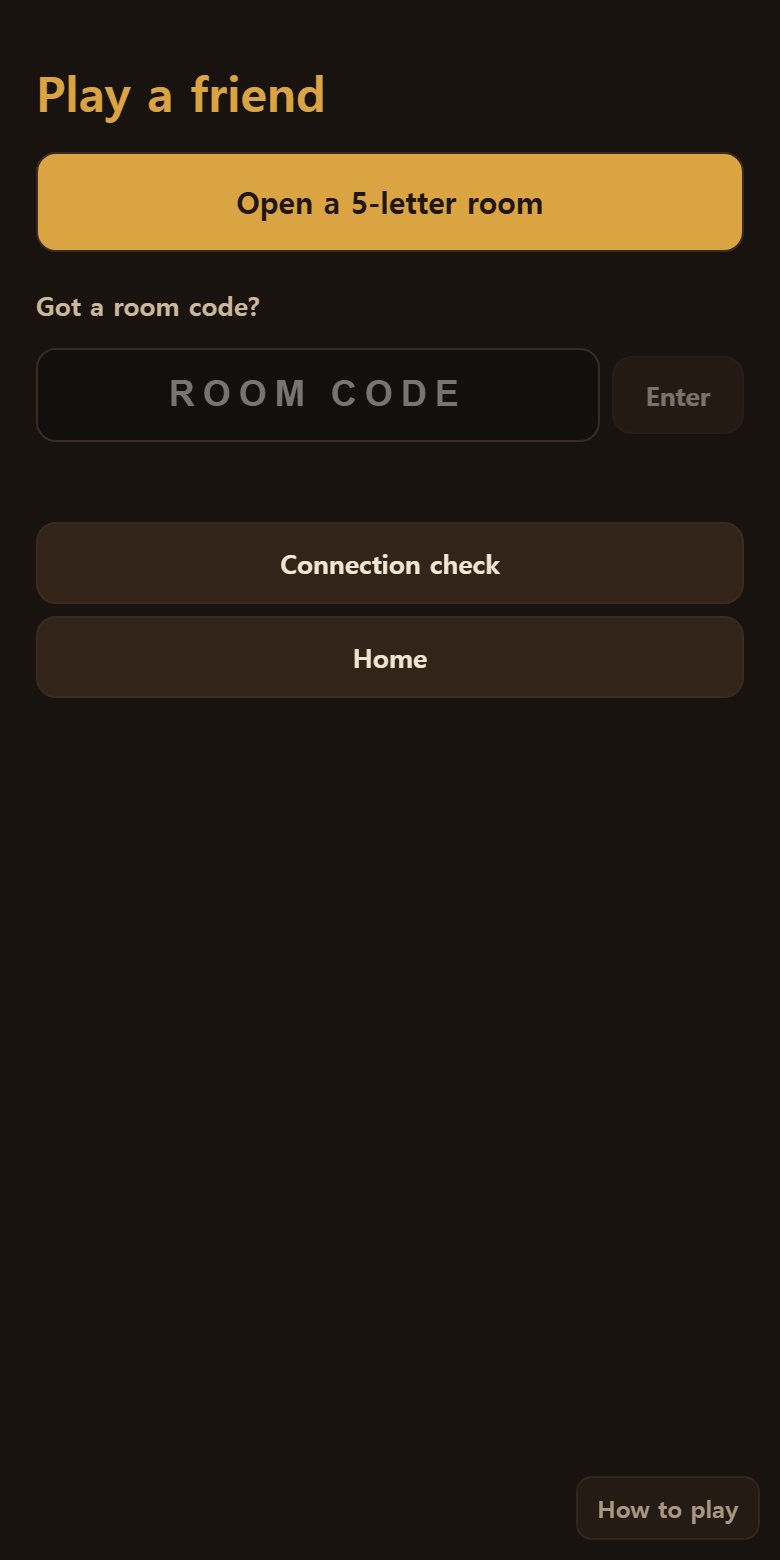
Once both players are in the room the game starts by itself. If one briefly drops out, it waits for them to come back.
You may pass a turn
Janggi has one rule chess does not. You may skip your turn even when you have legal moves. Press Pass at the bottom of the screen.
It exists because janggi can also be won on points. If you are ahead, there is no reason to stir the board — moving opens a hole somewhere. So you sit still and wait for the other side to break first.
- Pass — hand the turn straight back. Use it when you are ahead on points.
- Undo — step back one move at a time, as often as you like.
- Block hints — shows on the board whether a horse or elephant has its path blocked. Leave it on.
- How to play — opens the rules right there when you forget one.
- The coloured bar on the left — your opponent's time on top, yours underneath.
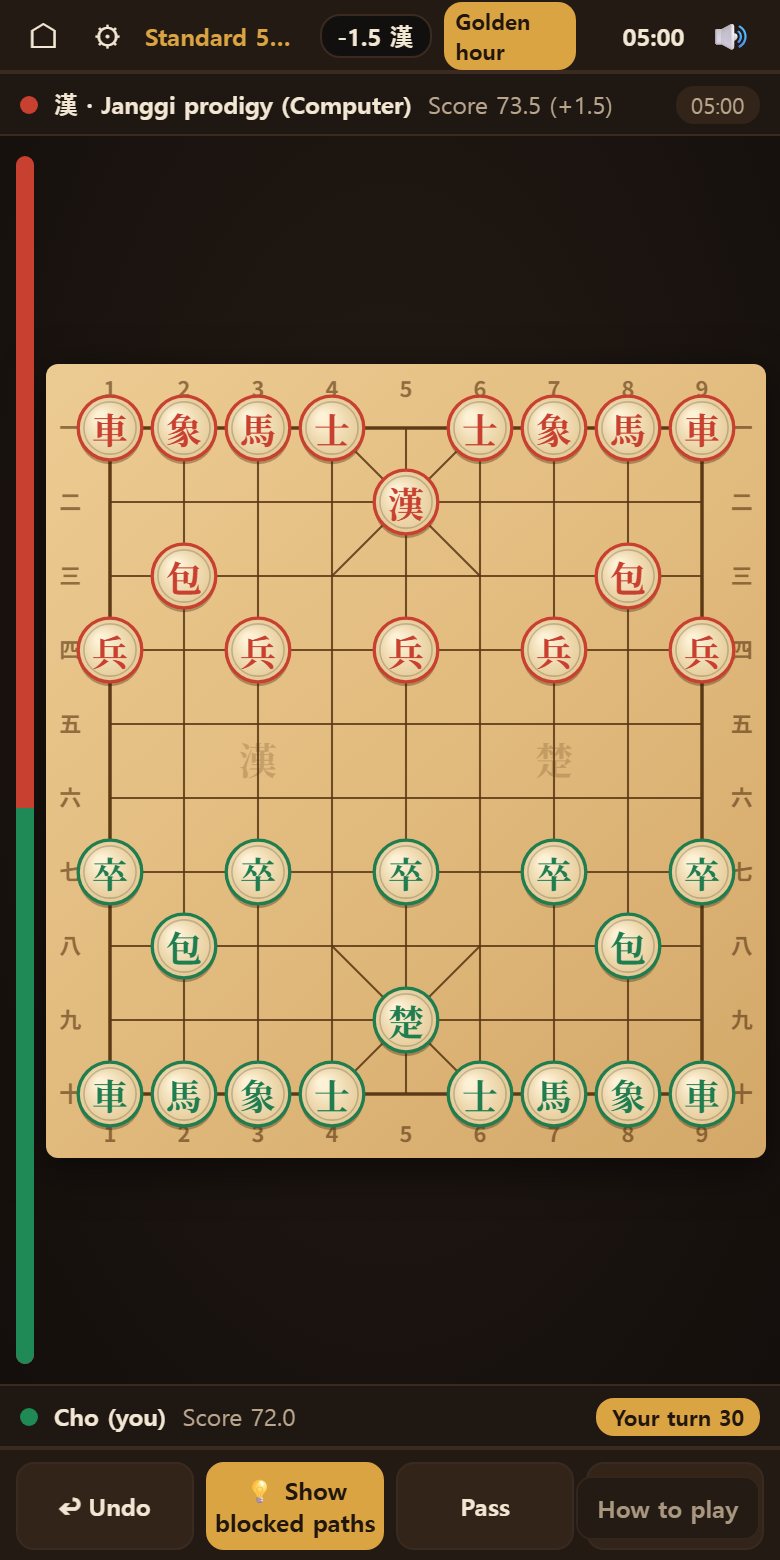
You may not pass while in check, though. A check has to be answered. As a beginner you will rarely need this. But when there is no move you actually like, passing can beat shoving a soldier forward for the sake of it — a soldier cannot come back.
How it differs from chess
If you play chess, these six things are all you need. The board looks familiar enough that your chess instincts are what will trip you up.
- Pieces sit on the intersections, not in the squares. So a 9x10 board holds 90 points.
- The king (general) never leaves the palace. There is no walking it out to fight, the way a chess king does in an endgame.
- There is a cannon (包). It must jump exactly one piece to move, and cannons can neither jump nor capture each other. Chess has nothing like it.
- Horses and elephants get blocked. A chess knight leaps over anything; a janggi horse cannot pass a piece standing in its way.
- Soldiers move sideways — but never backwards, and reaching the far end promotes them into nothing.
- No castling, no en passant. Instead you choose where the horses and elephants start — the setup.
The biggest difference is how games end drawn. Chess draws are common; janggi is decided on points, the values of the pieces still standing. Even with nothing left to capture, the higher score wins. So you do not have to hunt the game down to the last move. If you are ahead, holding on is enough to win — which is exactly what the Pass above is for.
Common questions
Horses and elephants are stopped by any piece along their path, and a cannon needs exactly one piece to leap. Turn on the blocked-road guide to see what is in the way.
There is nothing in front of it to leap. Send a horse or elephant in front of it and its road opens.
Move the general, capture the checking piece, or block the line. If none of the three is possible, you lose.
It cannot. A cannon may neither leap nor capture another cannon. This rule is peculiar to janggi.
That is correct. Soldiers move only forward and sideways, so think before you push one out.
Swapping the positions of your horses and elephants before play begins. There are four arrangements, and which you pick changes the game. Choose it under Change.
Just the five-character room code. They enter it and join.
Yes. Press Take back and it steps back one move at a time.
It is the value of every piece you still have. Chariot 13, cannon 7, horse 5, elephant 3, guard 3, soldier 2 — which puts both sides on 72 at the start. Lose a piece and the score drops by its value.
No. The higher score wins. Han (漢) holds a 1.5 point compensation, so a tie on points is a win for Han.
When you are ahead on points and have no move you like. Moving opens a hole, so you hand the turn back and let the other side break first. You cannot pass while in check.
The general never leaves the palace, there is a cannon that jumps, horses get blocked, and soldiers move sideways but never promote. The section How it differs from chess gathers all six.
- A Cannon is only alive while it has something to jump. Clear the piece in front of theirs and it goes dead.
- Horses and Elephants block easily. Look at the squares along the way before you move.
- Only the Chariot and the General use the palace diagonals. A Chariot in there is very dangerous.