 MindHub
How to play Go
Place stones to claim as much territory as you can. Whoever has more territory at the end wins. There are only a handful of rules. Learn two things — liberties and territory — and the rest follows by itself. Both are shown here in pictures. Go looks hard not because it has many rules but because it is not a game about placing lots of stones. The stones are only the fence around the land. Turn that one idea round in your head and everything else becomes much easier.
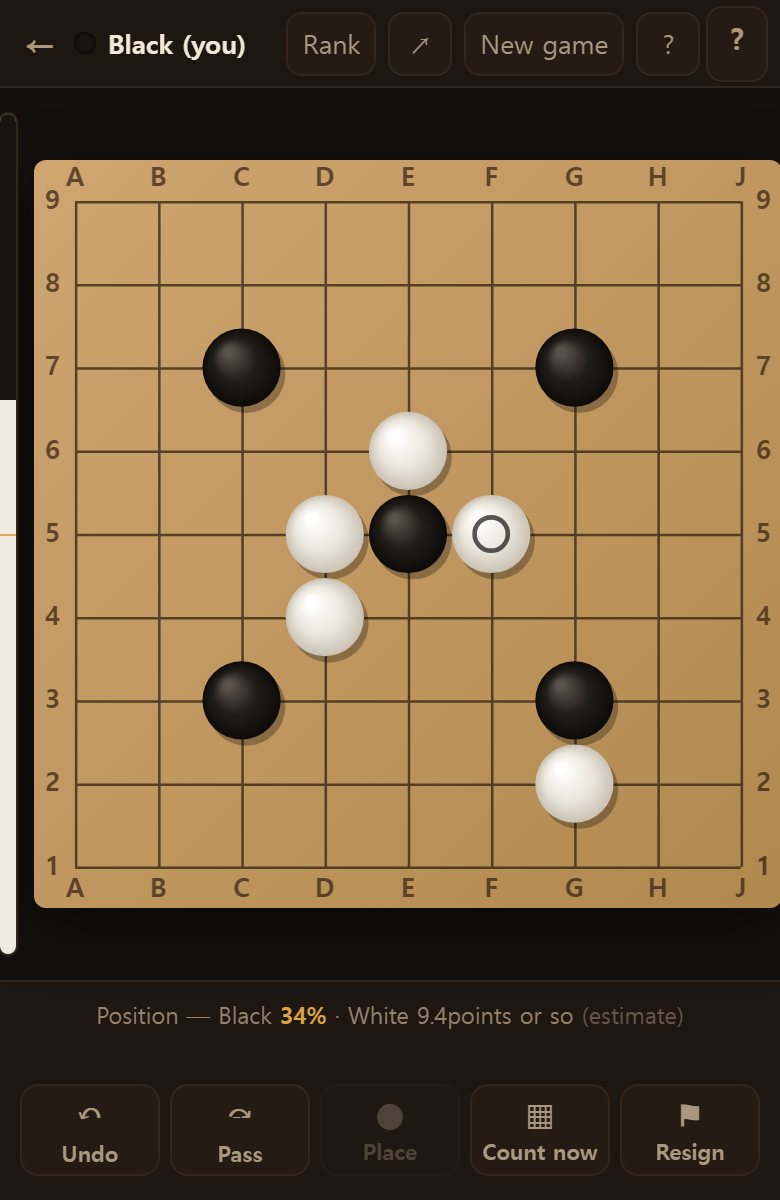
First, look at the screen
There is a board ruled with lines. Stones go not inside the squares but on the points where lines cross.
- Black plays first, then white.
- The board can be 9, 13 or 19 lines.
- The figures below — how many stones you have captured, and how much territory you hold.
- With a finger, tap the point once and then press Place. A mis-tap never plays a stone.
- The marked points — called star points. They are there to help you count positions.
If you are new, start on 9 lines. A game is short, so the rules sink in quickly. A 19-line game can take an hour.
You start with an empty board
Open a new board and there are no stones at all. Black simply plays anywhere.
The A B C… and 1 2 3… along the edges are names for the points, for saying “I played C7” to a friend.
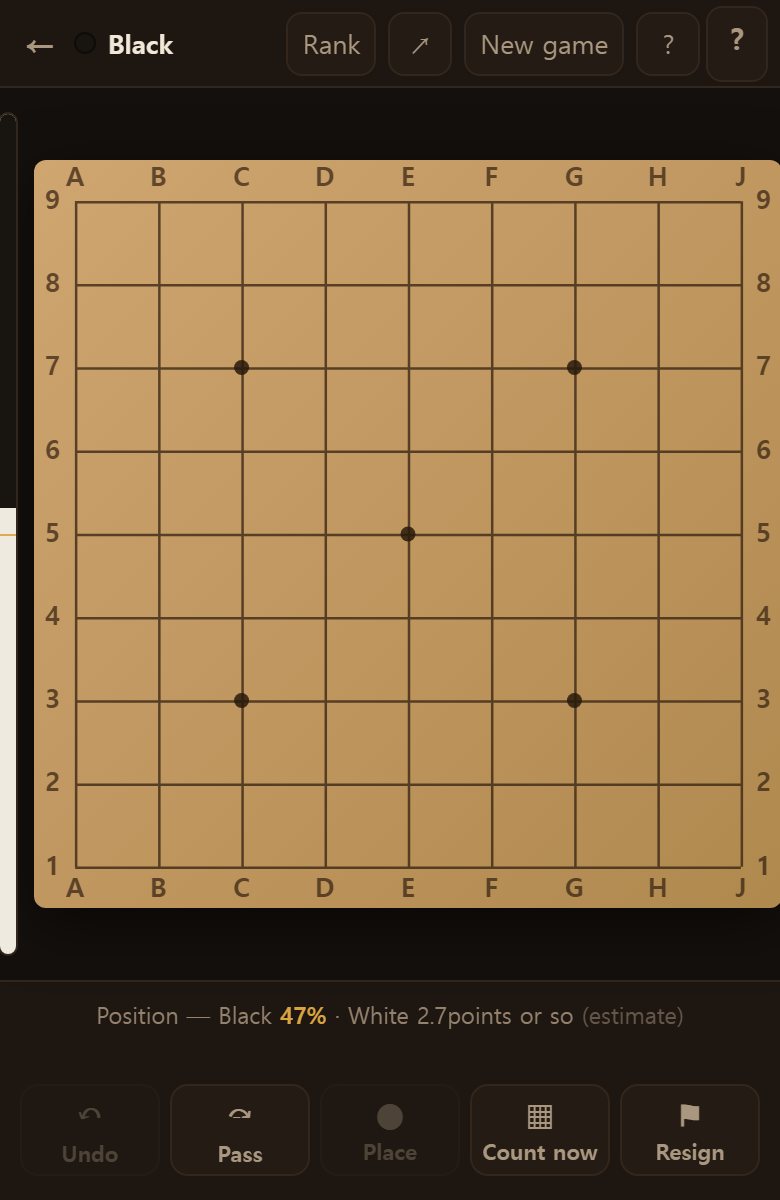
The marked points are called star points. They are only there to help you count positions; no special rule attaches to them.
Liberties — the most important word in go
Every stone has liberties — the empty points directly touching it.
Look at the stone in the middle of the picture. Above, below, left and right there are four empty points. That stone has four liberties.
- A lone stone in the middle — four liberties
- A lone stone on the edge — three
- A lone stone in a corner — two
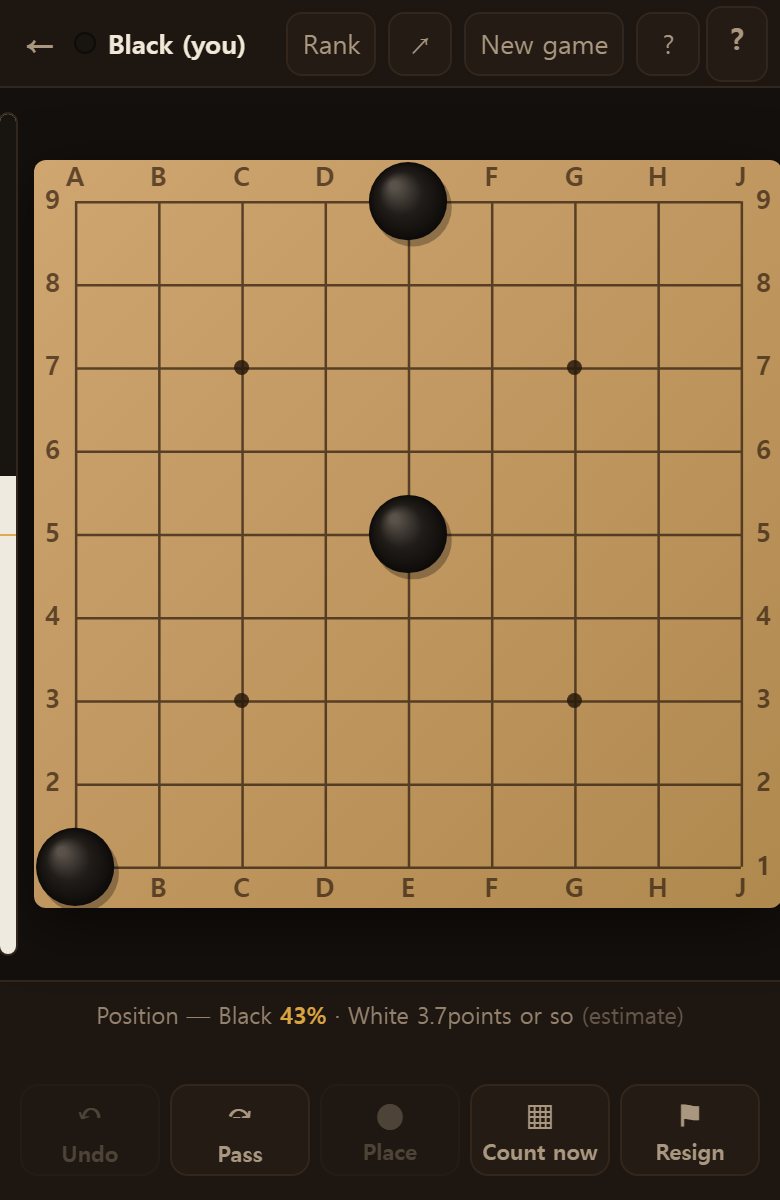
Which is why stones in corners and along edges are easier to capture — there are fewer points to block. Nearly everything that happens in go can be explained by counting liberties. Who has more left? Count that alone and you can see whether you will capture or be captured. Before you play, get into the habit of counting your liberties and your opponent’s.
Touching stones are one group
Stones touching along a line count as one group, and a group shares its liberties.
Three in a row as in the picture have eight liberties — far sturdier than three stones standing apart.
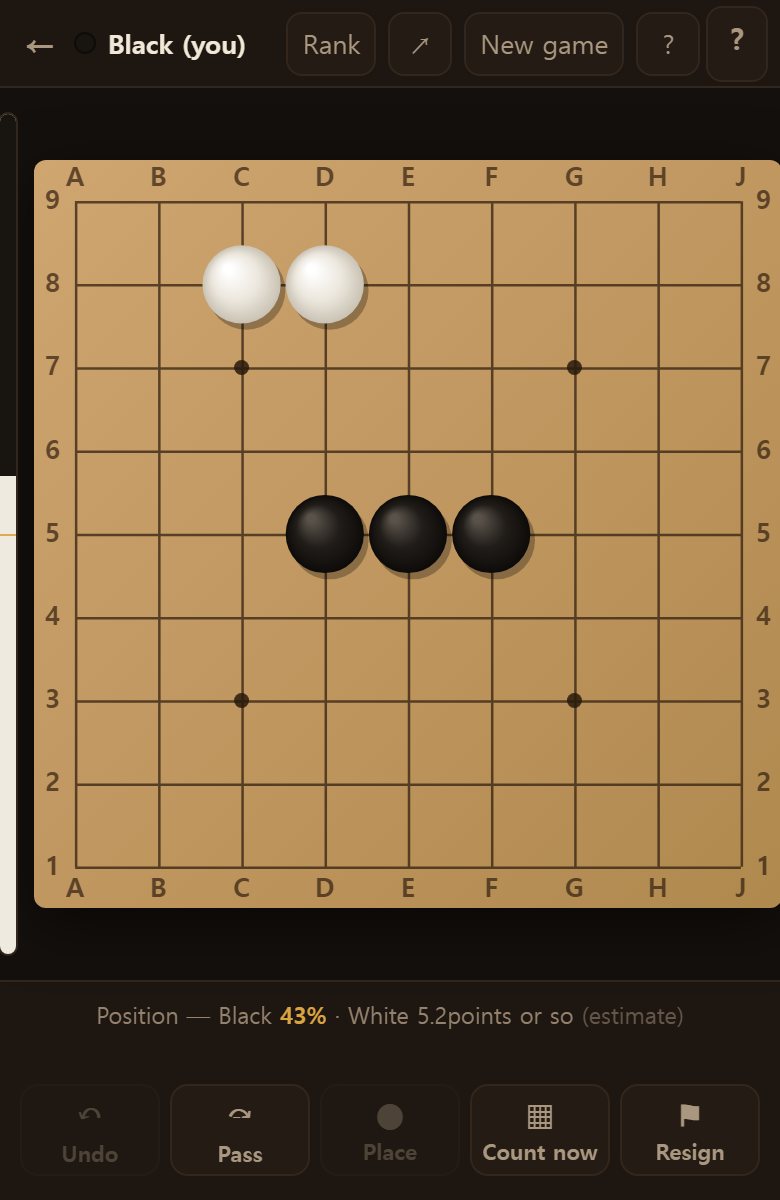
Diagonals do not touch. Only stones adjacent along a line form one group. Confuse this and go stays hard. That is not to say diagonals are useless. Two stones placed diagonally have two ways to connect, so if your opponent cuts one, you connect with the other. Spacing your stones out lets you fence off more land with the same number of them. Close together is solid; spread out is wide — weighing those two against each other is what go is.
Atari — one liberty left
Look at the white stone in the middle of the picture. Above, left and right are blocked by black. Its only liberty is the point below.
A stone with one liberty left is in atari. Black takes that point below and the white stone is lifted off the board.
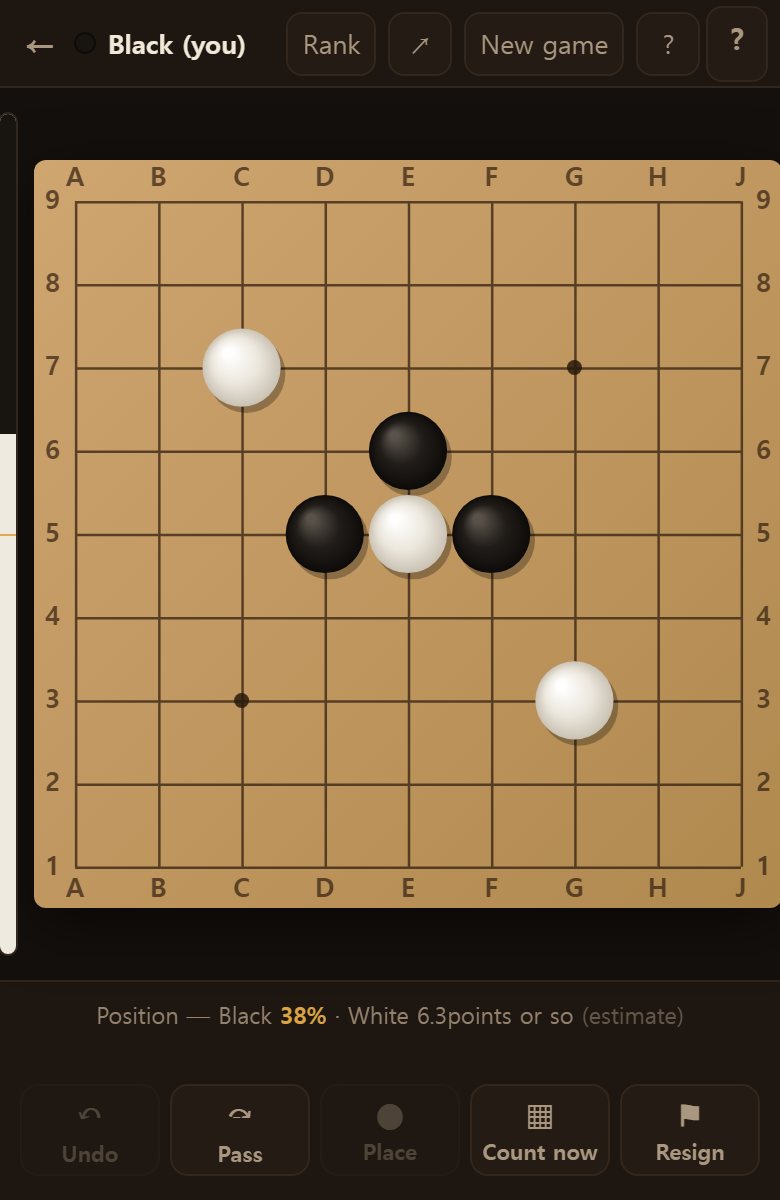
When your own stone is in atari, look at it at once. Run, add a stone beside it for more liberties, or capture your opponent’s stones instead.
The ladder — running makes it worse
This is where beginners lose most heavily. If you simply run with a stone in atari, it is in atari again one move later, and again after that. It gets dragged out like a staircase until the whole chain is captured. That shape is called a ladder.
- When a stone is put in atari, count before you run. How many liberties does the escape square have?
- If running leaves you with only two liberties, you are in atari again next move. You are in a ladder.
- If running gives you three or more, the stones can live.
- A ladder runs all the way to the edge of the board. Ten or twenty stones can change hands at once.
- Handing over one stone is far cheaper than losing twenty.
A ladder changes completely if you have a stone waiting far along the escape route. The running chain reaches it, gains liberties and lives. Players deliberately place stones for this, but you do not need to think that far ahead yet. One thing is enough for now — do not run on reflex just because you are in atari. Count the liberties, and if it does not work, abandon the stone and play somewhere bigger.
Capture — no liberties means off the board
When a group has no liberties left, it comes off the board. That is a capture.
The picture shows that white stone’s last liberty being taken. The stone is gone, and the captured count below has gone up by one.
- Corners and edges are easiest to capture on, since there are fewer points to block.
- Captured stones count towards the score at the end.
- A point where a capture happened becomes empty, so it can be played again.
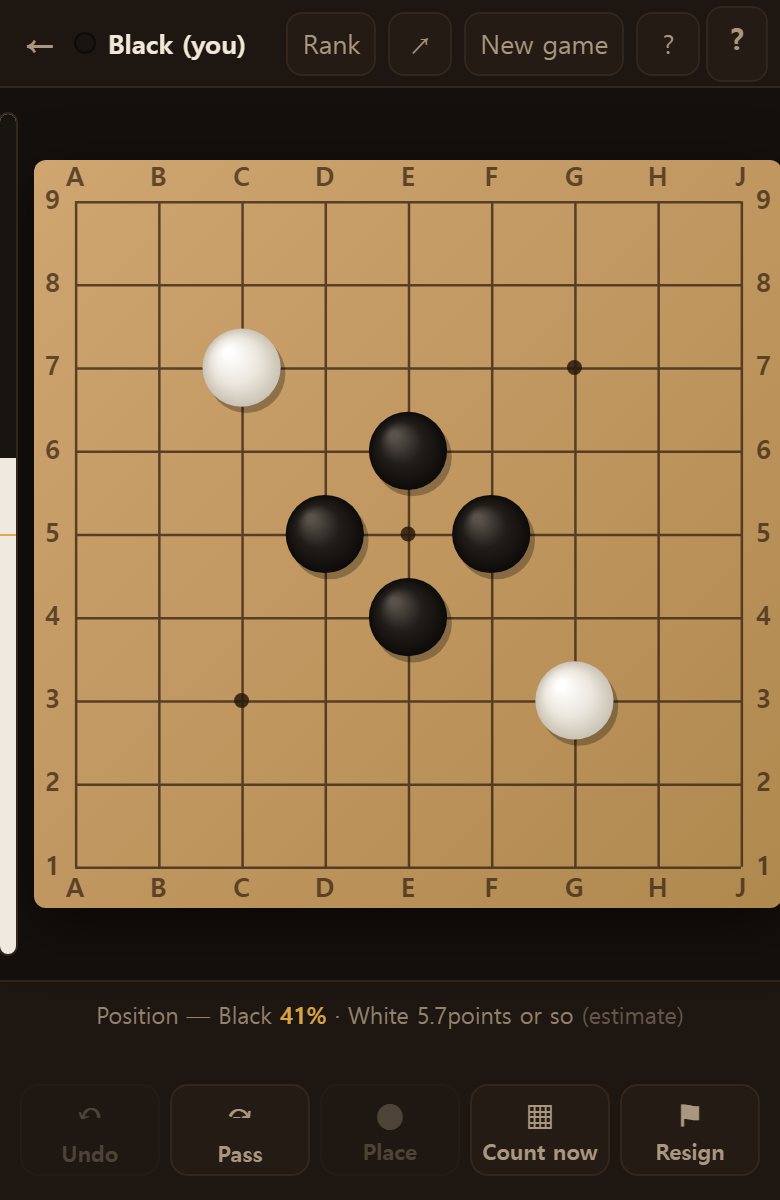
The same holds for groups. When a whole group runs out of liberties, all of it comes off at once. So a big group can be the more dangerous one. Ten stones joined together with only two liberties left means losing ten stones in two moves. Size is not safety; liberties are.
Where you may not play — self-capture
You may not play where the stone would have no liberties the moment it lands. It would simply die. This is called self-capture.
The picture shows black being played into a point surrounded on all sides by white. It does not go down; the game says self-capture.
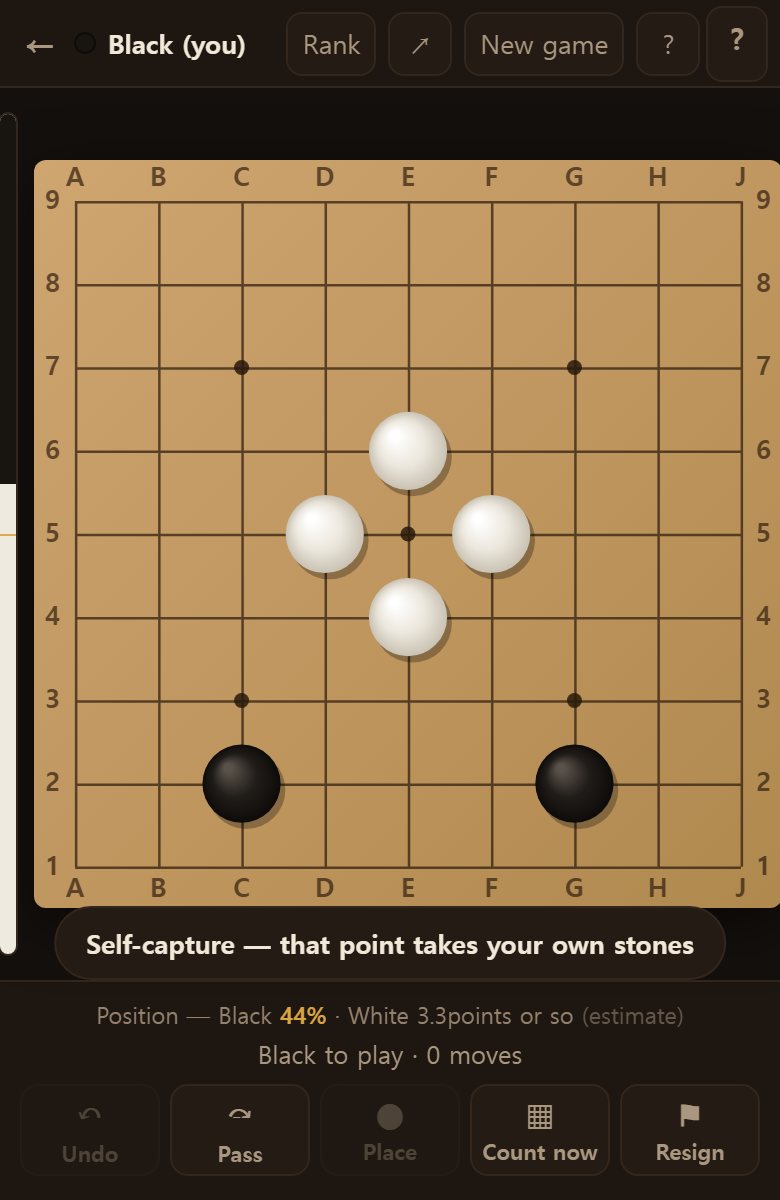
There is one exception: if the move captures enemy stones, it is allowed. Those stones come off, leaving empty points, and your stone breathes.
Ko — so the same shape does not repeat
If each side captures one stone and takes it straight back, the same shape can repeat forever and the game never ends.
So retaking immediately at the point just captured is forbidden. You must play elsewhere first. This is called ko.
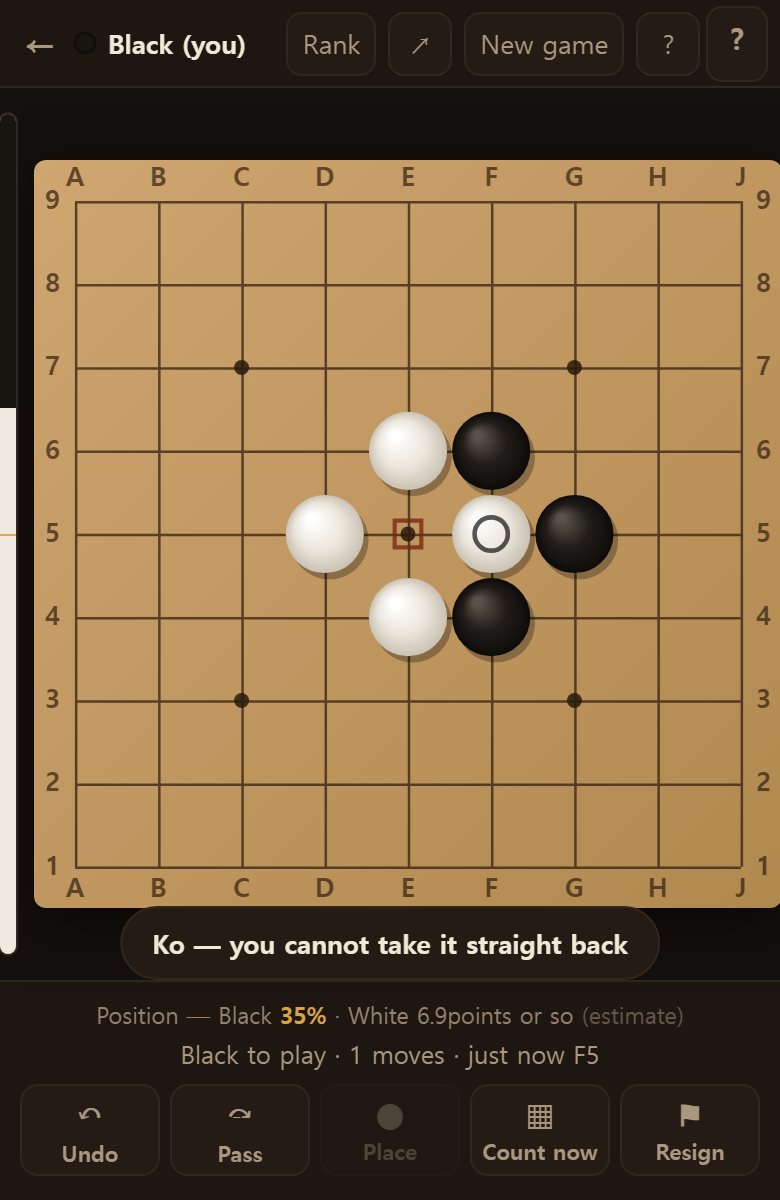
The picture shows black trying to retake at once where white has just captured. It is stopped with ko — you cannot retake immediately. Play a move elsewhere and come back.
Two eyes and it can never die
This is the most important passage in go.
A group with two separate empty points inside it can never die. Those empty points are called eyes.
The reason is that filling one eye would be self-capture, so your opponent cannot play there. With two eyes, there is no way to fill either.
- With only one eye, it is captured in the end.
- With two, it never dies. Such a group is said to be alive.
- Corners are the easiest place to make eyes.
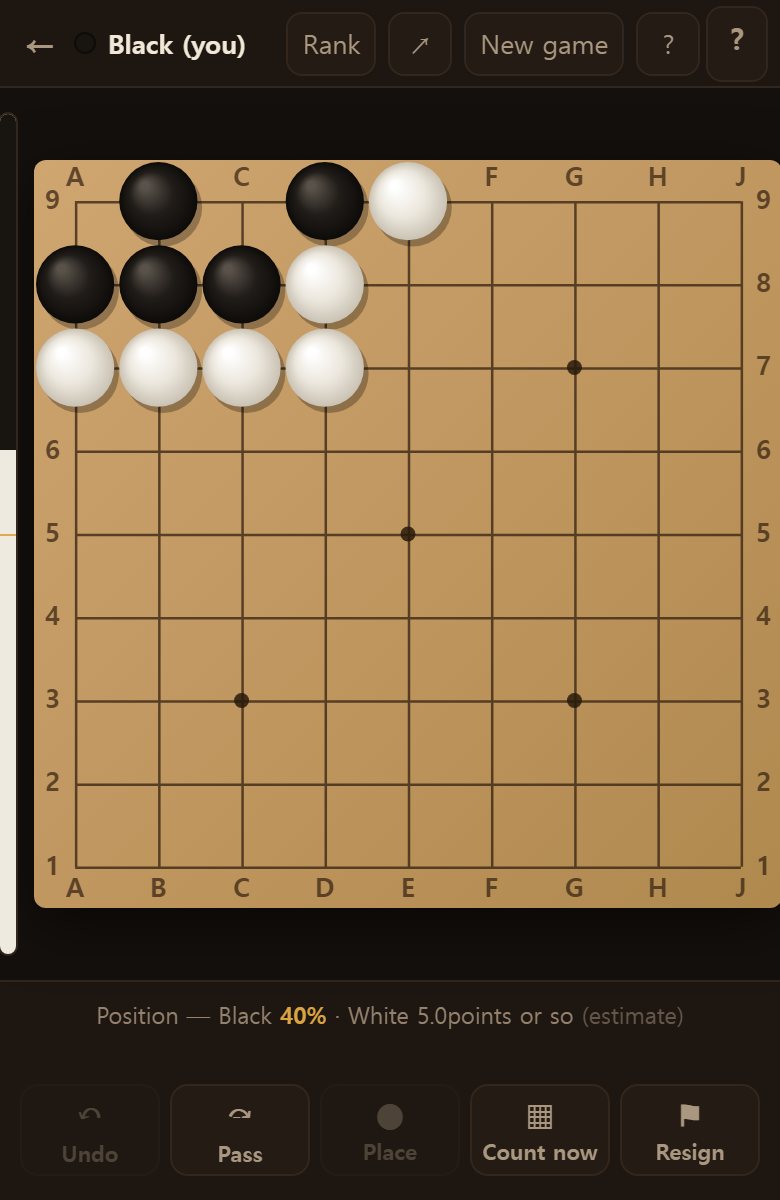
When one of your groups looks in danger, the first thing to work out is whether it can make two eyes. To capture an enemy group, aim to reduce it to one eye. A single stone placed early where an eye would form stops that eye from ever appearing. Nearly every life-and-death fight in go is over one eye.
Territory — the empty land your stones enclose
The empty points your stones completely surround are your territory. Whoever has more of it wins.
So go is not a game about placing many stones but about enclosing much empty land. This is the part people find most confusing.
- Corners are the easiest place to build territory, since two sides are already walls.
- Then the edges. The centre is hardest of all.
- Which is why go is usually played corners, then edges, then centre.
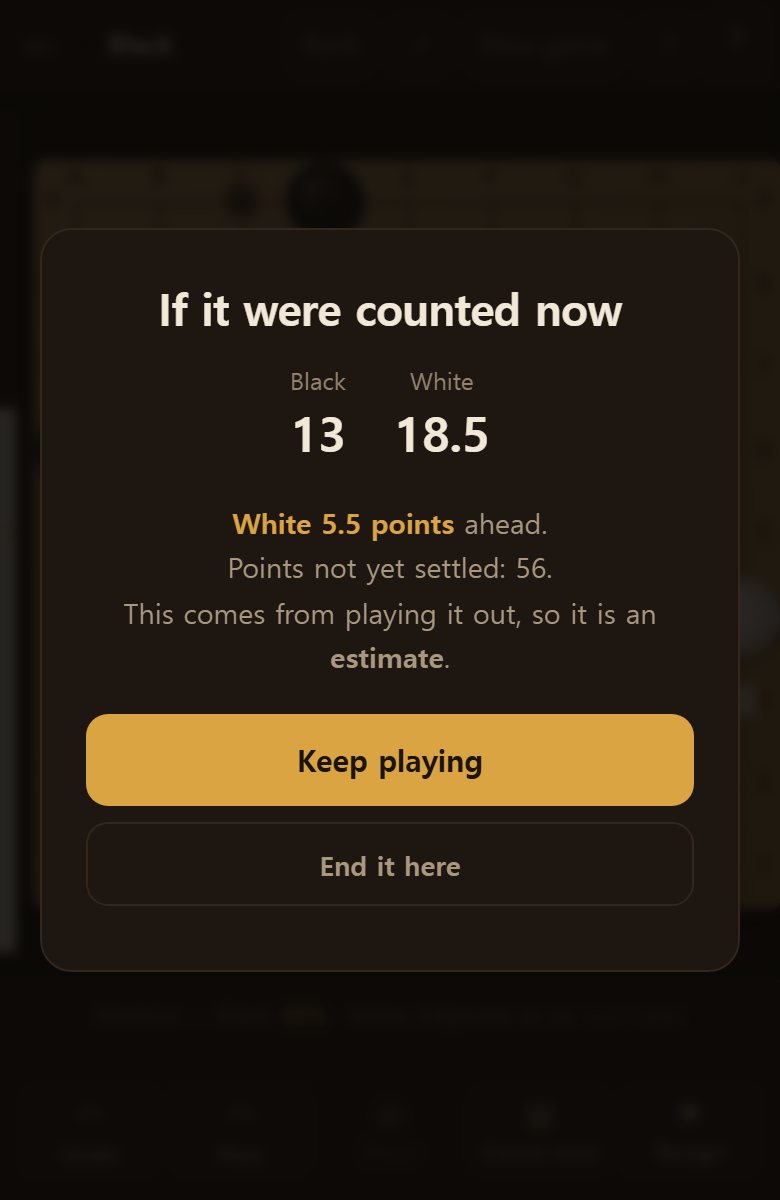
Because white plays second, it is given a few extra points, called komi, to offset the advantage of playing first. Only empty points count as territory. Points your own stones sit on do not. So the fewer stones you spend enclosing the same land, the better. Fill the inside with your own stones and the land is unchanged while the territory shrinks — a mistake everyone makes exactly once.
After a few moves
Reading the rules alone gives you no feel for it. Play ten moves on a nine-line board and you begin to see whose land is forming where.
The figures below are captures and current territory. Watch how they move as you play.
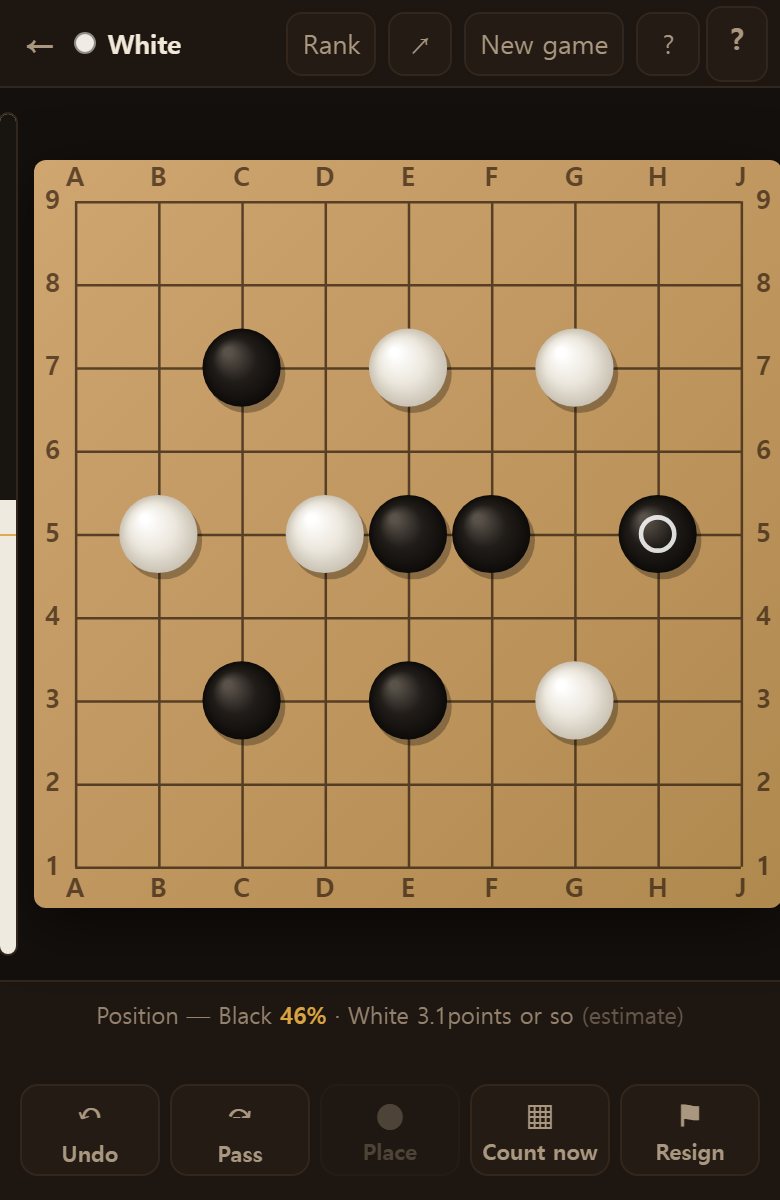
For the first few games, do not try to win — just watch two things, captures and territory. A nine-line game takes five minutes. Play ten of them and the rules settle in without any effort to memorise them. Do not begrudge the losses; simply playing many games is far quicker.
Who is winning right now
Press Count now and it tallies the territory so far. You can look at any time, not only at the end.
It shades each side’s territory in colour, so you can see at a glance what you hold.
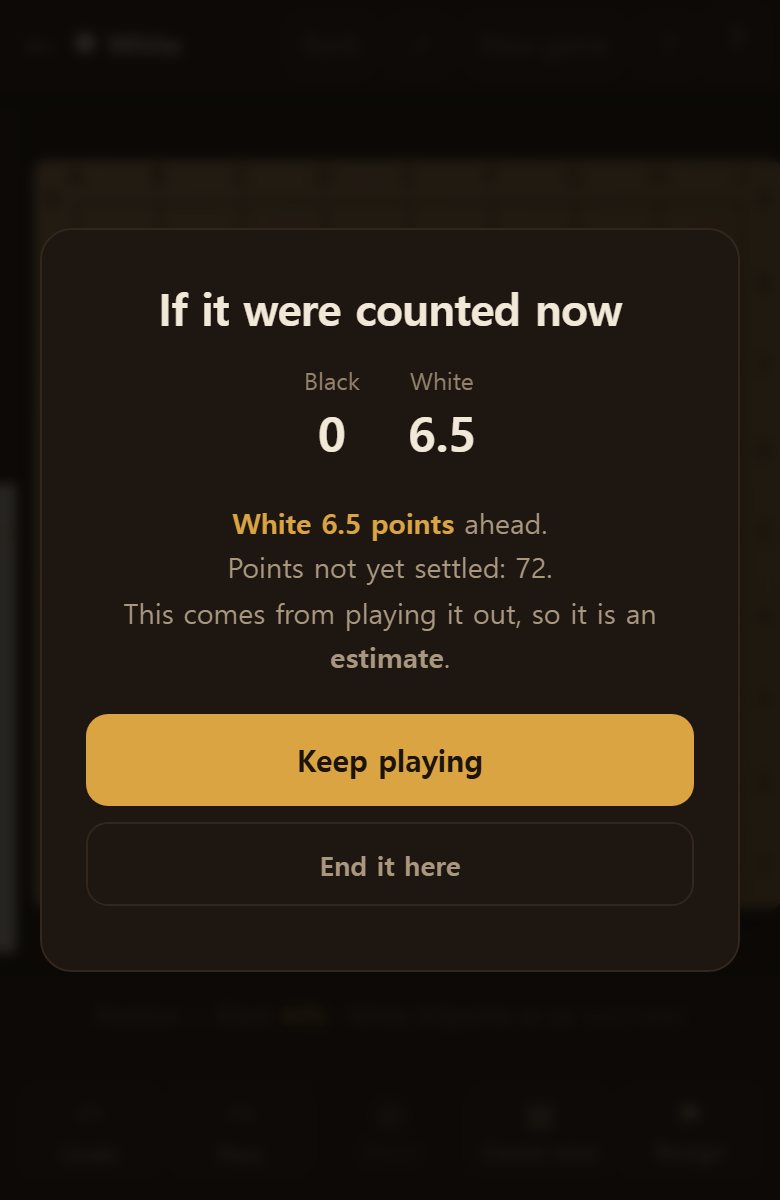
At first it is hard to see what territory even is. Play a few moves, press the count, and it clicks: “ah, that is territory.” Press it often.
Pass — when there is nothing left to play
When another move would not gain you any territory, press Pass — you simply give up your turn.
When both players pass in succession, the game ends there and moves to counting.
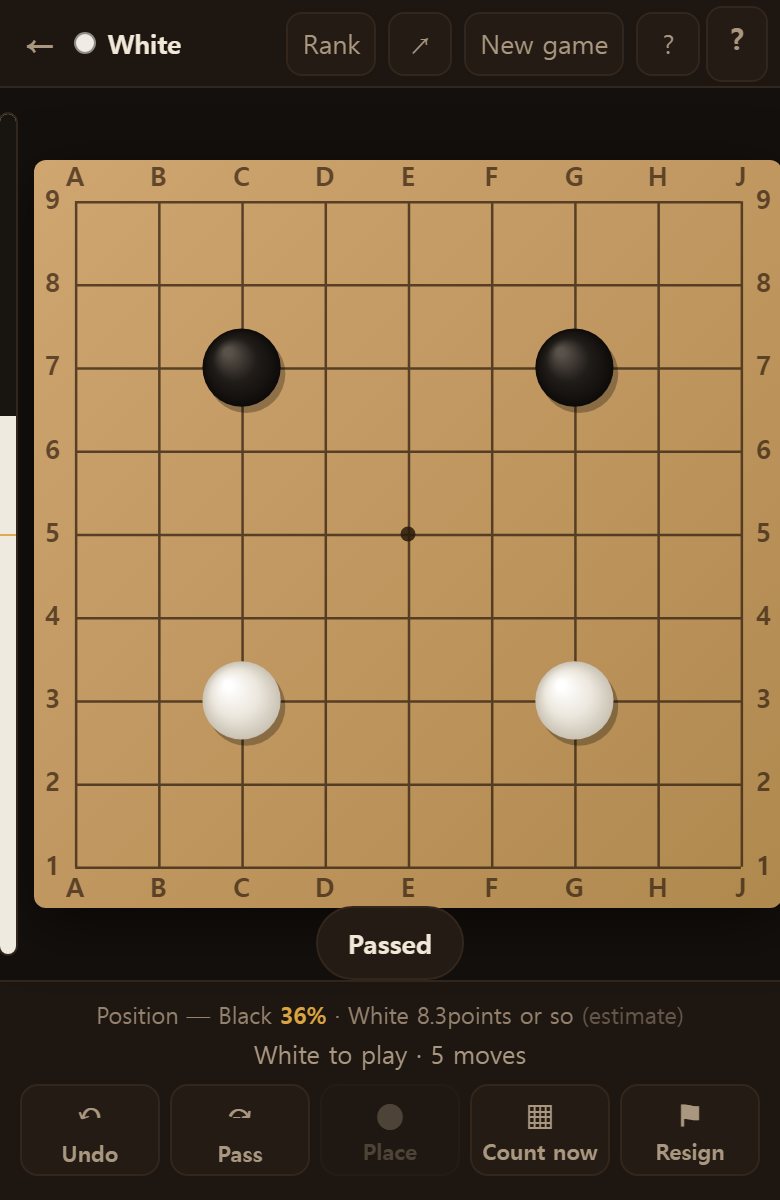
If you are unsure when to stop, press Count now. When another move would not add territory, that is the time.
How the game ends
When both sides pass, territory and captures are counted to decide the winner.
If there are dead stones, tap to mark them and press Confirm. It then tells you who won and by how many points.
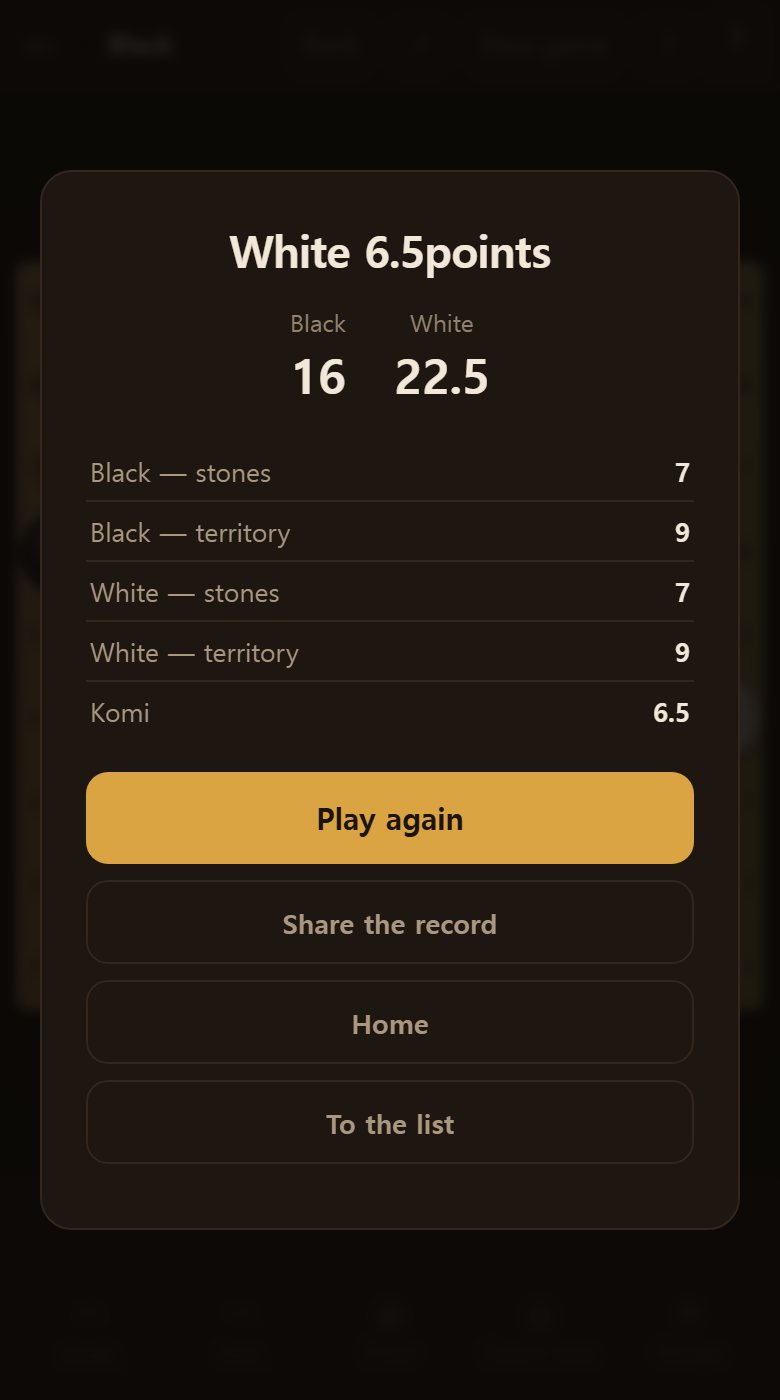
White carries komi of 6.5 points from the outset. The half point is there so the game cannot be drawn.
Board size and strength
Choose them on the opening screen.
- 9 lines — a short game. Start here if you are new.
- 13 lines — a good step up once the rules are familiar.
- 19 lines — the real board. A game can take an hour.
- Strength — how many games the computer plays out to the end. The stronger it is, the longer it thinks.
- Two players — two people can take turns on one screen.
- This meter comes from playing the position out at random, all the way to the end, and counting how often each side won.
- So it is unreliable early on. The more empty points there are, the more those random finishes wander.
- It becomes useful once a fair number of stones are down. Treat it as a hint, not a verdict.
- Press it when there is nothing worth playing. Forcing a move often just fills in your own territory.
- When both sides pass in a row, the game ends there and goes to scoring.
- Playing inside your own territory is throwing away a point of your own. Passing is better.
- If your opponent passes but you still have somewhere worth playing, play it — do not pass back.
- Scoring here is Chinese style — your stones on the board, plus the empty points only you surround.
- White moves second, so it receives 6.5 points of komi. The half point means no game can end in a draw.
- Dead stones are marked by tapping them. Marked stones are counted as gone.
- A 9x9 game takes under ten minutes. A 19x19 game takes far longer.
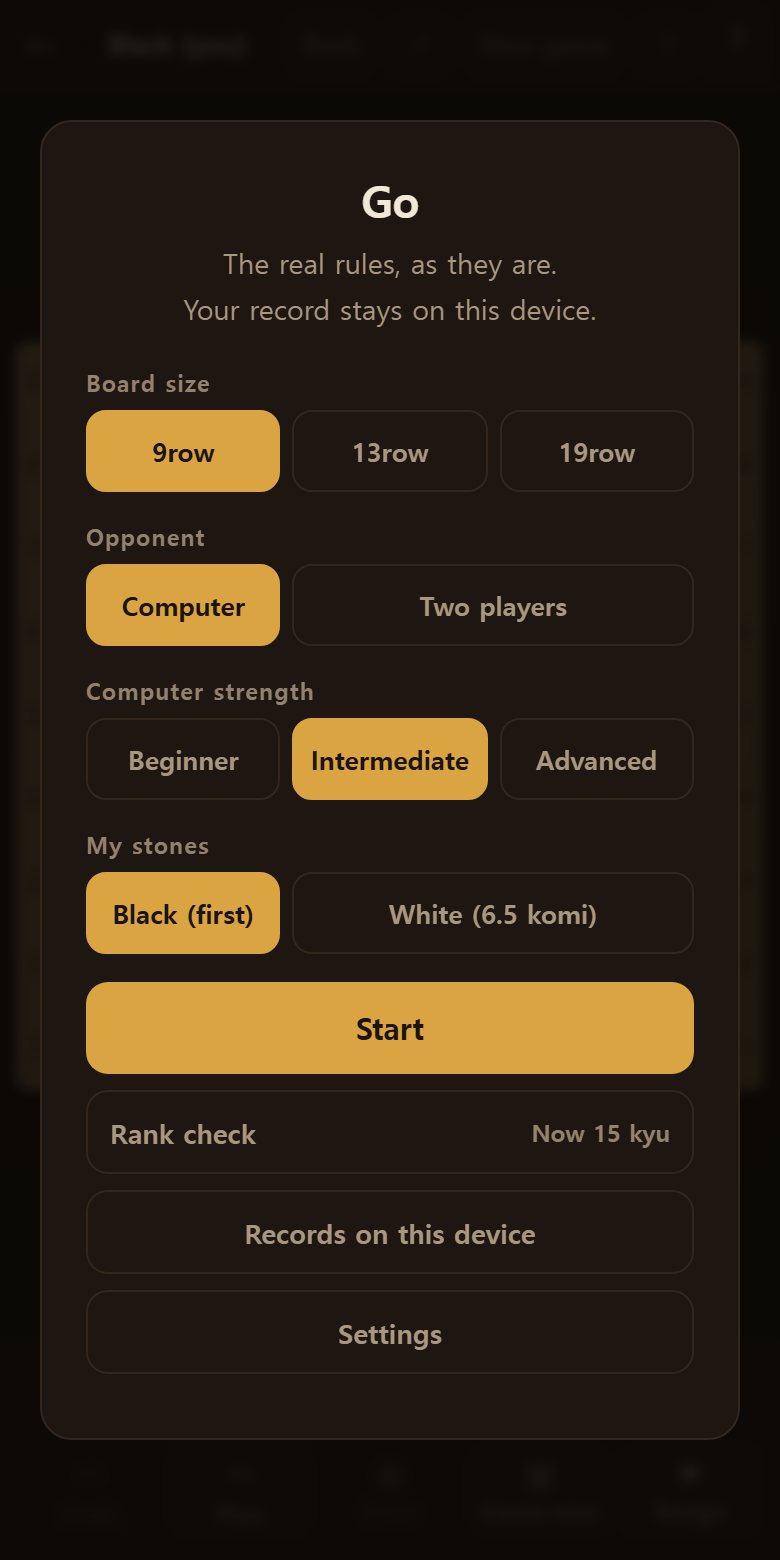
The computer does not work from memorised moves. It plays games out at random to the end and picks the point that wins most often — which is why it feels like playing a person.
How to play well
Do not try to memorise the rules; just follow these. It will take you a long way.
- Play the corners first. Two sides are already walls, so territory comes easiest there.
- Play around the third line rather than right along the edge. Too close and the territory is thin; too central and it is hard to enclose.
- Do not scatter your stones. Play them joined and solid.
- When a group of yours is in atari, look at it immediately.
- For a group in danger, work out whether it can make two eyes.
- Do not chase captures alone. Whoever has more territory wins.
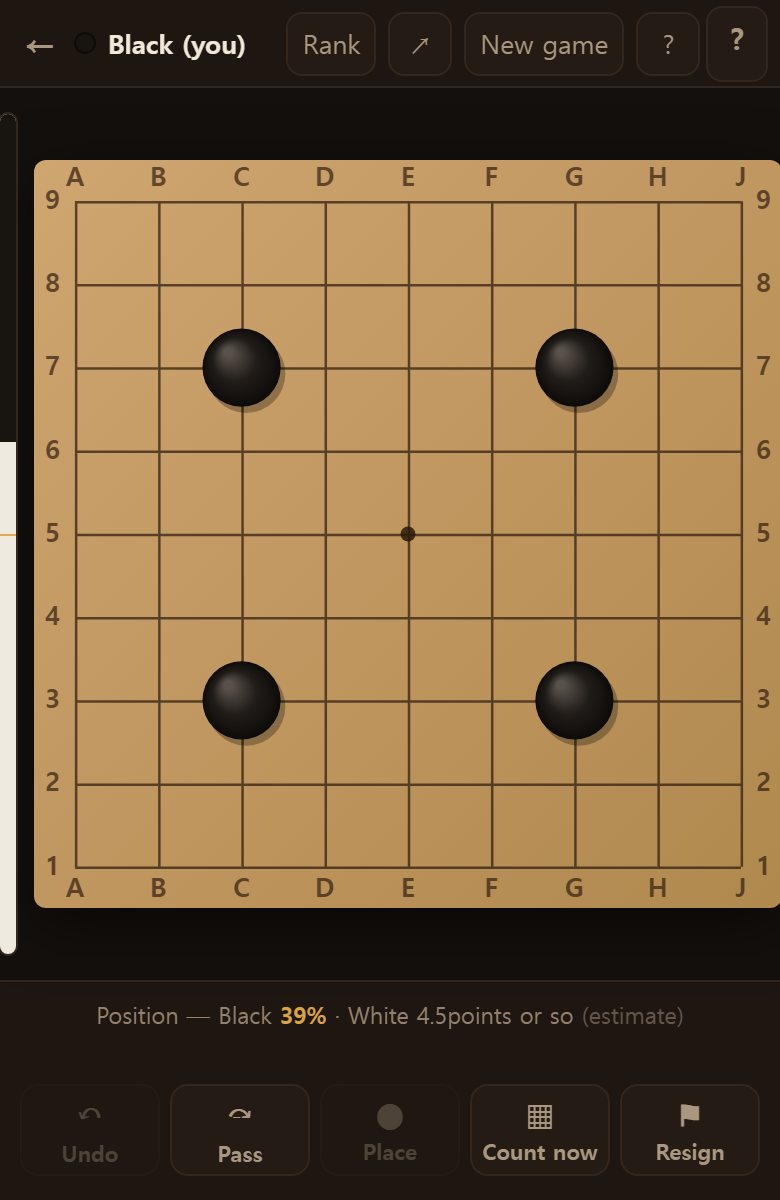
Above all, play the big places first. Chasing one enemy stone around while the far side of the board quietly becomes your opponent's territory is the classic way to lose. Capturing a stone is worth a point or two. A corner of open space is worth ten or more. Making room usually beats making captures. And when a stone is put in atari, count before you run. A stone that runs and gets put in atari again drags a whole chain out behind it — that is how beginners lose most heavily. Sometimes handing over one stone and playing elsewhere is far bigger.
Common mistakes
Early losses nearly always come down to one of these four.
- Chasing captures — plenty of stones taken, but too little territory, so you lose. The picture shows exactly that.
- Starting in the centre — with four sides to enclose, it rarely becomes territory.
- Scattering stones about — no group is solid, and they are captured one by one.
- Missing an atari — overlook that last liberty and the stones come straight off.
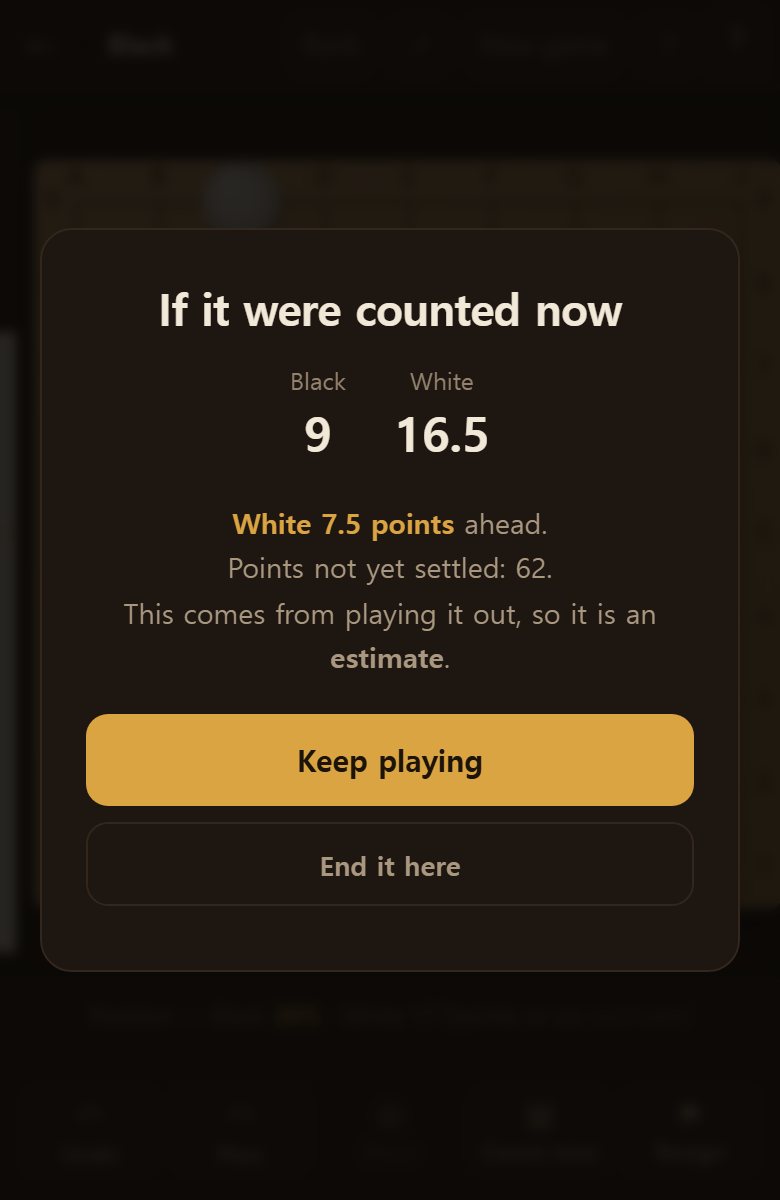
When in doubt, press Count now. It shows you in colour what you actually hold.
Common questions
Either a stone is already there, or the move would be self-capture, or the point is blocked by ko.
An empty point directly touching a stone. Only along the lines — diagonals do not count. When a stone has none left, it comes off the board.
When another move would not gain territory, press Pass. When both sides pass, the game ends.
Press Count now and it tallies the territory so far.
Go is won by whoever has more territory. Captures only add a little to the score. Put more of your attention into enclosing land.
Scattered stones are captured one at a time. Play them joined. For a group in danger, see whether it can make two eyes — with two eyes it cannot die.
White is at a disadvantage for playing second, so white is given a few points in advance to make up for it — usually 6.5. The half point is there so the game cannot be drawn.
Lower the strength in settings, or switch to a nine-line board.
Black plays first, which is an advantage. Komi is the compensation handed to White up front to balance it. The half point is there so that games cannot end tied.
Chinese style here — the stones you still have on the board plus the empty points only your stones surround. White then adds 6.5 komi.
It does not score positions the way a person does. It plays the game out at random from that point, many times, and picks the move that won most often. That can produce moves that look odd to a human eye. It also tends to play safely rather than sharply once it is already ahead.
Start on 9x9. The rules are identical but a game is short enough to play many of them. Once liberties, capturing and two eyes feel natural, move up to 13x13 and then 19x19.
- Start on the 9-line board. Games are short, so captures and territory are easy to see.
- Around the third line makes better territory than the very edge.