 MindHub
How to play Yukon Solitaire
The layout is much like Klondike Solitaire, with two differences: there is no stock to turn, and any face-up card can be moved together with everything piled on it. Build all four suits from A to K and you win.
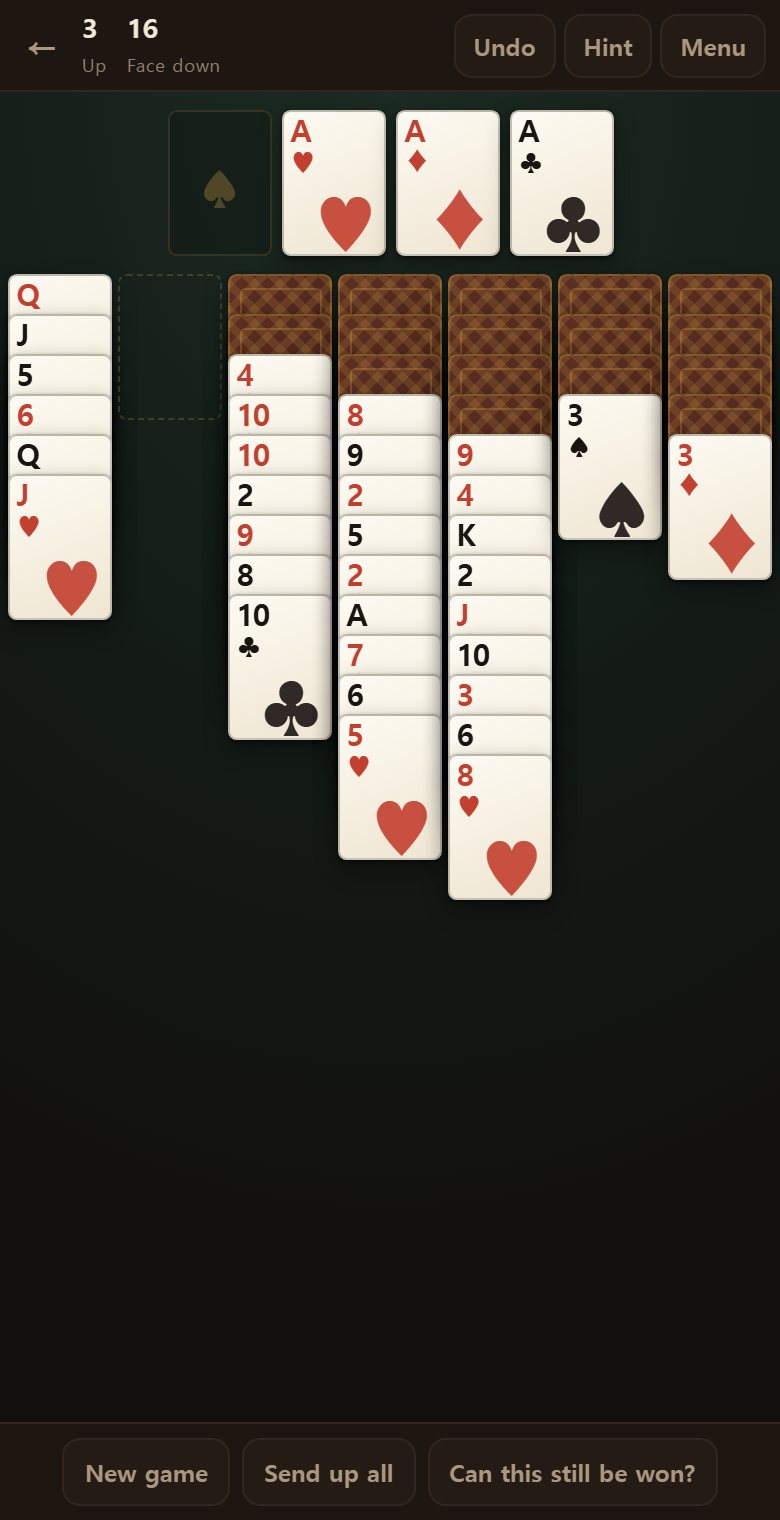
First, a look at the screen
Four empty spaces above, and the cards laid out in seven columns below.
- The four spaces above — the foundations, built by suit from A. Fill them and you win.
- The seven columns below — all fifty-two cards are here. There is no stock.
- Face-down cards — not yet in play. Clear everything above one and it turns by itself.
- The figures at the top — how many cards are home, and how many still lie face down.
The face-down figure is the measure of the work remaining. It starts at twenty-one, and when it reaches 0 the deal is all but solved.
This is how a deal looks
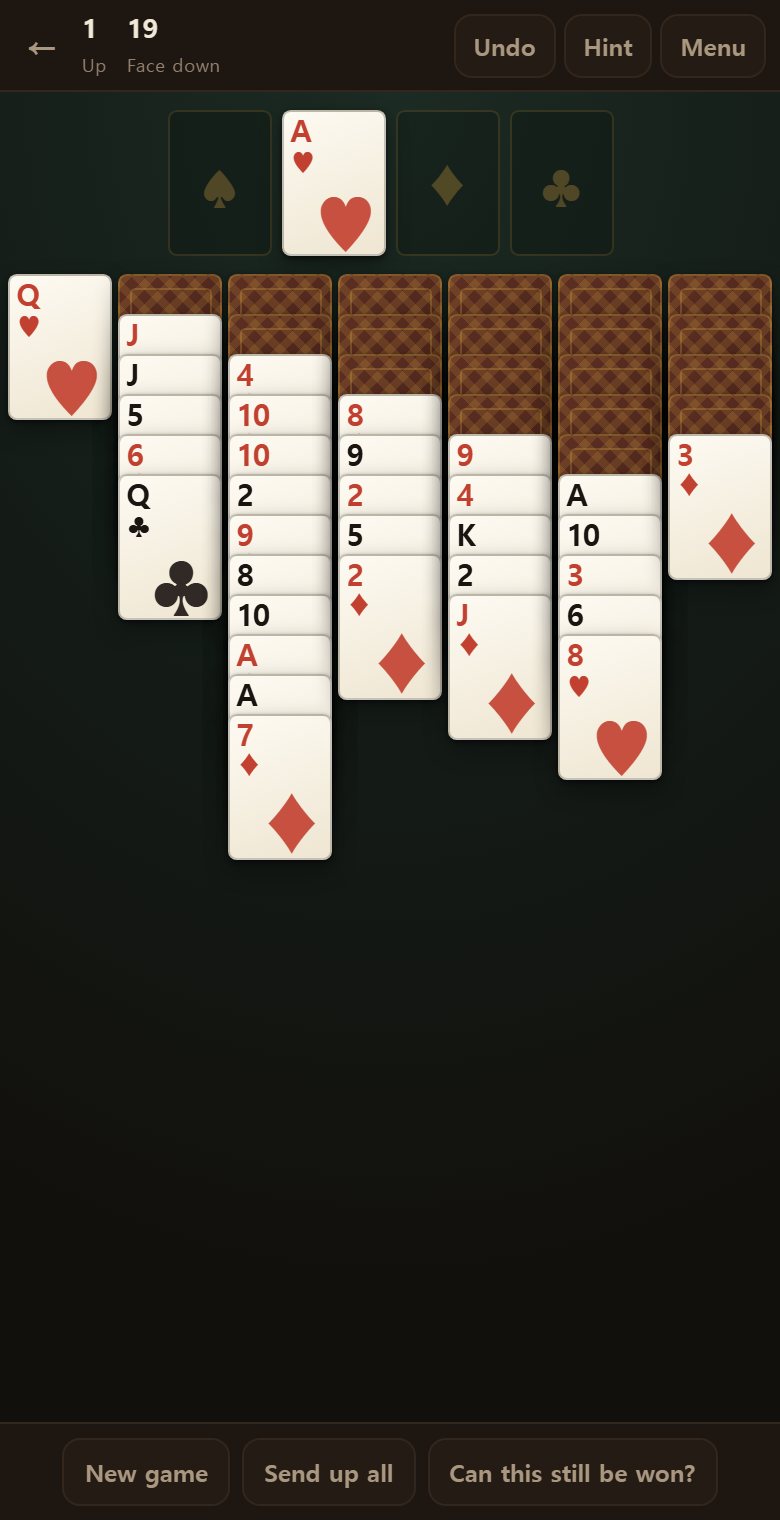
The first column holds a single face-up card. From the second on, each holds some face-down cards plus five face up.
The second has one face down, the third two, and so on to six in the seventh. Together that is fifty-two.
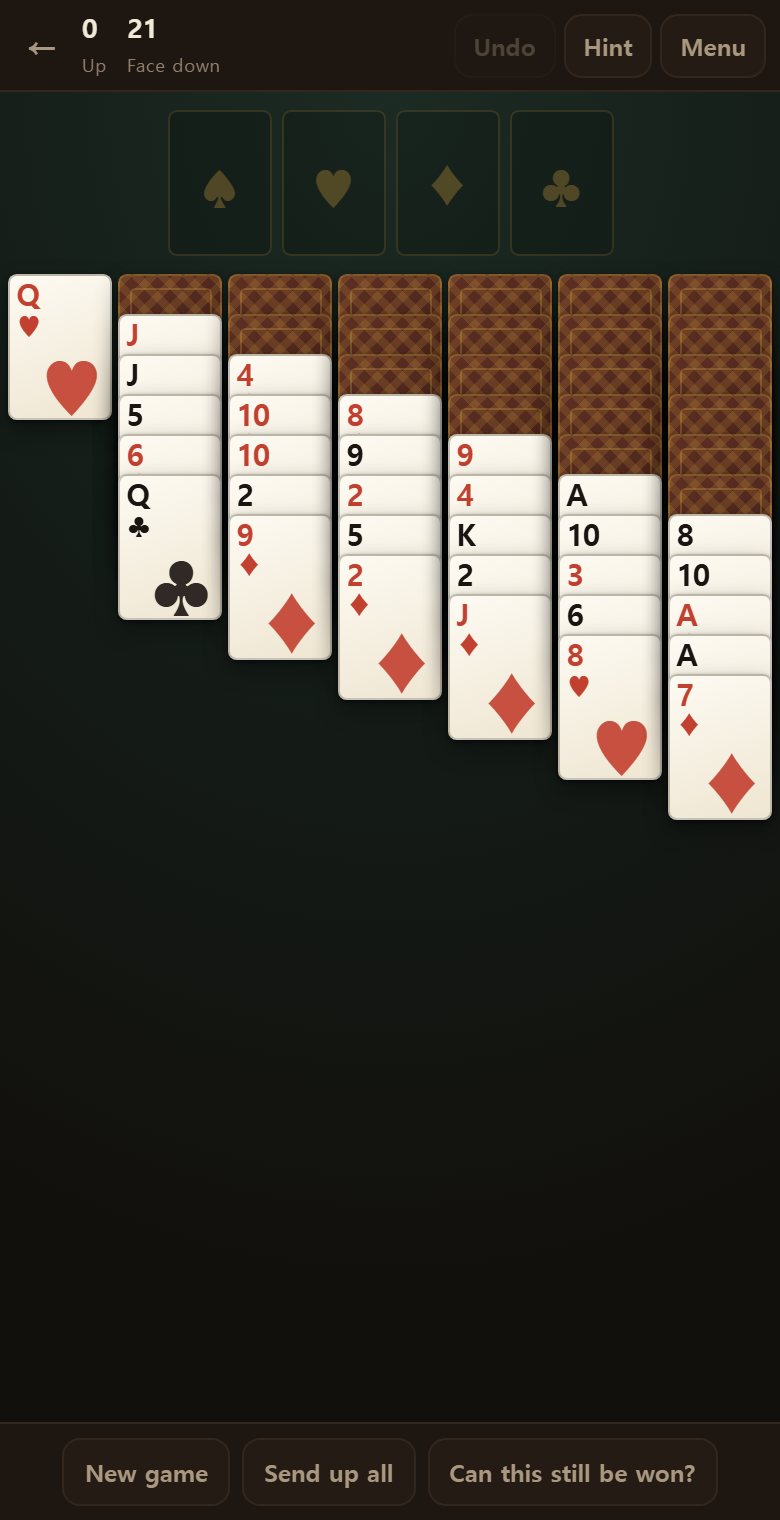
So thirty-one cards are visible from the outset — a far cry from Klondike's seven.
This is all of Yukon — moving whole stacks
You can pick up any face-up card, and everything piled on it comes along — in order or not.
Klondike only lets you move a proper run. Yukon has no such limit, which puts far more moves in view.
- Tap the card you want and it, with everything below it, is taken up in gold.
- Then tap the column you want and the whole lot goes.
- Tapping another card changes what you have hold of; tapping the same one again lets go.
- Picked up the wrong card? Press Esc, or tap it again.
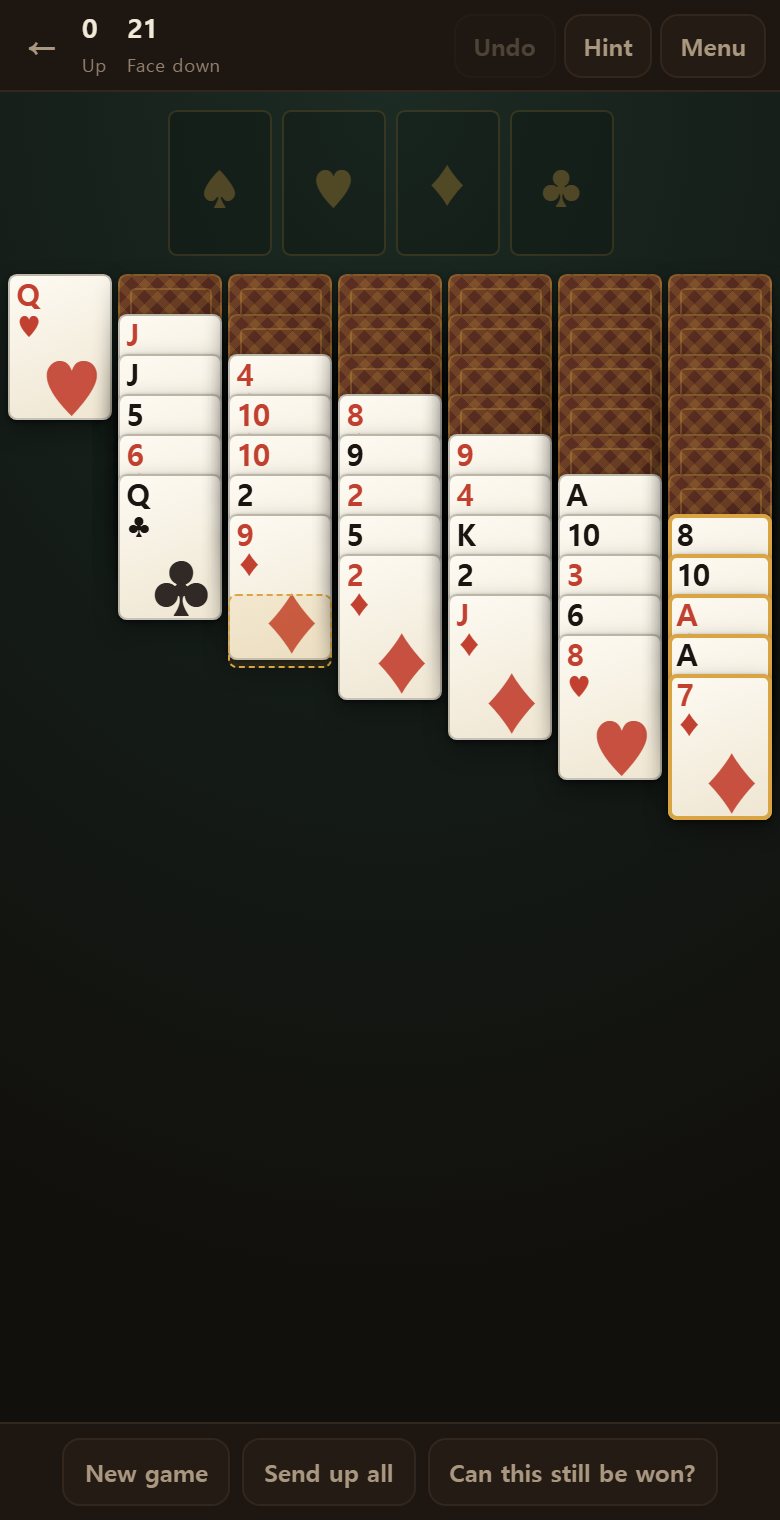
That one difference changes the whole game. To dig out a buried card you will often move a thoroughly disordered stack on purpose.
Placing still needs alternating colours
Picking up is free, but placing follows Klondike exactly.
The card you took has to be one rank lower and the other colour than the card it lands on.
- On a 7♠ you may place the 6♥ or the 6♦. Not the 6♣.
- The suits need not match. Only the colours must differ.
- What follows may be in any order at all. Only the leading card has to fit.
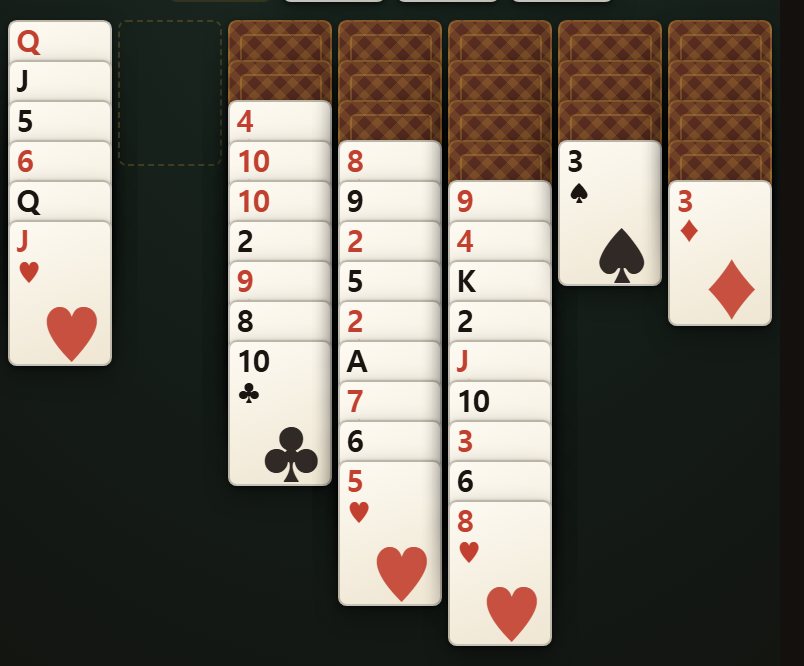
So a 9♦ with 3♣, K♥ and 5♠ jumbled beneath it can still go on a 10♣.
Only a K goes in an empty column
When a column empties, only a K may go there — and whatever follows the K goes with it.
So before emptying one, check that a K is available. Without one, the empty column simply sits idle.
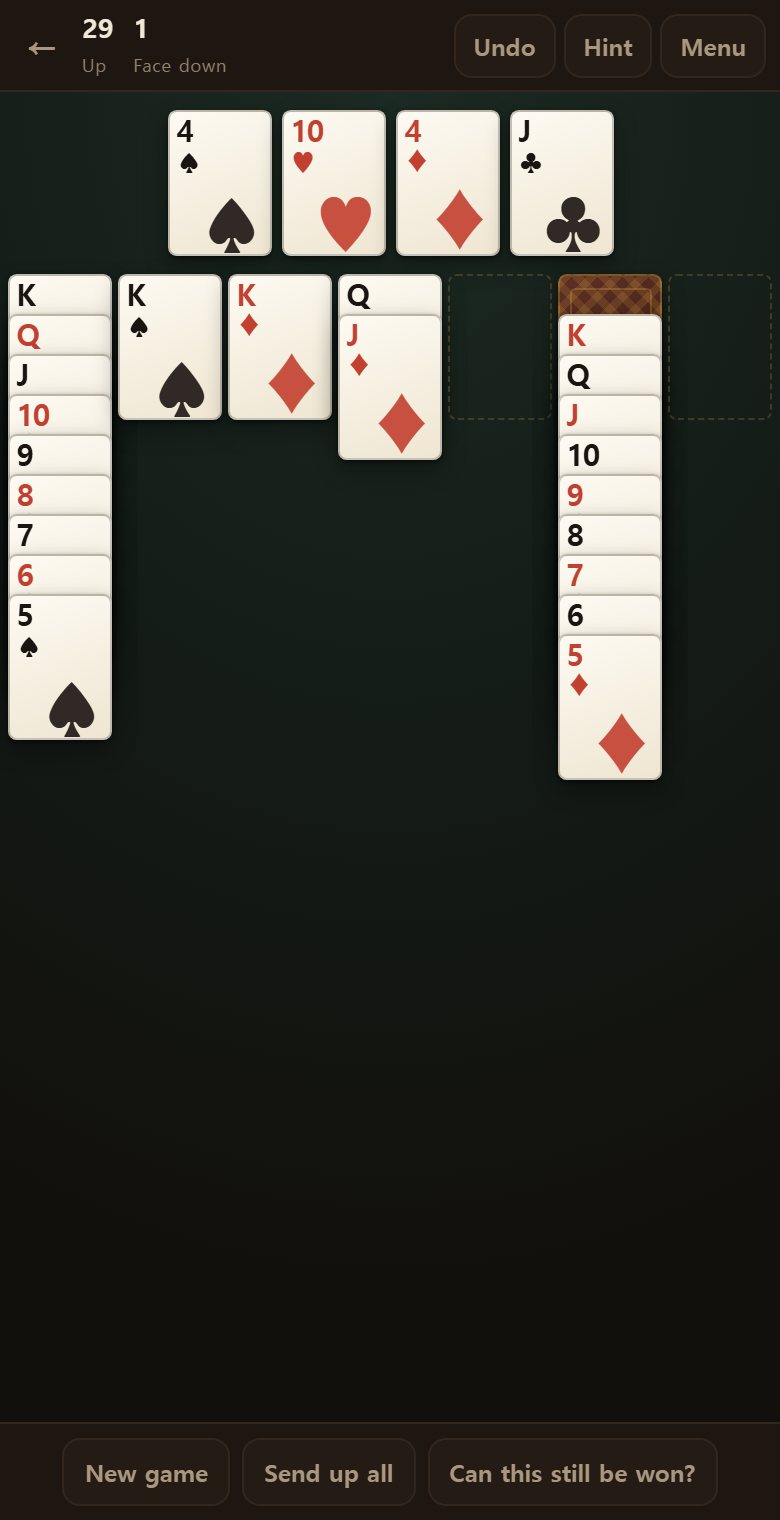
An empty column is worth less in Yukon than in Klondike, since you can pick up from anywhere and there are plenty of places to move to.
Face-down cards turn by themselves
Clear every face-up card from a column and the face-down one beneath turns over by itself.
That is the real work of Yukon. The face-down cards are the homework.
- A face-down card cannot be tapped. Nothing happens.
- The columns with the most face-down cards are on the right. The seventh hides six.
- Each card that turns takes the face-down figure at the top down by one.
Sending cards to the foundations
The four spaces above take one suit each, strictly A, 2, 3 … K.
Only the bottom card of a column can go up. Never several at once.
- Tap a bottom card that can go up and it simply goes. No second tap needed.
- Send up all below sends everything safe in one go.
- Send aces and twos up on sight. The columns rarely want them.
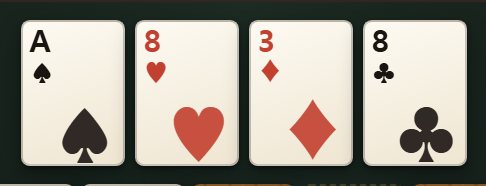
Beyond that, do not hurry. Those cards serve as landing places below. Send the 6♥ up and you lose one of the cards that could have gone on a 7♠.
Where to start
Yukon offers so many moves that it becomes confusing. An order helps.
- 1. If a move turns a face-down card, play it first, nearly always.
- 2. Send aces and twos up on sight.
- 3. Look for a move that frees a buried card. That card unlocks the column below.
- 4. Then build somewhere for cards to land — a run in alternating colours.
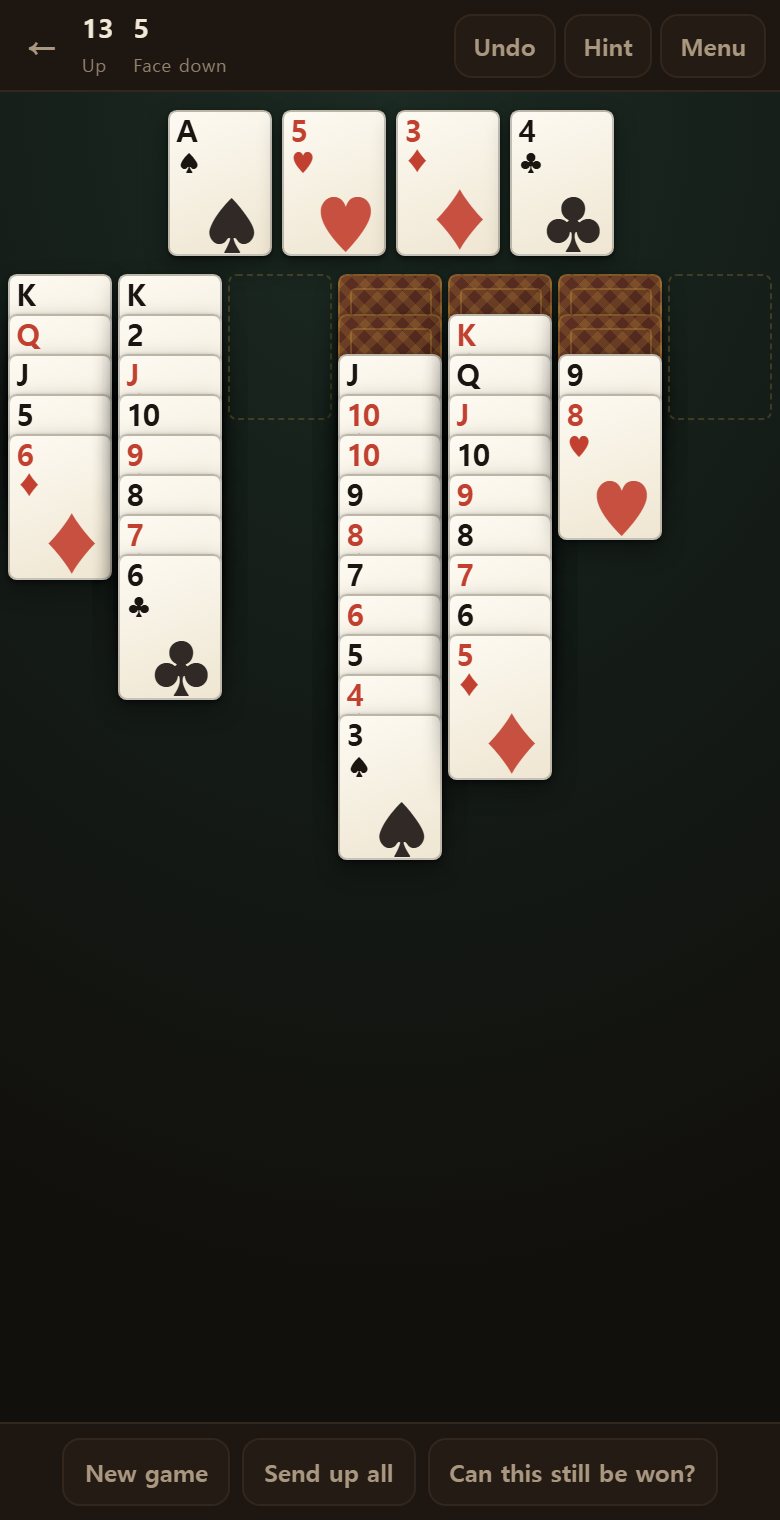
The commonest mistake is tidying for the look of it. However neatly a column runs, if the face-down count has not fallen, the deal has not moved.
Moving a mess on purpose
Here is the trick that belongs to Yukon alone. When the card you want is buried in the middle of a stack, take it from there and move the whole lot to another column.
The stack is still a mess where it lands, but that many cards have left the original column — and a face-down card opens.
- Move it onto a column that is already untidy. Leave the clean ones alone.
- Moving it to a short column makes it easier to dig out again later.
- You may shift the same stack two or three times. It costs moves, not position.
- So long as a face-down card opens, the move has paid for itself.
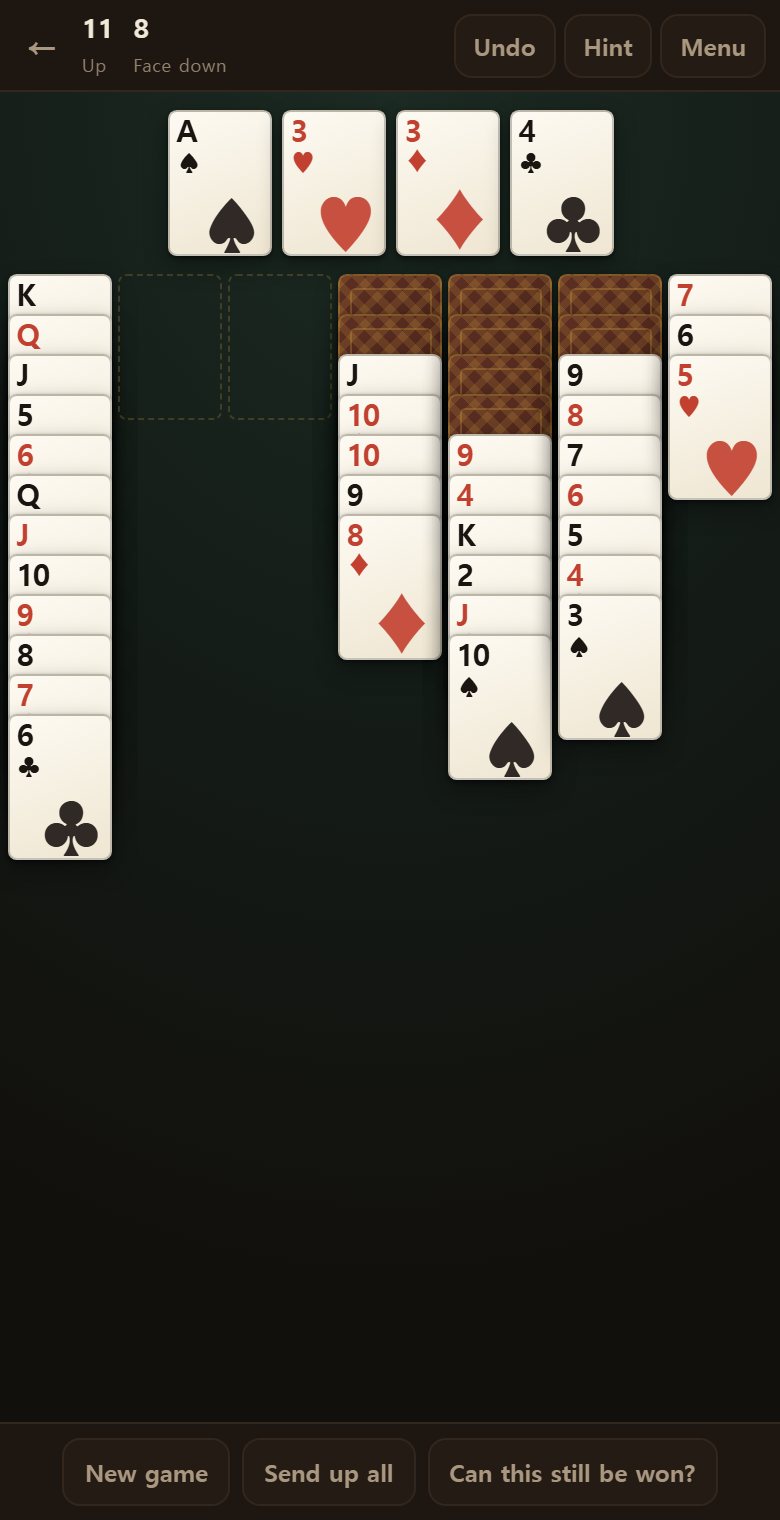
Anyone who has only played Klondike tends not to see this move. In Yukon it is the basics. After digging like that, press Send up all below once. The card you just opened has often made several plays available. It saves dragging them one by one.
Only winnable deals are handed out
A Yukon position can offer over twenty legal moves, so unlike Golf every path cannot be examined.
What happens instead is a search that digs from the most promising moves to find a winning line. Only deals where one was found are handed out.
So if you are stuck, there is a move you have not seen.
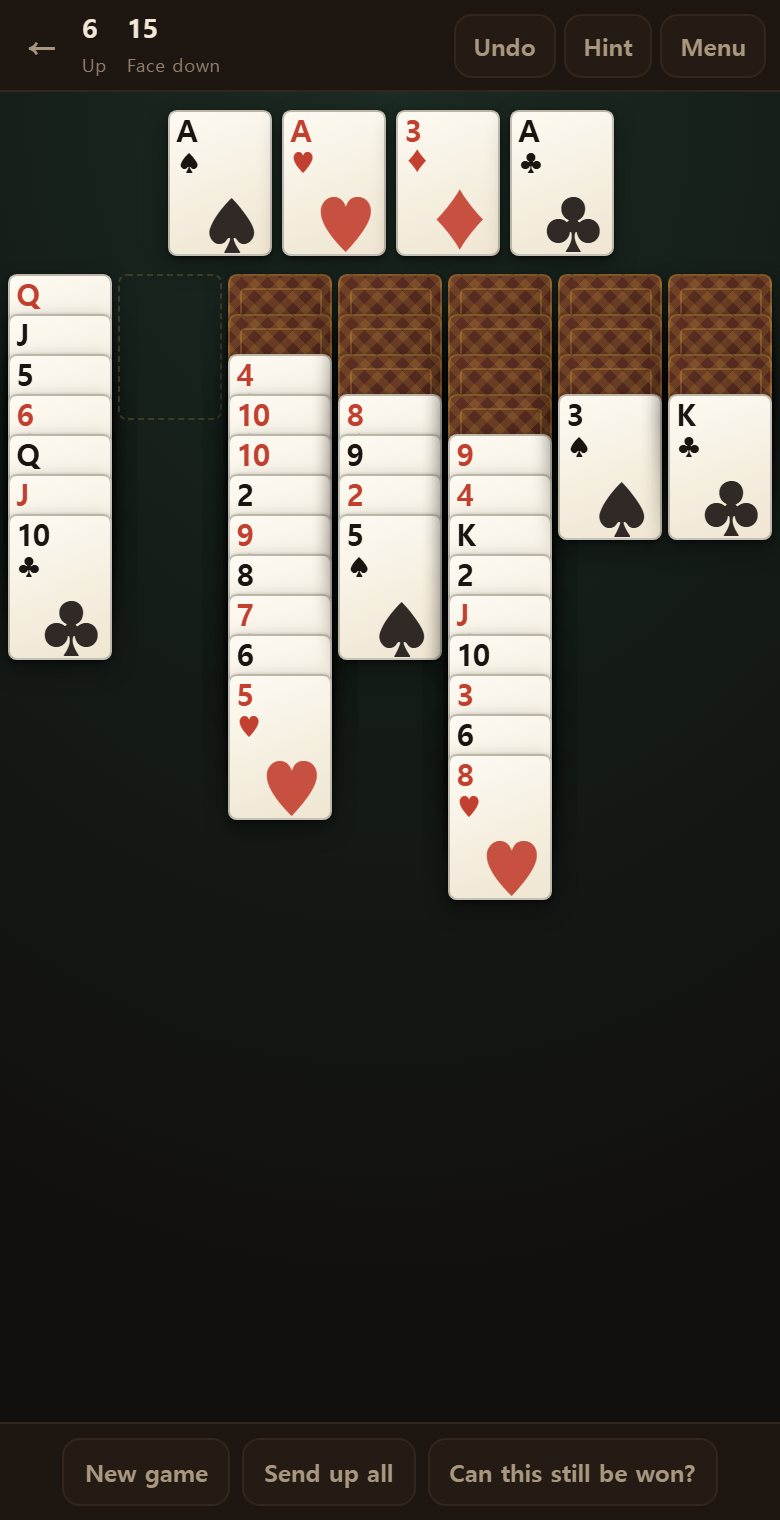
To ask whether the position is still winnable, press Can I still win? below. It may answer that it could not find a path — which is not quite the same as there being none.
Undo and hint
Moved badly? Press Undo at the top, as often as you like. A card that turned over goes back face down with it.
If you cannot see it, press Hint. It marks the first move of a winning line in blue, and no more.
- Tap the card it marks, then the column it names.
- The A key sends up everything that can go.
- Esc puts down whatever you are holding.
- Undo is Ctrl+Z and hint is H.
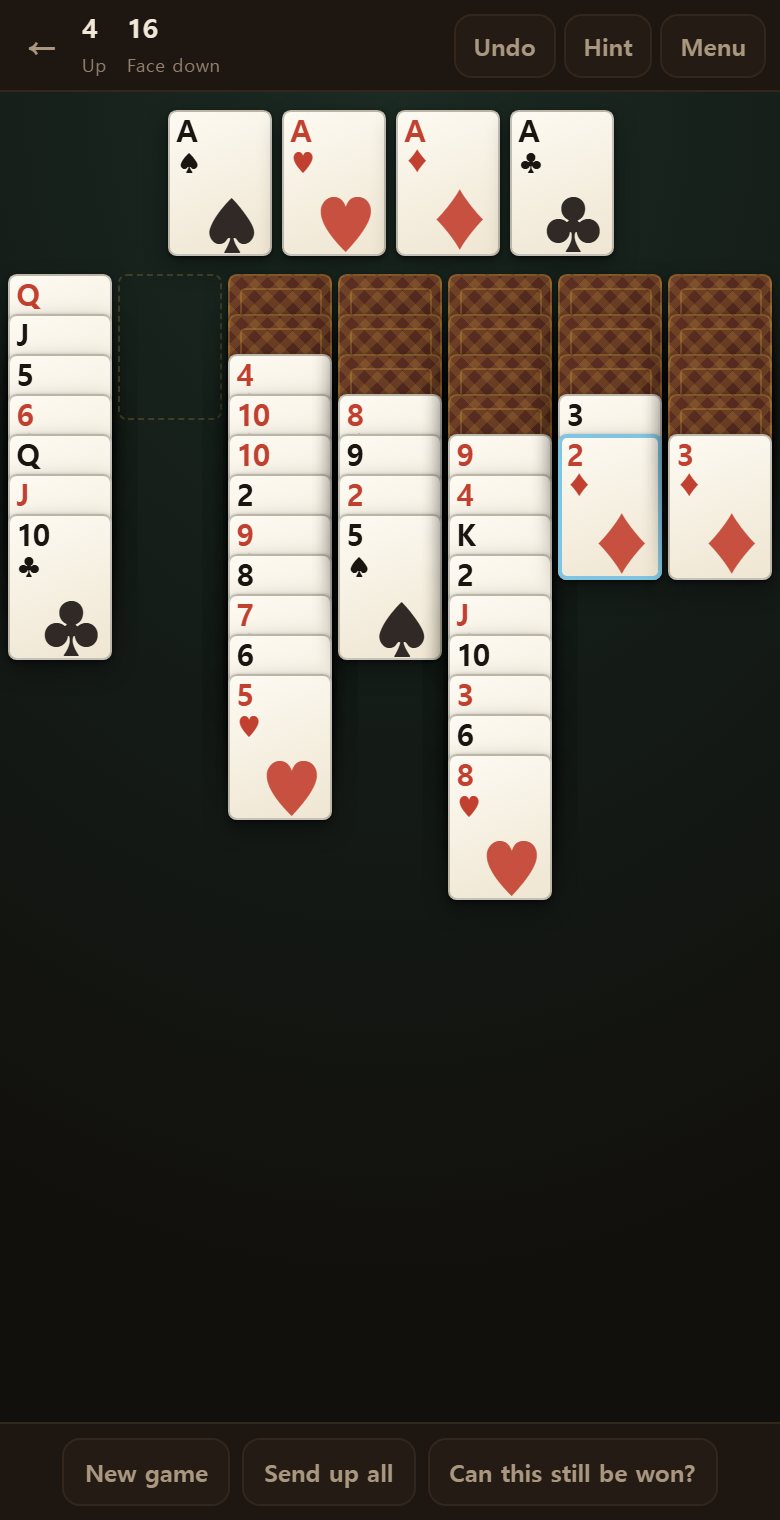
With so many moves available, Yukon cannot be read to the end. So the hint digs from the most promising moves and gives you the first step of what it found. If its suggestion looks odd, watch the face-down figure. That move usually opens a card.
When it is all home
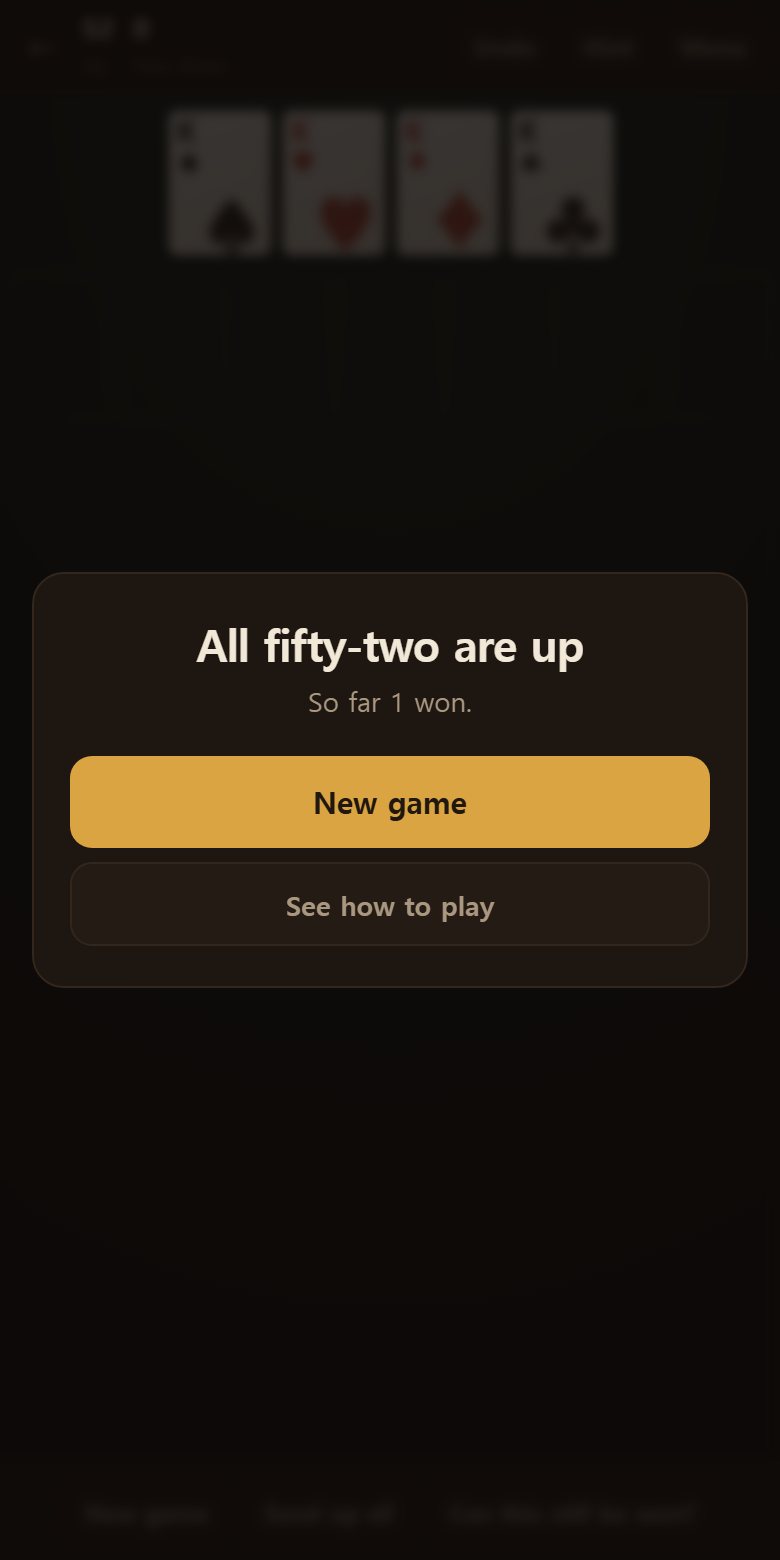
Fill all four spaces to the K and you win — all fifty-two cards.
Far more Yukon deals come out than Klondike ones, because being able to pick up anywhere opens so many paths.
- Your moves, your time and the deal number are kept together.
- Note the number and you can open the same deal again.
- The fewer moves, the better the solve. Replay a deal and try to cut the count.
The face-down count is the work remaining
The face-down figure at the top counts the cards not yet turned. It starts at twenty-one, and at 0 the deal is effectively solved.
- At 0, every card is visible and all that remains is sending them up in order.
- So watch the face-down figure before the cards home one. What is home is work already done.
- A move that does not reduce it is marking time, however many cards it shifts.
- Before any move, ask whether it brings that figure down.
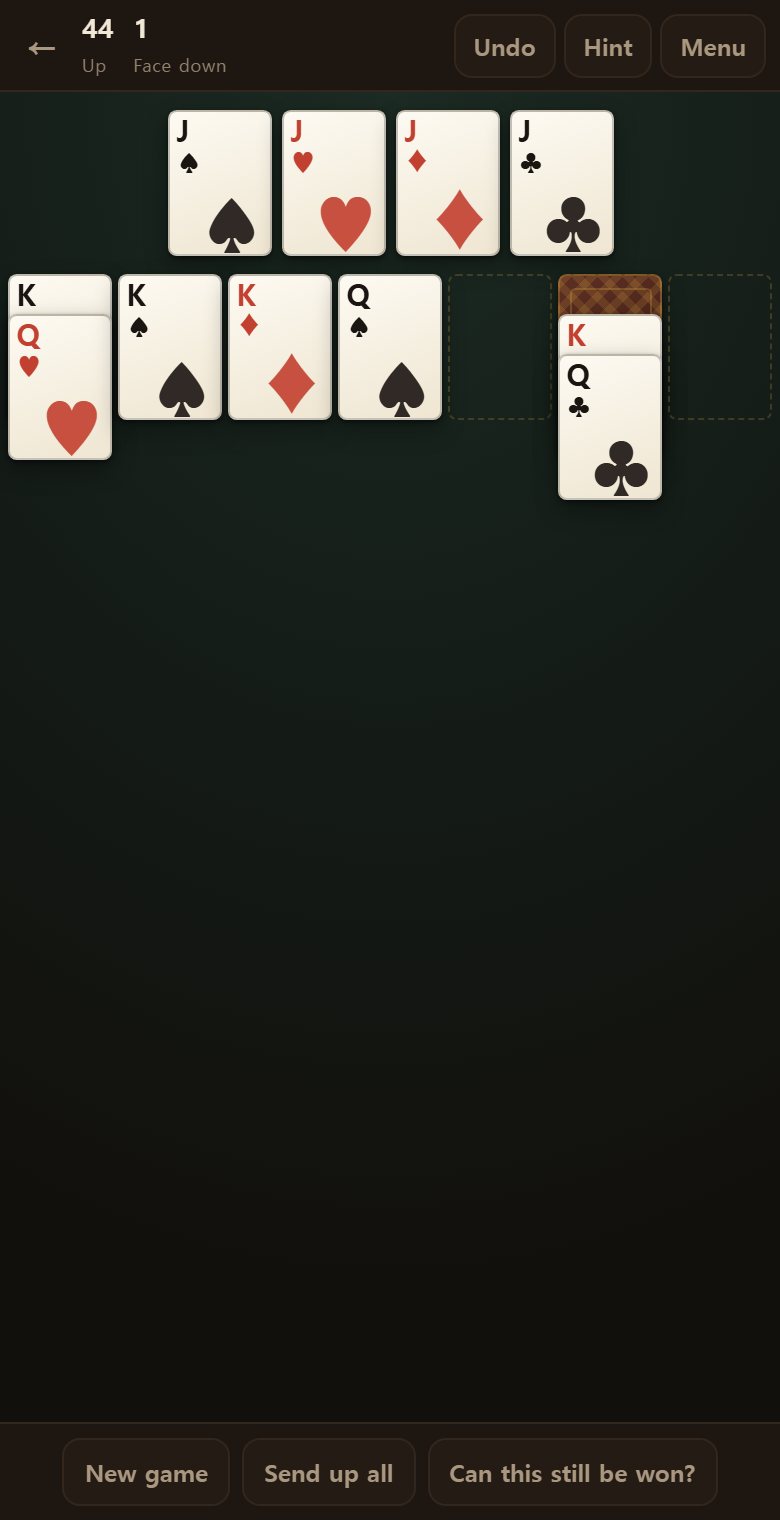
Almost every lost Yukon deal is one where the face-down count stood still while the board was tidied to look well. A handsome run is worth nothing in itself.
Undo
Press Undo at the top and your last move never happened. On a keyboard it is Ctrl+Z.
- A whole-stack move undoes as a single move.
- A card that turned as a result goes back face down with it.
- A batch sent up by Send up all comes back in one go too.
- You can undo as far back as the start.
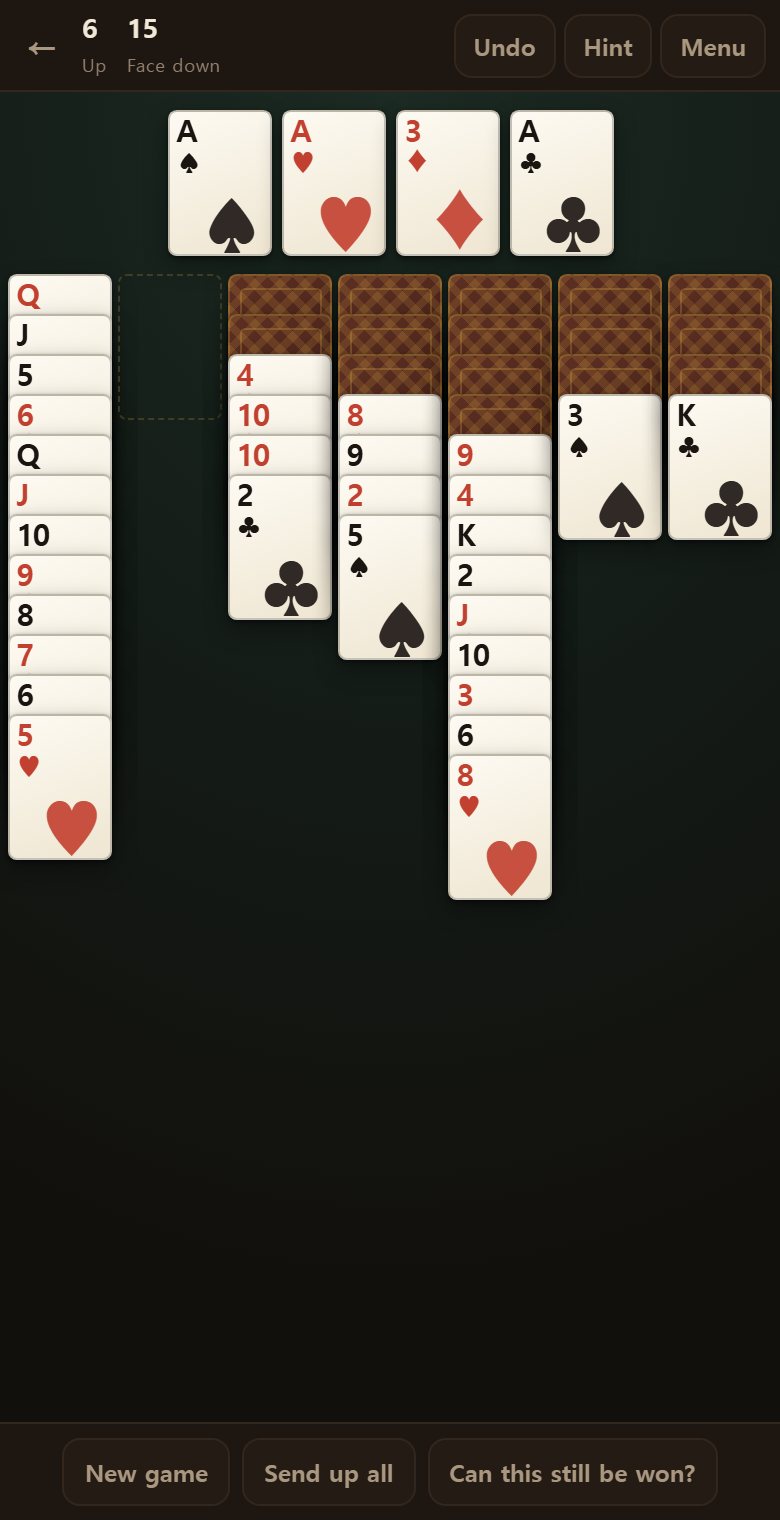
With so many moves available, it is easy to take a wrong road. When you jam, do not undo one or two — go back to the fork.
How to win
Five habits will win you a great many more deals.
- Play the move that opens a face-down card first. It is the only homework this game sets.
- Dig the columns with the most face-down cards. The shallow ones will keep.
- Beyond aces and twos, do not hurry cards up. The columns need them as landing places.
- Hoard an empty column. The moment a K goes in, its power is spent.
- Do not forget to take cards from the middle and move the stack whole. That is where Yukon's power lies.
All five are really one: bring the face-down count down. A move that does not is wasted, however good it looks.
Common mistakes
Deals that jam are nearly always one of these four.
- Tidying for the look of it — the commonest of all. A long run in alternating colours means nothing while the face-down cards sit untouched.
- Sending everything up — feed the foundations on sight and the columns lose their landing places. Send all the low cards up in particular and there is no way to build down from a K.
- Filling an empty column at once — hard-won, then any old K goes in. Which K you choose changes a great deal of what follows.
- Only ever taking the bottom card — in Yukon you can take from the middle too. Play by Klondike habits and half the paths stay invisible.
All four come from Klondike habits or from chasing what looks tidy. In Yukon the only thing to watch is the face-down cards.
Common questions
There is none. All fifty-two cards are dealt at the start, so there is nothing to turn and nothing to redeal.
The leading card of what you took must be one rank lower and the other colour. In an empty column, only a K.
You may — that is the heart of Yukon. The order of what follows makes no difference.
The foundations take one bottom card at a time. The Send up all button handles a batch for you.
Clear every face-up card from that column and it turns by itself.
Try undoing. This site only hands out deals for which a winning line was found.
Yes. With everything visible and cards liftable from anywhere, far more deals come out. But there is a great deal to read, which is confusing at first.
- Opening face-down cards always comes first. Those cards are the work that is left.
- Apart from Aces and 2s, do not rush cards up. They are useful as landing places down in the columns.